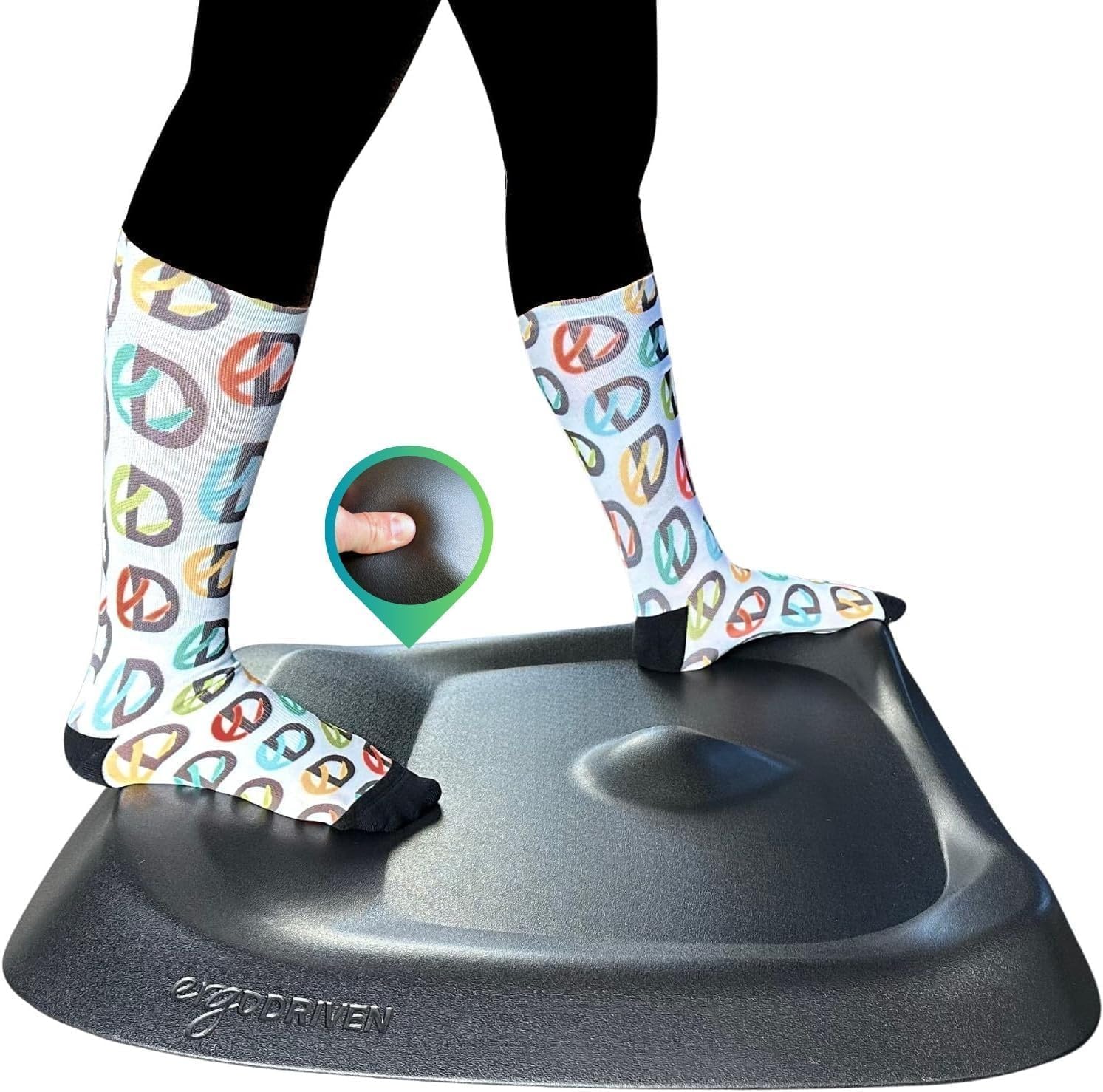
Build Quality
Ergodriven builds the Topo from high-density polyurethane with an integral skin finish - the same material category used in commercial anti-fatigue mats found in industrial settings. That skin layer resists surface cracking and makes the mat wipeable, which matters after months of barefoot or sock-footed use. The 7-year warranty is the longest offered by any mat in the non-flat standing mat category as of 2026, and it signals genuine manufacturer confidence in the polyurethane's longevity. Competitors like the VariDesk Active Mat, rated 41/100 by independent reviewers, offer no comparable coverage.
The beveled edge running around the full perimeter is not decorative. Standing mats with abrupt edges create tripping hazards during the unconscious weight shifts the Topo is meant to encourage. Ergodriven's perimeter bevel eliminates that risk specifically because the mat expects you to step on and off its edges repeatedly throughout the day.
One genuine build concern: there is no rubberized or textured grip layer on the underside sufficient to anchor the mat on hard floors. On smooth hardwood or polished concrete, the Topo migrates. This is not a minor complaint - it affects the mat's core usability for a significant portion of the standing desk market.
Comfort & Ergonomics
The Topo's central design claim is "calculated terrain" - a specific arrangement of 3D ridges, raised platforms, and slopes engineered to distribute standing load across multiple muscle groups without any conscious decision from the user. In practice, this means you can stand straight on the flat center, perch one foot on a raised ridge for heel raises, shift laterally onto a slope, or cross your legs against a side ridge - all within a single mat footprint.
Business Insider rates the Topo as best overall in the anti-fatigue mat category for exactly this reason. Fatigue reduction in the heels, lower back, and calves comes from distributing load, and the Topo does that passively. A flat anti-fatigue mat like the AmazonBasics Anti-Fatigue Mat cushions impact but does nothing to encourage weight distribution across positions.
The standard model is sized for users over 5'4" with a standard-width stance. Users under that height or with a narrow stance should spend $69 on the Mini rather than the $109 standard - the terrain spacing is calibrated to stride width, and the wrong size defeats the ergonomic geometry.
Adjustability
The Topo has zero manual adjustments, and that is intentional. There are no height pegs to swap, no removable inserts, no firmness dials. The calculated terrain is fixed at manufacture. This makes the mat extremely simple to use - repositioning with one foot takes under 2 seconds - but it means you cannot tune the mat to a specific complaint. If a particular ridge hits the wrong point on your heel, you cannot move it.
For users who want modular terrain they can reconfigure, the CubeFit Terramat at a higher price offers interchangeable terrain zones. The Topo trades that flexibility for simplicity and a lower entry price.
Assembly
Unbox, place, stand. There is no assembly. The mat ships flat and ready to use within 30 seconds of opening the package. At 2 pounds or under (Ergodriven does not publish weight), it repositions without effort. The one-foot repositioning the company describes is accurate - you nudge it with your heel and it moves. On carpet, it stays put better than on hard floors.
Value for Money
At $109 in 2026, the Topo sits between the $69 Mini and the higher-cost Terramat. It holds a 67.8/100 independent rating versus the Terramat's 81.4/100, a gap that reflects the floor-grip weakness more than any ergonomic failure. The 7-year warranty and 10-consecutive-year NYT recognition create genuine long-term value - this is not a mat you replace annually. If your floor is carpeted or low-gloss, the $109 represents fair pricing for proven terrain engineering. If your floor is smooth, spend the extra money on the Terramat or buy a separate non-slip rug pad to place under the Topo.