


Best Wrist Rests for Keyboard and Mouse (2026)
If you spend hours every day typing or navigating with a mouse, a good wrist rest can make a meaningful difference in how your hands and wrists feel by the end of the day. The right keyboard wrist rest reduces fatigue, encourages neutral wrist positioning, and helps you stay comfortable through long work sessions. The wrong one does nothing at best and makes things worse at worst.
This guide breaks down everything you need to know before buying a wrist rest in 2026, including which materials actually hold up, what to look for on a budget, and how to use your wrist rest correctly so it does its job.
Why a Wrist Rest Actually Matters
Most people grab a wrist rest as an afterthought. They see one bundled with a keyboard, toss it on their desk, and forget about it. That approach misses the point entirely.
A well-designed wrist rest serves a specific ergonomic function: it keeps your wrist in a neutral position while you type or move your mouse, reducing the amount of bending and extension your wrist has to endure over thousands of repetitions throughout the day. Without any support, many people end up resting their wrists on a hard desk edge, which concentrates pressure directly on tendons and nerves in a very unforgiving way.
The difference between a thoughtfully designed wrist rest and a cheap, poorly made one comes down to material, height, firmness, and cover quality. All four factors affect how your wrist is actually supported and how the product holds up over time.
Memory Foam vs. Gel Wrist Rests
This is the most important decision you will make when choosing a wrist rest. In 2026, memory foam is the clear winner for the vast majority of users, and understanding why will help you shop more confidently.
How Memory Foam Works
Memory foam contours slowly and adaptively to the shape of your wrist. This matters because it means the load is spread evenly across the contact surface rather than concentrated in one spot. Superior pressure distribution is the defining advantage of memory foam, and it directly translates to less nerve and tendon stress during long sessions.
After 30 to 60 minutes of continuous use, quality memory foam maintains stable, predictable support. It does not shift, pool, or change shape in ways that create new pressure points. Over months and years of daily use, good memory foam also resists permanent indentation and retains its structural integrity, which means you are not replacing it every year.
The Problem with Gel
Gel wrist rests have been popular for a long time, and they feel impressive in the store. They have a satisfying squish and a cool initial touch. The reality of long-term daily use is less flattering.
Gel tends to displace under sustained pressure rather than conform evenly. As you press down, the gel moves away from the contact area and creates firmer edges or localized pressure points at the sides of the rest. For someone who already has wrist discomfort, those pressure spots can make things noticeably worse.
There is also a durability problem. Gel is more prone to flattening, tearing, and in some cases leaking over time, especially in warmer environments or with heavy daily use. Once a gel rest loses its structure, it provides little benefit.
The cooling reputation of gel is also overstated. Gel starts cool, but once it reaches body temperature, it can trap heat and sweat just as readily as foam. A well-designed memory foam rest with a breathable cover often performs comparably or better on temperature over a full workday.
The Bottom Line on Materials
For a keyboard wrist rest or a mouse wrist rest you plan to use every day for years, choose memory foam over gel. It distributes pressure better, lasts longer, and does not create the secondary pressure problems that gel can cause during extended sessions.
Wrist Rests and Carpal Tunnel Syndrome
A lot of people buy a wrist rest hoping it will fix existing wrist pain or carpal tunnel syndrome. It is worth being honest about what a wrist rest can and cannot do.
A wrist rest cannot cure carpal tunnel syndrome. If you have been diagnosed with carpal tunnel, a wrist rest is one part of a broader ergonomic strategy, not a standalone solution. You should be working with a healthcare provider on treatment.
What a good wrist rest can do is help prevent wrist problems from developing in the first place by encouraging neutral wrist alignment and reducing the cumulative strain of poor positioning. The key issue with carpal tunnel and repetitive strain injuries is sustained awkward positioning and concentrated pressure on the median nerve. A memory foam wrist rest, used correctly, addresses both of those factors.
The critical word there is correctly. A wrist rest should support your wrist during pauses in typing, not prop your wrist up at an awkward angle while you are actively typing. If your keyboard wrist rest forces your wrists into extension while you type, it may actually increase strain rather than reduce it. Proper use means resting lightly during breaks in activity and keeping your wrists as neutral as possible during active typing.
Key Features to Look For
Height and Thickness
The height of your wrist rest needs to match the height of your keyboard. A thicker keyboard with a steep incline needs a taller wrist rest. A low-profile keyboard needs a thinner one. If the height is wrong, your wrist rest will force your wrists into an uncomfortable angle regardless of how good the foam is.
Match wrist rest height to your keyboard profile before buying. Many product listings include the height in millimeters, and it is worth checking.
Firmness
Firmness is a matter of personal preference to some extent, but there are outer limits. A wrist rest that is too soft will bottom out under your weight and provide no real support. One that is too firm creates the same pressure problems as a hard desk edge.
Medium-firm memory foam is the sweet spot for most users. It should compress slightly under the weight of your wrist but not collapse entirely.
Cover Material
The cover affects comfort, hygiene, and durability. Lycra blend and moisture-wicking fabrics are the best options for daily use because they resist sweat buildup and are relatively easy to clean. Leatherette or faux leather covers look sleek but tend to get sticky with heat and wear out faster at contact points.
Look for covers that are removable and washable if hygiene is a priority for you, which it should be given how much skin contact a wrist rest accumulates over time.
Non-Slip Base
A wrist rest that slides around on your desk is worse than no wrist rest at all, because you will constantly be chasing it and adjusting your posture. Rubber or silicone bases are non-negotiable for any wrist rest you plan to use seriously. Check product reviews specifically for feedback on whether the base grips well on common desk surfaces.
Set vs. Individual
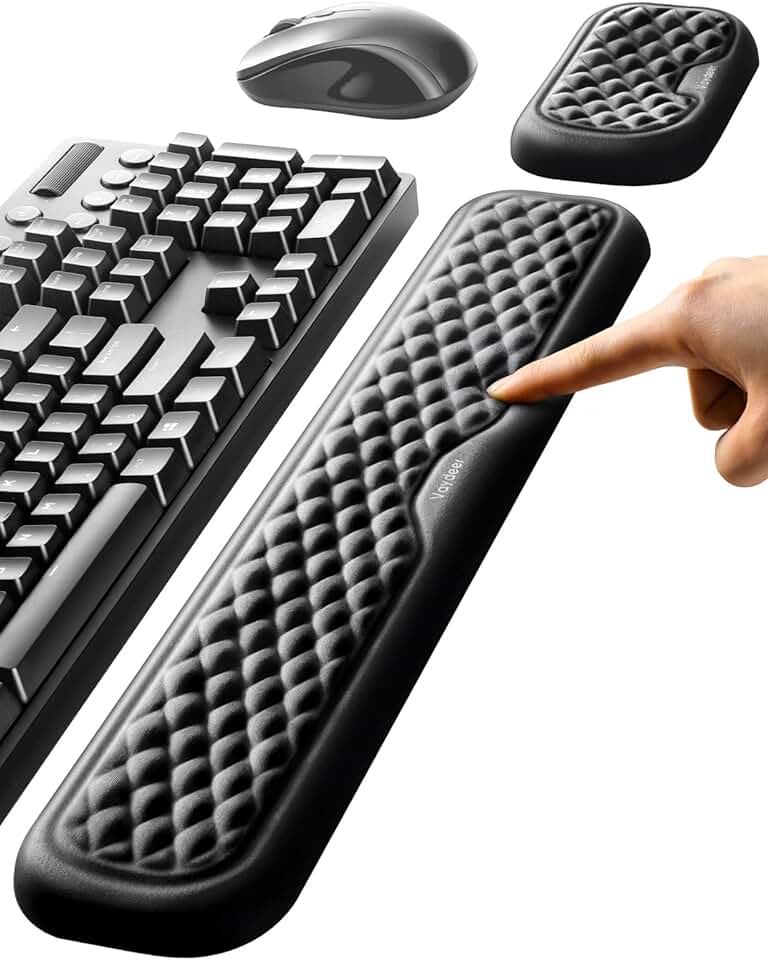
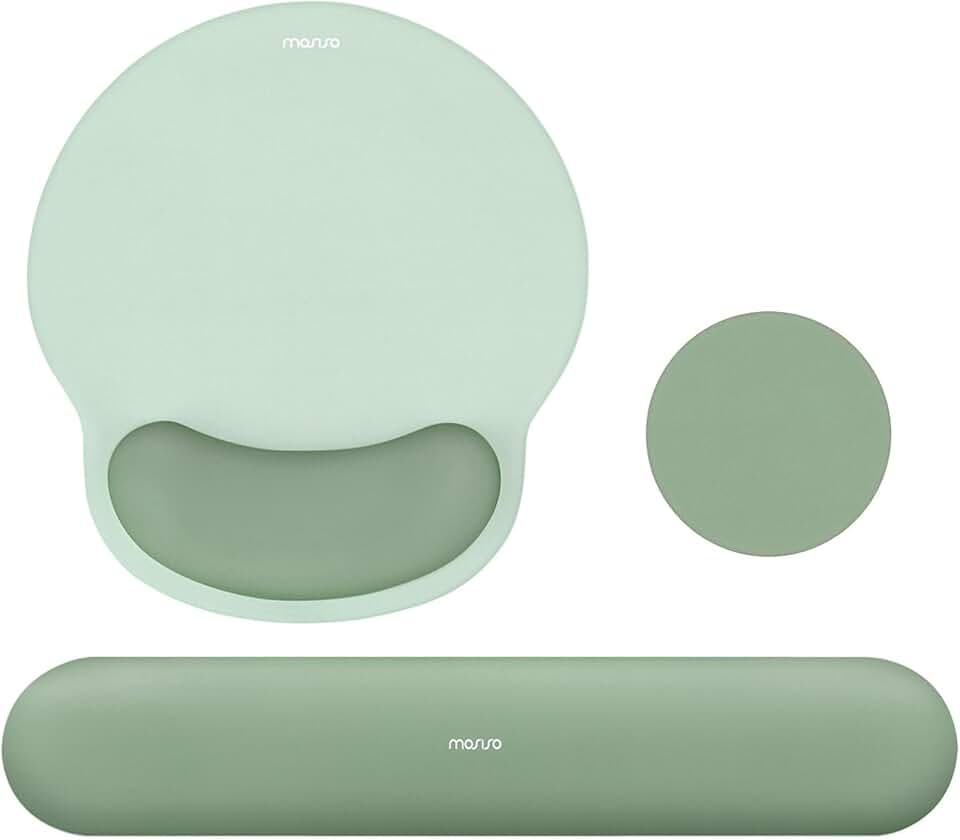
If you use both a keyboard and a mouse, consider buying a matched set. Keyboard wrist rests and mouse wrist rests are designed with different dimensions, and a matched set ensures consistent height and firmness across both input devices. Many sets are available at prices comparable to buying individual rests separately.
Budget Options Worth Considering
You do not need to spend a lot of money to get a functional, well-made wrist rest. Several solid options are available in the budget range.
The Gimars Memory Foam Keyboard and Mouse Wrist Rest Set is a strong choice for buyers who want both a keyboard and mouse rest without spending much. It features soft memory foam padding, a moisture-wicking Lycra blend fabric cover, and rubber base grips to keep it in place. The matched set design means consistent support across both your typing and mousing hands.
The Fellowes Memory Foam Wrist Rest is a good option if desk space is limited. Its narrow profile fits comfortably in tighter setups without taking up excessive real estate. It includes breathable fabric and an easy-clean backing that grips the desk surface reliably.
Both of these represent the kind of memory foam construction that outperforms gel options at similar or even higher price points. For most home office and work-from-home setups, either of these will serve you well.
How to Set Up Your Wrist Rest Correctly
Buying the right wrist rest is only half the equation. Using it correctly determines whether it actually helps.
Keep your wrists neutral while typing. Your wrists should not be bent up, down, or to the side during active typing. The wrist rest supports your wrists during pauses, not during the motion of typing itself.
Adjust your desk and monitor height. A wrist rest cannot compensate for a desk that is too high or a monitor at the wrong height. Your elbows should be at roughly 90 degrees, your forearms roughly parallel to the desk, and your monitor at or slightly below eye level.
Do not press hard into the rest. Resting your full arm weight on a wrist rest while typing puts pressure directly on the carpal tunnel. Rest lightly and keep your arms mobile.
Take regular breaks. No wrist rest eliminates the need for breaks during extended typing or mouse use. Stand up, shake out your hands, and give your wrists a rest from any sustained position every 30 to 60 minutes.
Following these habits alongside using a quality keyboard wrist rest gives you the best chance of staying comfortable and avoiding long-term wrist problems.
Final Recommendation
For most people shopping for a wrist rest in 2026, the decision is straightforward. Choose memory foam over gel, prioritize a breathable fabric cover, make sure the height matches your keyboard, and confirm the base has real grip. If you use both a keyboard and a mouse, buy a matched set.
Pair your wrist rest with a proper ergonomic desk setup, use it with correct technique, and it will be one of the better low-cost investments you make in your daily comfort and long-term wrist health.