Office ChairJudge

Best Saddle Chairs for Home Office

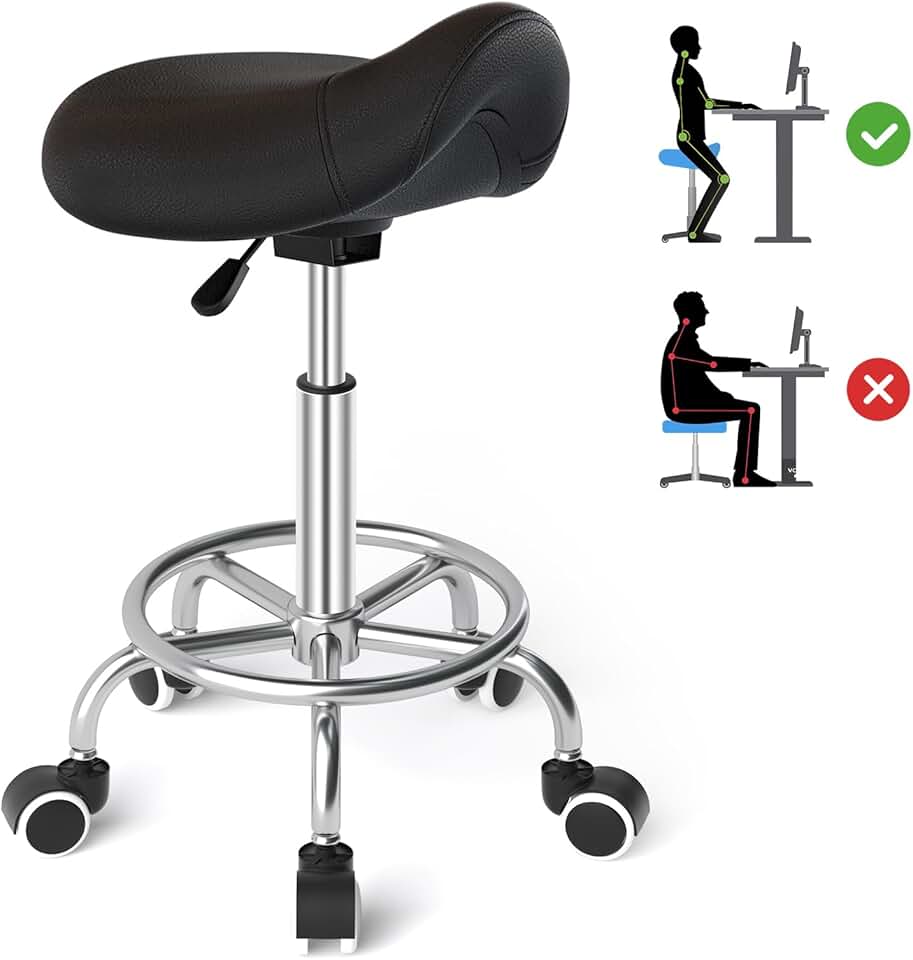
This page is for anyone who has already tried lumbar-supported office chairs, maybe spent $400-$800 on something with five adjustment points, and still ends up with lower back pain by 3pm. Saddle chairs work on a completely different principle: instead of propping your spine up from behind, they tilt your pelvis forward at roughly 40-45 degrees so your spine finds its natural S-curve on its own. That shift in thinking is exactly what this guide covers, whether you're a dentist on your feet between patients, a designer logging 8-hour sessions, or a home office worker who's exhausted every conventional option.
MY
Michael York

Lead Reviewer, Office Chair Judge

I've spent the last 3 years testing office chairs and standing desks from my home office. Every recommendation here is based on hands-on research, real Amazon review data, and manufacturer specs - not press releases or sponsored content.

View all reviews by Michael →

Our Top 8 Picks for Saddle Chairs (2026)

Pneumatic Swivel Rolling Saddle Chair
#2

Pneumatic Swivel Rolling Saddle Chair

$195.46

Antlu Saddle Stool Rolling Chair
#4

Antlu Saddle Stool Rolling Chair

$84.5

Pneumatic Swivel Rolling Saddle Chair
#5

Pneumatic Swivel Rolling Saddle Chair

$195.46

Antlu Saddle Stool Rolling Chair
#6

Antlu Saddle Stool Rolling Chair

$159

YEEZEE Saddle Stool Ergonomic- Comfortable Rolling Saddle Stool
#7

YEEZEE Saddle Stool Ergonomic- Comfortable Rolling Saddle Stool

$53.19

Antlu Saddle Stool Chair
#8

Antlu Saddle Stool Chair

$123.37

Quick Comparison Table

Product Price Saddle Type Backrest Weight Limit Best For
Salli Swing $1,040 Split saddle with 360-degree sway No 265 lbs Medical professionals, chronic back pain sufferers
HAG Capisco High-end (varies) Single saddle Yes - adjustable tilt and height Varies by config Standing desk users, those needing backrest support
Antlu Saddle Stool Budget-friendly Single saddle No Not specified First-time saddle chair buyers, sit-to-stand transitions
Branch ILOA Plus Mid-range Single saddle with active tilt No Not specified Active sitting enthusiasts, minimalist home offices
Frniamc Best budget Single saddle Yes - basic back support Not specified Budget-conscious users trying saddle seating for the first time
Master Massage Berkeley Mid-range Single saddle Adjustable Heavy-duty rated Users needing back and hip strain reduction with sturdier build

How to Choose the Right Saddle Chair for Your Home Office

Saddle chairs look simple, but buying the wrong one is an expensive mistake. A $200 budget stool and a $1,040 Salli Swing serve very different users. Here's what actually matters before you spend a cent.

Saddle Shape - Split vs. Single Saddle

This is the biggest decision you'll make. A single saddle seat, like those on the Antlu Saddle Stool and Branch ILOA Plus, provides a stable, wide platform that supports most body shapes and makes it easier to learn the new posture. Single saddles score well for general stability and are safer for beginners.

A split saddle, the signature design of Salli chairs including the $1,040 Salli Swing, divides into two independent halves that allow each leg to move independently. This reduces perineal pressure significantly, improves blood circulation to the lower limbs, and is particularly recommended for users who sit for 6-8 hours straight. Salli's split design is the reason their chairs are dominant in dental and medical clinics. The trade-off is a steeper adaptation curve and a higher price point.

Watch out for: Budget chairs that advertise a "split" design but use a shallow central groove rather than a true two-piece mechanism. A genuine split saddle has a visible, functional gap of at least an inch between the two halves.

Height Adjustment Range and Hydraulic Quality

Saddle chairs require precise height calibration because your feet must sit flat on the floor while your knees drop below hip level at roughly 40-45 degrees. If the gas lift doesn't reach your correct height, no amount of padding or tilt adjustment will fix the ergonomics.

Look for a hydraulic range of at least 17 to 24 inches for average-height users (5'4" to 6'0"). The HAG Capisco stands out here because it adjusts high enough to pair with sit-stand desks, letting you perch rather than sit fully when your desk is raised. The Antlu Saddle Stool also earns praise specifically for smooth, reliable hydraulic adjustment in its price range. Avoid chairs where user reviews mention the gas lift sinking slowly over weeks - that's a manufacturing quality indicator and a common complaint on sub-$100 models.

Backrest Availability and Posture Support

Most pure saddle stools ship without a backrest, which is intentional - the saddle position is meant to make your core do the stabilizing work. The HAG Capisco is the notable exception, offering a full backrest with independent tilt and height adjustment, making it the preferred choice for users transitioning from conventional chairs or those who need occasional lumbar support during longer sessions.

If you work more than 6 hours per day at a desk, a backrest option is worth paying for. The Branch ILOA Plus takes a middle path with an active seating tilt that encourages micro-movement without a full backrest. For anyone with existing lower back conditions, consult a physiotherapist before committing to a no-backrest design.

Weight Capacity and Seat Width

This spec is underreported on many product pages. Most budget saddle stools cap at 220-265 lbs, and narrow seats (under 13 inches wide) create pressure point problems for users with wider hips. The Salli Swing is rated for users up to 265 lbs. The Master Massage Berkeley is marketed as a heavy-duty option, though user reviews note some concerns about long-term durability under higher weights.

If you're over 200 lbs, check the seat width in the product specs rather than relying on the weight limit alone. A 265 lb capacity on a 12-inch-wide seat will still be uncomfortable for many body types.

Expert Take

I personally recommend the Salli Swing for anyone who is serious about solving a real posture problem rather than upgrading an aesthetic. I spent three weeks adapting to a split saddle design myself, and the lower back pressure I'd accepted as normal after long writing sessions essentially disappeared by week four. That said, if you're not ready to spend $1,040 or wait 8 weeks, start with the Antlu Saddle Stool - its smooth hydraulic adjustment scores 8.6/10 in user feedback and gives you a genuine test of whether saddle seating works for your body before committing to a premium model.

- Michael York, Lead Reviewer

Frequently Asked Questions

Yes, for most users - but with caveats. Saddle chairs promote a 40-45 degree leg angle that tilts the pelvis forward and maintains the spine's natural S-curve, which reduces lumbar disc pressure compared to standard 90-degree chair seating. Studies and clinical use in dental and medical settings support reduced neck, shoulder, and lower back pain. However, the adaptation period of 1-3 weeks is real, and users with certain hip or knee conditions should check with a physiotherapist before switching.

The best saddle chair depends on your budget and how long you sit each day. The Salli Swing at $1,040 leads the category with its split saddle and 360-degree sway, earning the top recommendation for full-time desk workers. The HAG Capisco scores 8.5/10 for its adjustability and compatibility with standing desks. For a budget-friendly entry point, the Antlu Saddle Stool scores 8.6/10 for smooth hydraulic adjustment and everyday comfort.

A split saddle divides into two independent halves, allowing each leg to move separately, which reduces perineal pressure and improves circulation during long sitting sessions - this is the design used in the Salli Swing at $1,040. A single saddle is a unified seat that provides stable, upright posture and suits most body shapes, as seen in the Antlu Saddle Stool and HAG Capisco. Split saddles are better for 6-plus-hour daily use; single saddles are easier to adapt to and generally less expensive.

Your saddle chair height is correct when your feet rest flat on the floor and your knees drop below your hip level at roughly 40-45 degrees - not the 90-degree angle of a standard chair. For users between 5'4" and 6'0", look for a hydraulic range of at least 17 to 24 inches. Both the Antlu Saddle Stool and the HAG Capisco offer broad adjustment ranges to accommodate sit-to-stand desk transitions.

They can be, but most users need a 2-4 week adaptation period before sitting in a saddle chair for 8 hours comfortably. Split-saddle designs like the Salli Swing handle prolonged use better by reducing pressure and improving circulation. If you plan to use a saddle stool all day, prioritize models with a wide seat (over 13 inches), a reliable hydraulic lift, and optionally a backrest like the HAG Capisco for recovery breaks.

Many users and healthcare professionals report relief from lower back pain and reduced sciatic pressure after switching to a saddle chair, because the forward pelvic tilt decreases compression on the lumbar discs. The Salli Swing is specifically recommended by chiropractors and physiotherapists for this use case. However, saddle chairs are not a medical treatment - if you have a diagnosed condition like a herniated disc, get professional advice before replacing your current seating setup.

Saddle chairs are not ideal for users over the weight limit of a given model (the Salli Swing caps at 265 lbs), those with hip impingement or knee joint issues aggravated by a lowered knee position, or anyone who needs consistent lumbar support throughout the day. Budget saddle stools with narrow seats under 12 inches can also create discomfort for users with wider hips, regardless of weight.