

Best Anti-Fatigue Mats for Standing Desks (2026)
If you use a standing desk, you already know that standing without support is just trading one problem for another. The right standing desk mat can dramatically reduce fatigue, improve circulation, and keep you productive throughout the day. The wrong one leaves you with sore feet and a mat that compresses into a useless pancake within weeks.
This guide covers everything you need to know before buying an anti fatigue mat in 2026, including which types work best, how to choose the right thickness, and which specific models are worth your money.
Why You Actually Need an Anti-Fatigue Mat
Standing on a hard floor for hours forces your muscles into a static contraction. Blood pools in your legs, pressure builds in your heels and lower back, and fatigue sets in faster than most people expect. Research consistently shows that even 60 to 90 minutes of uninterrupted standing causes measurable discomfort and reduced concentration.
A quality anti fatigue mat works by encouraging small, subtle movements in your feet and legs. These micro-movements keep your muscles active, improve blood flow, and reduce pressure on joints. The result is noticeably less fatigue during a full workday.
Not all mats deliver on this promise equally, which is why choosing the right one matters.
Flat Mats vs. Terrain Mats
The single biggest decision you will make when buying a standing desk mat is choosing between a flat design and a terrain design. Both have legitimate use cases, but they serve different users.
Flat Anti-Fatigue Mats
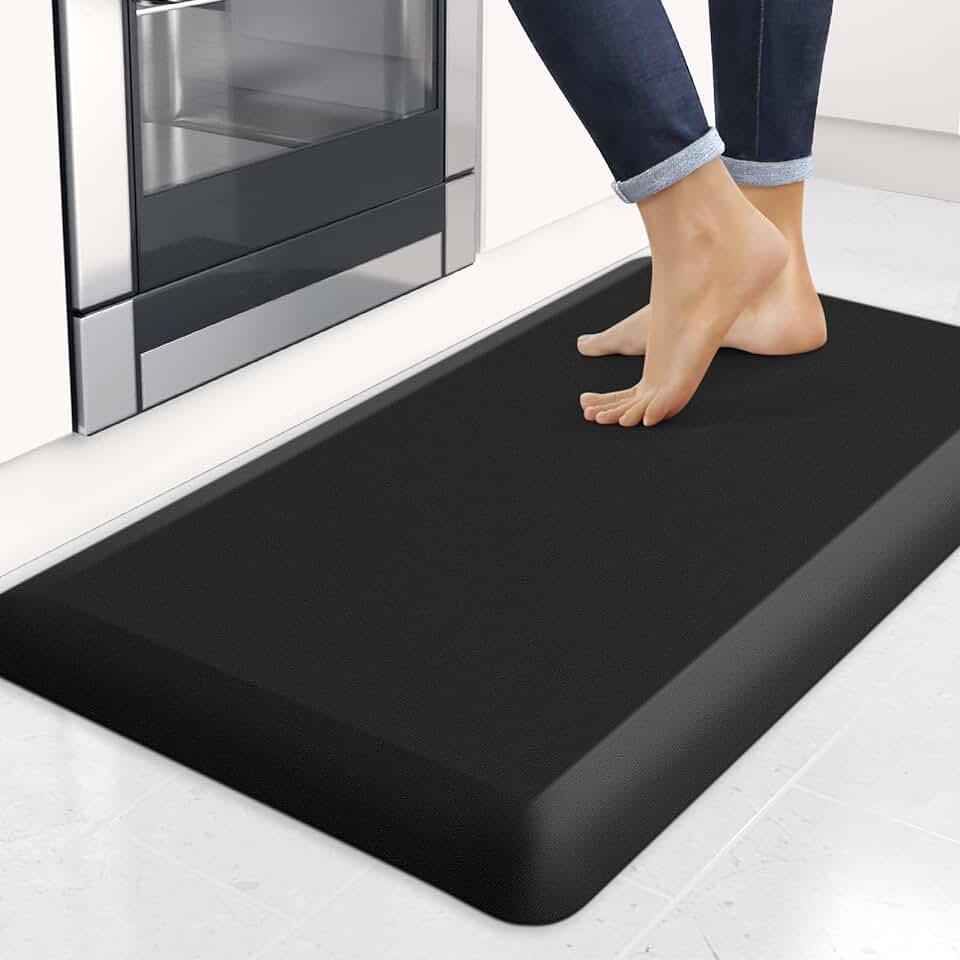
Flat mats offer uniform cushioning across the entire surface. They are typically 0.75 to 1 inch thick and provide consistent support for users who stand in a relatively fixed position. They tend to feel immediately comfortable right out of the box.
The downside is that flat mats offer less encouragement for movement. Over a long workday, you may find yourself standing in the same spot without realizing it, which reduces the circulatory benefits. There is also a quality gap that matters enormously here. Cheap foam mats compress and lose their cushioning within months, while quality polyurethane flat mats maintain their support for years.
Top flat mat options in 2026 include the GelPro Eco Pro, which earns an 83 out of 100 rating and is made from 100% USA-produced polyurethane that provides firm cushioning without bottoming out. The WellnessMats line also stands out for consistent 6 to 10 hour support due to its 100% polyurethane construction.
Terrain Anti-Fatigue Mats
Terrain mats feature contoured surfaces including slopes, raised areas, and textured zones that encourage your feet and legs to shift positions naturally throughout the day. Instead of standing static, you find yourself unconsciously moving, stretching, and redistributing weight.
This design directly addresses the root cause of standing fatigue. Users who spend six or more hours at a standing desk consistently rate terrain mats higher for all-day comfort. The tradeoff is a slightly higher price and a brief adjustment period as your body gets used to the uneven surface.
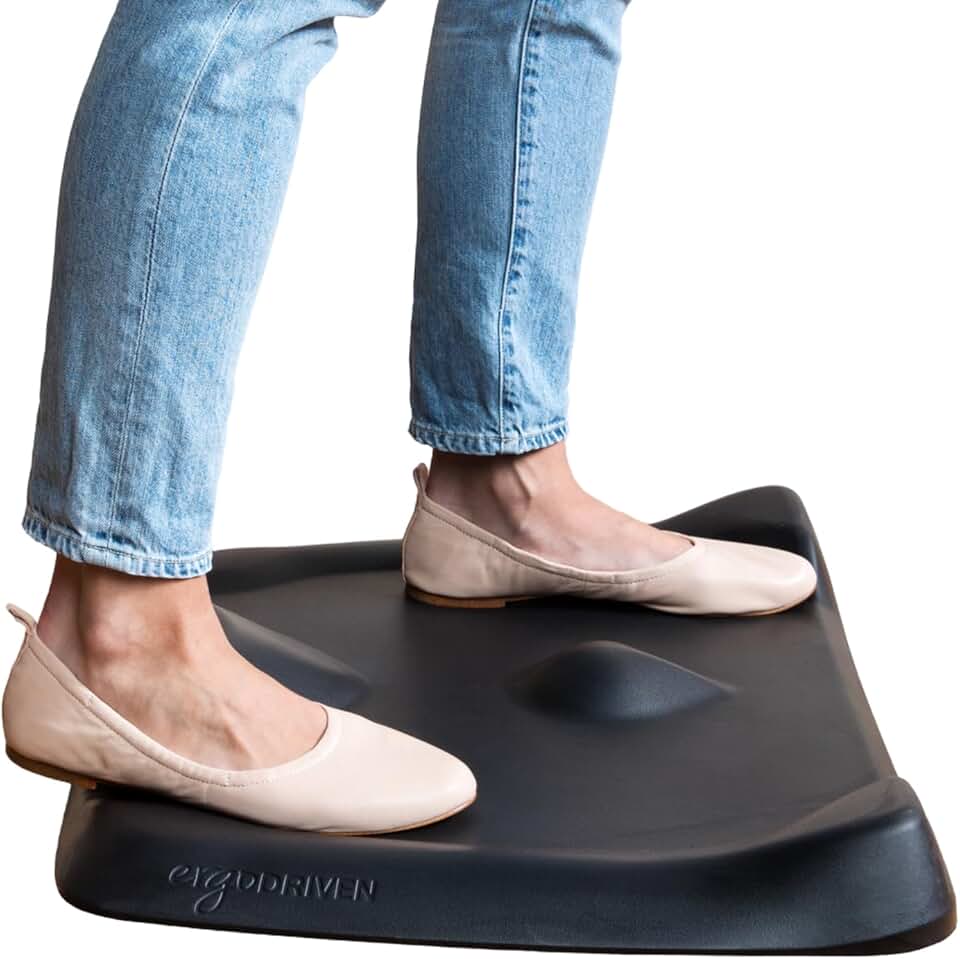
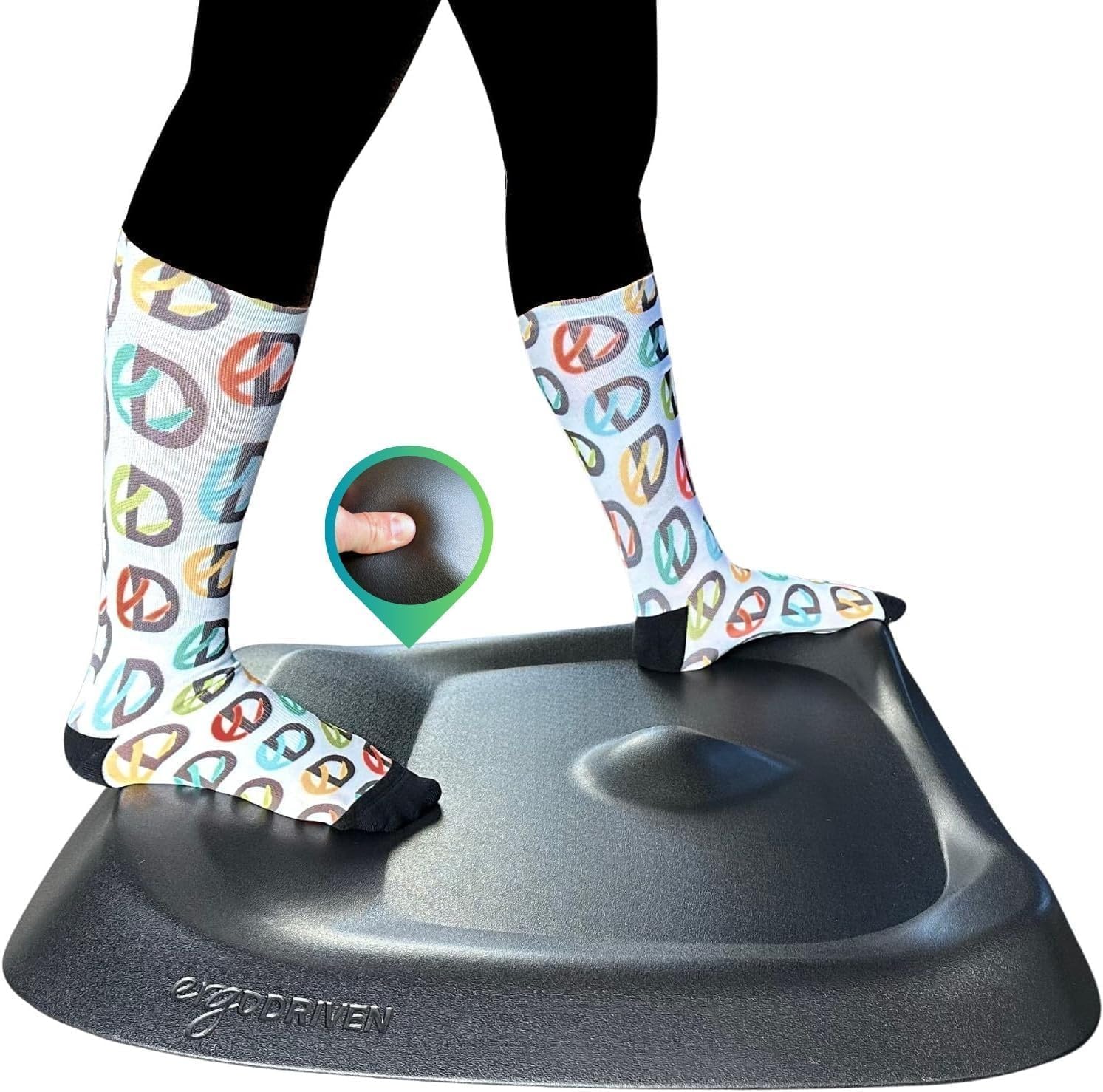
The Ergodriven Topo is the top-rated terrain mat available in 2026. Its varied slopes, slants, and raised surfaces actively encourage position changes, reducing pressure on heels, the lower back, and legs. Beveled edges make it easy to step on and off. The CubeFit TerraMat earns a close 81.4 out of 100 and provides terrain-like contours for better foot engagement and stability throughout long sessions.
For users standing four or more hours daily, a terrain mat is the smarter long-term investment.
How to Choose the Right Thickness
Thickness is one of the most misunderstood specs when shopping for a standing desk mat. More is not always better.
0.5 to 0.75 inches is the entry-level range. These mats provide basic cushioning for lighter use sessions of one to two hours. Foam mats in this range tend to compress fairly quickly under regular use. They work for occasional standing but are not built for full-day use.
0.75 to 1 inch is the sweet spot for most standing desk users. This thickness balances genuine cushioning with enough stability to avoid the wobbly or unstable feeling that very thick mats can produce. The GelPro Eco Pro and WellnessMats both fall in this range and represent the best value for everyday use.
1 inch and above is the maximum cushioning range. Extra-thick mats like the FEATOL offer intense underfoot comfort, but some users find the softness creates a slight instability that can increase ankle fatigue over time. If you are on your feet for six to eight hours daily, test your comfort level with standard thickness before going thicker.
Material matters as much as thickness. Polyurethane holds its shape and support profile far longer than foam or gel. A 0.75-inch polyurethane mat will outperform a 1-inch foam mat six months down the road.
Top Anti-Fatigue Mats for 2026
Ergodriven Topo
Best overall for active standing desk users. The Topo features a carefully designed terrain landscape with multiple zones for standing, leaning, and stretching. Its varied topography makes it nearly impossible to stand static for long, which is exactly the point. Beveled edges prevent tripping and make transitioning between sitting and standing smooth. This is the mat to buy if you stand for four or more hours daily and want the most fatigue reduction available.
CubeFit TerraMat
Best non-flat mat for users who want terrain features with a slightly lower profile. Rated 81.4 out of 100 in independent testing, the TerraMat provides terrain-like contours that engage the feet and promote stability. It suits users who want the benefits of movement encouragement without the more dramatic topography of the Topo.
GelPro Eco Pro
Best flat mat overall. Rated 83 out of 100 and manufactured entirely in the USA from 100% polyurethane, the Eco Pro delivers firm, consistent cushioning that does not bottom out under sustained pressure. It is an excellent choice for users who prefer a flat surface or who stand in a more stationary position.
WellnessMats
Best flat mat for heavy daily use. WellnessMats builds its entire product line around 100% polyurethane construction specifically chosen to resist compression under 6 to 10 or more hours of daily use. If longevity is your top priority, WellnessMats is hard to beat.
AmazonBasics Anti-Fatigue Mat
Best budget flat mat. For users who are new to standing desks and want to try an anti fatigue mat before committing to a premium option, the AmazonBasics mat provides solid cushioning, good non-slip stability, and reasonable comfort at a low price point. It is not built for all-day sessions but works well for one to three hour standing periods.
Ergodriven Topo vs. ComfiLife
ComfiLife mats appear frequently in search results but are not among the top-rated options in 2026 testing. The primary reason is material compression. ComfiLife uses a gel and foam construction that tends to flatten under sustained daily use, which reduces its support profile noticeably within the first few months.
The Ergodriven Topo, by contrast, maintains its shape and terrain features over long-term use. For sessions under two hours, ComfiLife is comfortable and affordable. For anyone using a standing desk as a regular part of their workday, the Topo is the significantly better investment. Its terrain design also allows for leg crossing, shifting positions, and varied stances that a flat gel mat simply cannot replicate.
What to Look for Beyond Thickness and Type
Non-slip backing is non-negotiable. A mat that slides on hard floors is a safety hazard and an annoyance. Look for rubberized backing designed specifically for hardwood or tile.
Beveled or tapered edges reduce the risk of tripping when stepping on and off the mat. This is especially important for terrain mats with raised surfaces. The Ergodriven Topo specifically engineers its edges with this in mind.
Size matters for your specific workstation. Standard mats range from 20 by 32 inches up to 20 by 48 inches. Larger mats give you more room to shift and step, which pairs well with terrain designs. Measure your usable floor space before buying.
Cleaning and maintenance is worth checking. Polyurethane mats are generally easier to wipe down and more stain resistant than foam. If you work in an environment where spills are possible, prioritize a mat with a wipeable surface.
Warranty signals manufacturer confidence. Premium mats from brands like WellnessMats and Ergodriven typically offer multi-year warranties, which reflects the expected lifespan of their materials.
Who Should Buy Which Mat
If you are new to standing desks and standing fewer than two hours daily, start with the AmazonBasics mat or a flat entry-level option. It gives you a low-cost way to experience the benefit before upgrading.
If you stand three to five hours daily, the GelPro Eco Pro is the most well-rounded choice. Its firm polyurethane construction holds up over time and the flat surface is universally comfortable.
If you stand five or more hours daily, skip directly to the Ergodriven Topo. The terrain design will make a measurable difference in how your legs and back feel at the end of a full workday.
If you prioritize longevity above all else, WellnessMats offers the most proven track record for maintaining support under heavy daily use.
Final Thoughts
The best anti fatigue mat for your standing desk in 2026 is the one matched to how long you actually stand. Terrain mats like the Ergodriven Topo lead for all-day use, while quality flat polyurethane mats like the GelPro Eco Pro serve stationary or shorter-session users extremely well. Avoid cheap foam mats if you plan to stand regularly. The compression problem is real and it happens faster than most buyers expect.
Invest in the right mat from the start and your standing desk setup will actually deliver the health and productivity benefits it promises.