Build Quality
The Dardoo G29 cockpit uses 50x50mm alloy steel square tubing throughout the main frame, connected via four-hole flange joints rather than the cheaper clamp-and-bolt systems found on plastic-hybrid rigs at this price point. The variant shipped for review weighs 94.47 pounds, which is meaningfully heavier than the Playseat Challenge at roughly 26 pounds - that mass is structural, not incidental. Pre-drilled panels for direct drive wheels are present from the factory, a feature that typically appears on rigs starting at $500 from brands like Next Level Racing or Sim-Lab.
The honest caveat: Dardoo's marketing language calls the frame "4x more stable" without citing a test methodology, and no independent lab or publication has published destructive or fatigue testing as of mid-2026. The steel gauge, weld quality, and powder coat adhesion are unverified outside of manufacturer claims. Buyers accepting that risk at $290 are getting a reasonable gamble. Buyers who need certainty should look at Sim-Lab P1-X at $549 or wait for more community data.
Comfort & Ergonomics
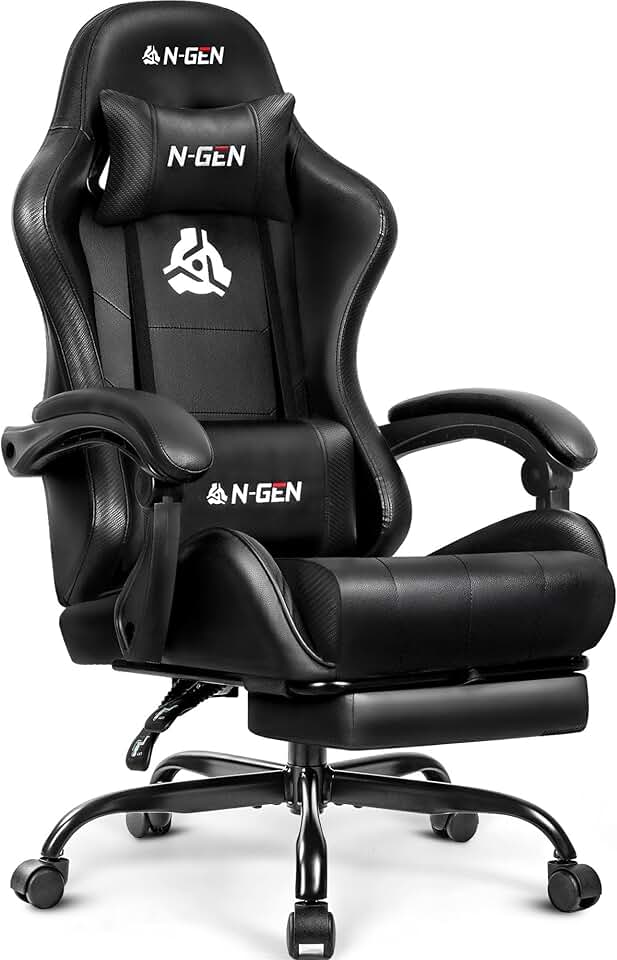
The seat reclines from 90 degrees upright to a full 180 degrees flat, which covers everyone from the F1-style upright posture to the GT recline most players actually use. Neck and lumbar pillows are included in the base price - not sold separately. Dual-rail seat sliding adjusts fore-aft distance, and height adjustment is listed as a separate axis, meaning tall drivers above 6'2" and shorter drivers under 5'6" should both find a workable position without purchasing extension kits.
For long sessions - defined here as 2-plus hours - the combination of recline range and lumbar support puts this cockpit ahead of the Playseat Challenge, which has no lumbar pillow and a fixed recline angle. The seat itself is a bucket-style unit; it is not swappable with aftermarket racing seats unless you fabricate a custom mount, which Dardoo's DIY punching support partially enables.
Adjustability
The wheel platform uses a two-stage adjustment system covering both height and forward tilt angle. The pedal platform adjusts for angle and longitudinal position. The shifter mount accepts left or right side placement and moves forward or backward along the rail - a meaningful detail for left-hand-drive sim setups or handbrake placement. All adjustments use tool-required bolts rather than tool-free levers, which is slower to change but more stable under load.
The cockpit is pre-drilled for direct drive wheel bases, meaning Fanatec DD1, DD2, Moza R9, and similar units bolt on without a drill. Upgraded variants at $349.99 to $403.99 add single or triple monitor stand mounts to the same base frame, so if you plan to add screens later, buying the monitor stand version upfront avoids a second purchase.
Assembly
No independent assembly time data exists in published reviews as of 2026. The frame uses four-hole flange connections throughout, which are self-aligning and generally faster to assemble than multi-bolt clamp systems. The 94.47-pound shipping weight suggests significant parts count. Dardoo lists DIY punching support in the specs, implying some buyers will need to drill or modify panels for non-standard wheel bases. Expect 2 to 4 hours for first-time assembly based on comparable steel frame cockpit build reports from competing brands.
Value for Money
At $290 on dardoo.net, the Dardoo G29 cockpit is priced $59 below the Next Level Racing GTtrack ($349) and within $9 of the Playseat Evolution Pro ($299). The Dardoo wins on adjustability range and direct drive compatibility at this price. The Playseat wins on documented reliability and brand history. The Next Level Racing GTtrack adds a more refined seat and better cable management but costs 20% more.
The $249.99 price point appears in promotional copy but is not the actual checkout price at any major retailer as of mid-2026. Budget $290 to $330 for the base unit and an additional $60 to $110 if you want the monitor stand included. Add peripherals separately: a Logitech G923 runs $399, a Thrustmaster T248 runs $249, and a Fanatec CSL DD starts at $349. The cockpit is the smallest line item in a complete sim rig build, which puts its value in perspective.