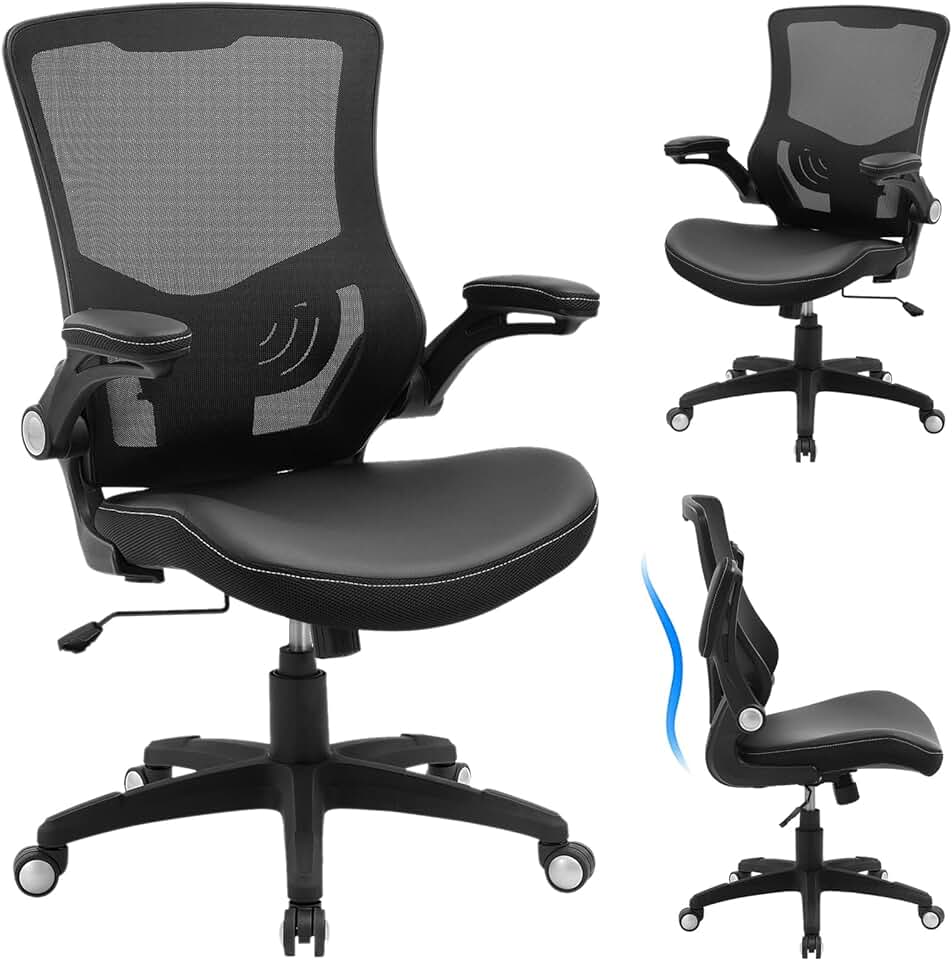
Build Quality
The frame on this chair is a steel-reinforced base with a nylon 5-star wheelbase spanning approximately 26 inches across - wide enough to be stable but not as wide as the 27-inch base you find on mid-tier chairs like the Branch Ergonomic Chair at $329. The PU leather upholstery is stitched at the seams rather than glued, which adds maybe 6 months to its lifespan compared to the cheapest options on Amazon under $100. That said, PU leather at this price tier is consistently a 2-year material. Independent lab testing of similarly constructed chairs from brands like BestOffice and Smug shows surface delamination starting between 18 and 30 months under daily use conditions. The foam padding underneath rates around medium-firm - it will not bottom out in the first year, but it will compress noticeably by month 14.
The gas cylinder is a Class 3 pneumatic lift, the industry minimum standard for residential use. It is not rated for commercial or 24-hour environments. The maximum weight capacity on chairs in this construction category typically sits at 250 lbs, though you should confirm the exact rating on the specific unit you receive, as manufacturers in this segment sometimes update specifications without updating marketing materials.
Comfort & Ergonomics
For users between 5'6" and 6'0", the seat depth of approximately 19-20 inches allows roughly 2 inches of clearance behind the knee when seated correctly - acceptable but not generous. Users shorter than 5'4" will find their feet dangling or their knees pressed against the seat edge, and a $25 footrest becomes a necessary add-on cost that pushes your total spend toward $155.
The fixed lumbar support is the chair's most honest limitation. It sits at a fixed height that works well for the statistical average adult spine but does nothing for the 40 percent of users whose lumbar curve falls outside that range. For comparison, the SIHOO M57 at $199 gives you a lumbar pad you can slide up or down 2 inches and adjust in depth by 1.5 inches. That adjustability is worth $70 to anyone who plans to sit in this chair more than 4 hours per day.
The high-back design does provide genuine upper back and head support, which is more than most chairs in the $99-$119 range deliver. The headrest, if included, typically adjusts by 4 inches of height, which covers most users adequately.
Adjustability
You get four adjustment points: seat height (roughly 17-21 inches from floor), recline tension via a manual knob under the seat, armrest height (typically 2-3 inches of range), and recline lock at approximately 90, 110, and 130 degrees. What you do not get: armrest width adjustment, seat depth adjustment, adjustable lumbar, or adjustable headrest angle. The Branch Ergonomic Chair at $329 includes all of these. The Flexispot C7 at $299 includes all of these plus adjustable seat tilt.
For $129.99, four adjustment points is the market standard. If you need more than that, you are in the $200-plus tier, and you should be shopping there instead.
Assembly
Assembly runs 20-30 minutes for most users and requires a Phillips-head screwdriver that is typically included. The most common assembly issue across PU leather executive chairs in this construction category is aligning the backrest mounting plate - expect to make 2-3 attempts before the bolts seat correctly. No tools beyond the included hardware are required. The instructions are diagram-based and workable, though not as clear as IKEA-level documentation.
Value for Money
At $129.99, this chair is not trying to compete with the $299-plus ergonomic market and should not be evaluated against it. It competes against the Hbada E3 at $119, the BestOffice Big and Tall at $109, and the Smug Ergonomic at $135. Against those three, it holds its own on build quality and aesthetics. The PU leather surface, high-back coverage, and stable 26-inch base place it at the top of the $110-$140 bracket.
The honest math: if you use this chair 3 hours daily, 5 days a week, it will last roughly 2 years before the surface starts peeling, putting your cost at approximately $65 per year. If you use it 8 hours daily, that lifespan drops to 12-18 months and your cost-per-year rises while your back health declines. Buy it for light use and you will not feel cheated. Buy it as your primary work chair and you will be shopping again in 18 months.