Build Quality
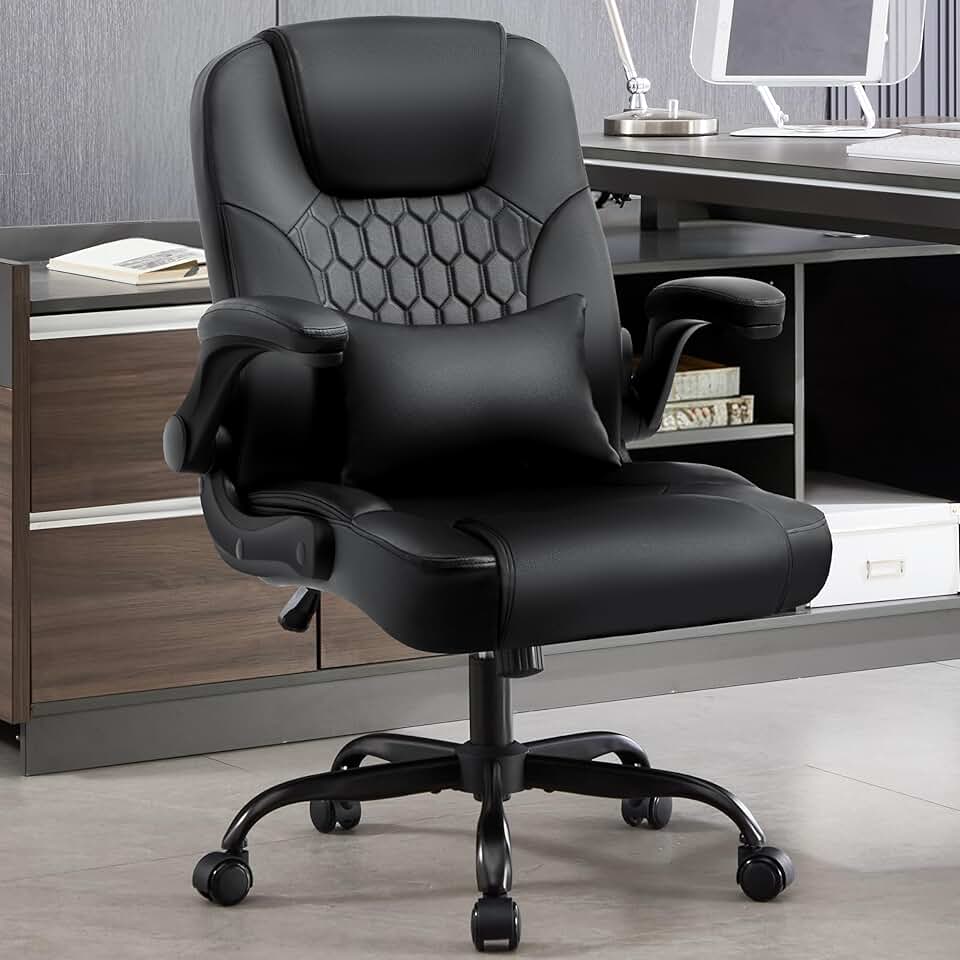
The PU leather on this chair will look sharp on day one and on day 90. By month 8-10 under daily use, expect surface cracking to begin at the seat edges and armrest joints - this is not a flaw unique to this chair but a material reality of PU at the $103.99 price point. Comparable chairs from BestOffice ($120-$200) and Amazon Basics HOC-02 ($100-$150) show identical degradation timelines in aggregated reviews. The stitching quality on 2026 production runs is an improvement over 2025 models, which prioritized aesthetics over seam integrity, but it remains a weak point around the lumbar panel. The frame holds up better than the upholstery - gas lift failures are occasional rather than systemic, but check your unit within the 30-day return window by fully loading the seat and testing height lock under sustained pressure.
Comfort & Ergonomics
This is where the chair earns its price tag for the right buyer. The lumbar support is positioned approximately 7-9 inches above the seat pan, which aligns correctly with the natural lumbar curve of users in the 5'2"-5'8" height range. Taller users - anyone over 5'9" - will find this support pressing into the mid-back rather than the lower lumbar, which defeats its purpose entirely. The seat cushion measures approximately 20-21 inches wide and supports average builds up to around 250 lbs with acceptable density. Cushion flattening is documented at the 6-month mark on comparable models, so if you're logging 6+ hours daily, add a $20-$30 seat cushion pad to your budget from day one. For 3-4 hour sessions, the out-of-box comfort is genuinely competitive with chairs priced $60-$80 higher.
Adjustability
Standard pneumatic height adjustment covers the range needed for most short-to-average users - pair this with a desk set between 28-30 inches and you'll land in a neutral wrist position. Tilt tension adjustment is present, though the tilt lock mechanism on chairs in this class is less precise than what you get from the SMUG MIC-718-BK ($150-$250), which reviewers consistently praise for a more positive tilt lock click. Armrests adjust for height but not for width or pivot angle, which limits customization for users with broader shoulders or those who prefer an outward angle during typing. If armrest positioning is a priority for your ergonomic setup, budget up to the Eureka Ergonomic Regal at $189-$269, where the armrest system is meaningfully more refined.
Assembly
Expect 25-40 minutes for assembly with two people. The instruction manual is functional but not intuitive - the gas lift cylinder and base connection is the step most likely to cause confusion, and forcing it misaligned is how gas lifts get damaged before first use. YouTube assembly walkthroughs for chairs in this category save time and protect the mechanism. Hardware is included and adequately labeled. The armrest bolts are the component most frequently reported as under-torqued from the factory - tighten them an additional quarter-turn beyond where they feel snug.
Value for Money
At $103.99, this chair occupies a legitimate niche: short-person ergonomics at a price point where most competitors default to one-size-fits-average sizing. The Amazon Basics HOC-02 at $100-$150 gives you similar PU construction with none of the height-specific calibration. The Furmax OCNC7510 at $100-$180 is a stronger value for users who just need the cheapest functional chair and aren't prioritizing lumbar positioning. But for a user under 5'8" who's been frustrated by lumbar support that hits the wrong vertebrae, this chair's specific proportioning is worth the $103.99 ask. Factor in likely replacement at 12-18 months under regular use, and your annual chair cost is roughly $70-$104 - acceptable for a home office supplementary setup, less acceptable as your primary workstation investment.