Build Quality
The mat measures 32 inches wide by 20 inches deep and sits 3/4 inch off the floor - standard dimensions for a single-person standing workstation. The polyurethane foam core is the structural foundation here, and at this price tier it performs adequately for the first 6-8 months. The surface material resists light liquid spills and wipes clean with a damp cloth, which matters if you're eating lunch at a standing desk. The non-slip base grips hardwood and tile without adhesives or anchors, and it doesn't shift during normal weight transfers. However, the foam density is visibly softer than the GelPro Eco Pro's construction - you can compress this mat noticeably with a thumb press, which is a rough indicator that heavier users will exhaust the rebound faster.
The beveled edges are one of the genuinely useful construction choices. The slope is gradual enough that stepping onto the mat from a standing position doesn't create a trip hazard, and the edge doesn't curl or lift after repeated step-ons the way cheaper $30 mats do within the first month. The stitching or bonding at the perimeter is clean out of the box, though long-term edge durability beyond 18 months is an open question at this foam density.
Comfort and Ergonomics
For flat-surface mats, this one does its job. Standing on it for 3-hour sessions on a concrete floor reduces heel and arch fatigue compared to standing directly on the surface - this is the core promise and it delivers. The flat surface is both a feature and a limitation: it's predictable and stable, meaning users who shift weight constantly or wear orthotics won't feel destabilized. But it also provides zero encouragement for the micro-movements - heel raises, weight shifts, toe presses - that reduce lower back and calf fatigue over 5+ hour sessions.
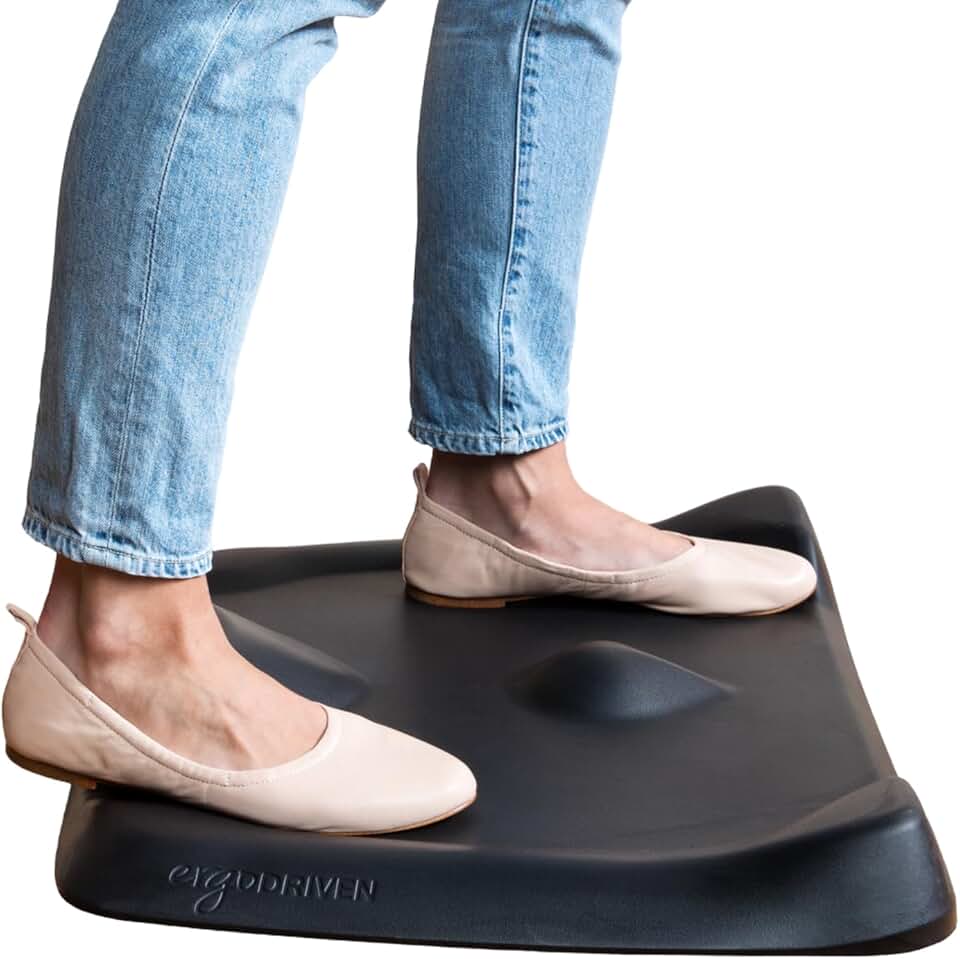
For comparison, the Ergodriven Topo's raised contour islands actively prompt small foot adjustments every few minutes, which research in occupational ergonomics consistently links to lower fatigue scores over 4+ hour standing periods. If you stand for fewer than 3 hours daily, this difference is largely academic. If you stand for 5+ hours, the flat surface here becomes a real ergonomic limitation by hour four.
Adjustability
There is no adjustability in this product - it is a static foam mat. No interchangeable inserts, no removable arch support zones, no modular sections. This is standard for the category under $100. The 32x20 footprint is fixed, so if your standing area is narrower than 20 inches deep you may find yourself stepping off the back edge during backward weight shifts. Some users pair this mat with a separate footrest block for heel elevation during long sessions, which adds cost but improves lumbar positioning significantly.
Assembly
No assembly required. Remove from packaging, unroll, place on floor. The mat may have a slight curl from shipping packaging for the first 24-48 hours. Laying it flat overnight with light books on the corners resolves this. No tools, no adhesive strips, no anchoring hardware.
Value for Money
At $79, this mat costs $4 less than the FlexiSpot MT1B and approximately $20 less than the GelPro Eco Pro. Against the FlexiSpot, it's a marginal win on cushion feel for flat-surface users. Against the GelPro, you're trading durability and foam density for the price difference - a reasonable trade for users under 180 lbs with moderate standing habits.
The honest framing: $79 is not a budget price, and at $79 you should be getting a mat that lasts 2+ years under daily use. Based on foam density alone, that longevity is not guaranteed for heavier users or high-volume standerers. If you're under 175 lbs and standing 2-3 hours daily, you'll likely get 18-24 months of useful life from this mat. If you're heavier or standing more, add $5 and buy the Ergodriven Topo - or save up $20 more and get the GelPro Eco Pro's denser foam construction.