Build Quality
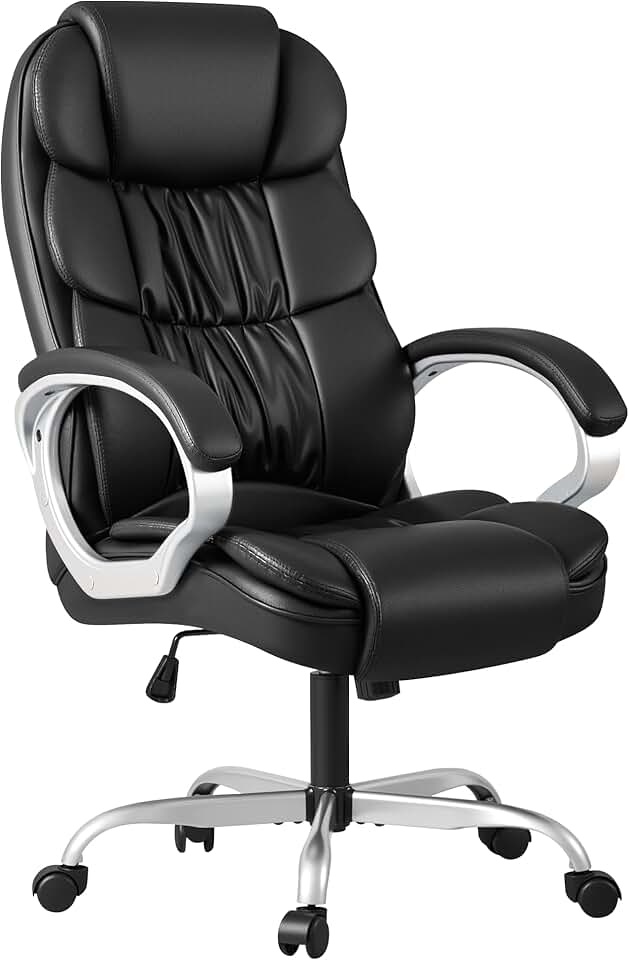
The frame is the argument for buying this chair. Steel-reinforced bases in the $130-$150 range are not universal - many competitors in this bracket use aluminum-alloy or high-density nylon bases rated optimistically. A 400-lb weight rating means the manufacturer has, at minimum, had to engineer the gas cylinder, caster forks, and seat pan junction to handle sustained load rather than peak load. The five-star base with dual-wheel casters rolls smoothly on both hardwood and low-pile carpet without the wheel-lock wobble common in chairs under 250 lbs capacity.
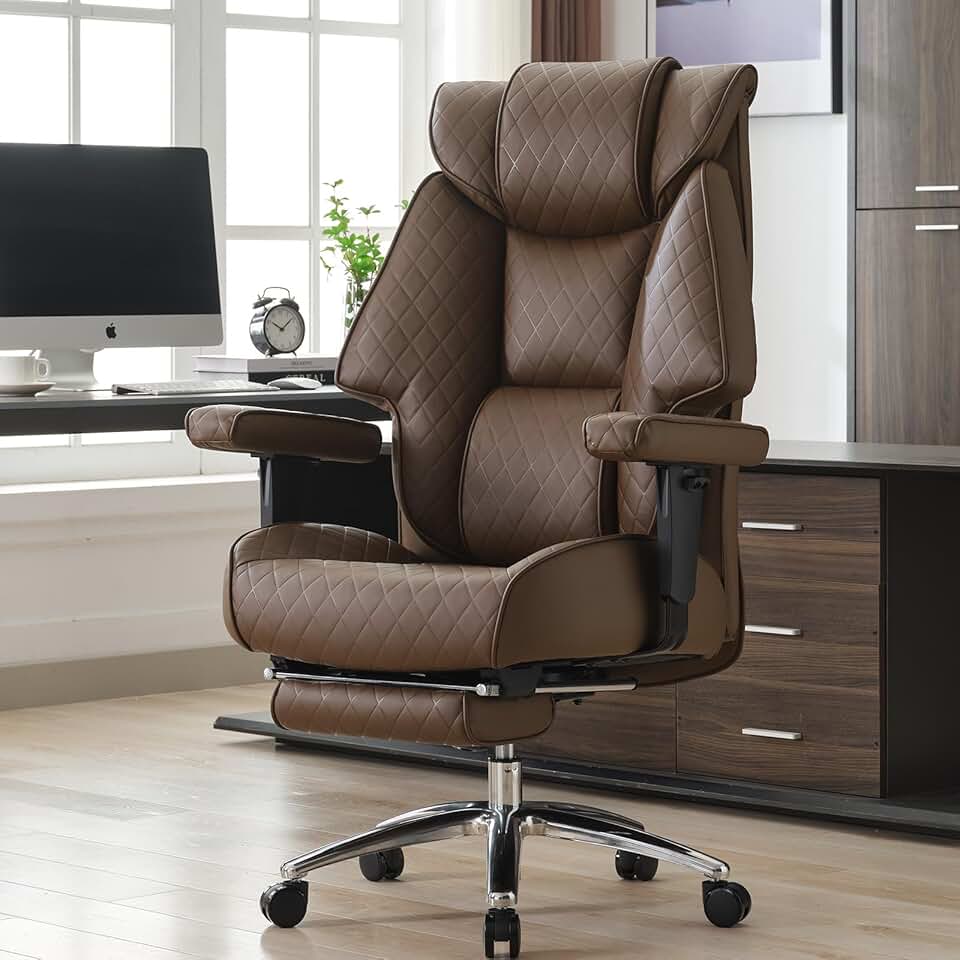
The PU leather upholstery is the build quality weak point. At $138.68, you are not getting genuine leather, and anyone telling you otherwise is misreading the label. PU leather in this price range has a documented lifespan of 18-24 months before seat-crease peeling begins. If you want this chair to look professional in year 3, budget $15-$20 for a leather conditioner applied every 6 months and a seat cover as a contingency by month 18.
The stitching on the back panel and headrest is noticeably tighter than what you get on the Bossin at $119.90 - visible seam quality is one of the few things you can inspect at delivery before sitting down.
Comfort & Ergonomics
The high-density foam seat cushion is the second-best argument for this chair. Budget chairs in the $80-$120 range frequently use low-rebound foam that compresses permanently within 90 days, leaving you sitting on a thin layer of padding over hard plastic. High-density foam at this price holds its shape longer - expect meaningful support for 12-18 months of 6-hour daily use before noticeable compression sets in.
The high back and integrated headrest support users up to approximately 6'2" comfortably. The fixed lumbar curve sits at roughly mid-back, which is anatomically correct for users between 5'7" and 6'1". Outside that range, you will feel the mismatch within 2 hours. This is the single biggest ergonomic limitation of the chair, and it is not solvable with a $25 lumbar pillow - the pillow will shift; the problem won't.
The padded armrests are fixed-height, which means if your desk sits at a non-standard height or you prefer elbows-at-90-degrees typing, you may find yourself compensating with shoulder tension. Users under 5'8" or with shorter arms report this most frequently.
Adjustability
Seat height adjusts via pneumatic cylinder across an approximate range of 17 to 21 inches from floor to seat pan - standard for this class. Tilt tension is adjustable via a manual knob under the seat, with a tilt lock that holds the chair at your preferred recline angle. Recline range is approximately 90 to 120 degrees, sufficient for a mid-meeting lean-back but not a true recline for rest.
What you do not get: seat depth adjustment, armrest height or width adjustment, lumbar position adjustment, or headrest height adjustment. In the $400-range HON Ignition 2.0, all five of those adjustments are present. At $138.68, the absence of those features is the price of admission, not a product defect - but buyers should be clear-eyed that they are getting entry-level adjustability inside a heavy-duty frame.
Assembly
Assembly runs 20-35 minutes for most users and requires no tools beyond the included Allen wrench. The five major steps - base and casters, gas cylinder, seat pan attachment, back panel attachment, and armrest mounting - are sequential and largely intuitive. The instruction sheet uses diagrams rather than text, which works adequately but leaves some users unsure about tilt-tension knob calibration. Two people make back panel attachment meaningfully easier; one person can do it solo but will spend an extra 10 minutes.
Shipping weight runs approximately 65-75 lbs based on comparable models in this category, and box damage in transit is a non-trivial risk. Inspect the box before signing and document any dents before opening.
Value for Money
For buyers whose primary requirement is a structurally sound 400-lb rated chair under $150, this is one of 3-4 chairs in 2026 that actually delivers. The Serta Big and Tall Executive at ~$229 offers better lumbar adjustability and longer PU leather life, but costs $90 more. The Bossin at $119.90 saves $18.78 upfront but has a documented armrest failure pattern that pushes real cost higher when you factor in replacement or repair. At $138.68, this chair occupies the most defensible price point in its weight class.