Build Quality
The frame handles 600 lbs, which is a structural claim that matters more than any upholstery detail on this chair. The seat shell measures 23 inches deep by 21.2 inches wide - for reference, a standard office chair runs 17-18 inches wide. The backrest hits 30 inches tall and 22 inches wide. These are not "generous" dimensions; they are the minimum dimensions a 300-400 lb user needs to avoid sitting half-off their chair.
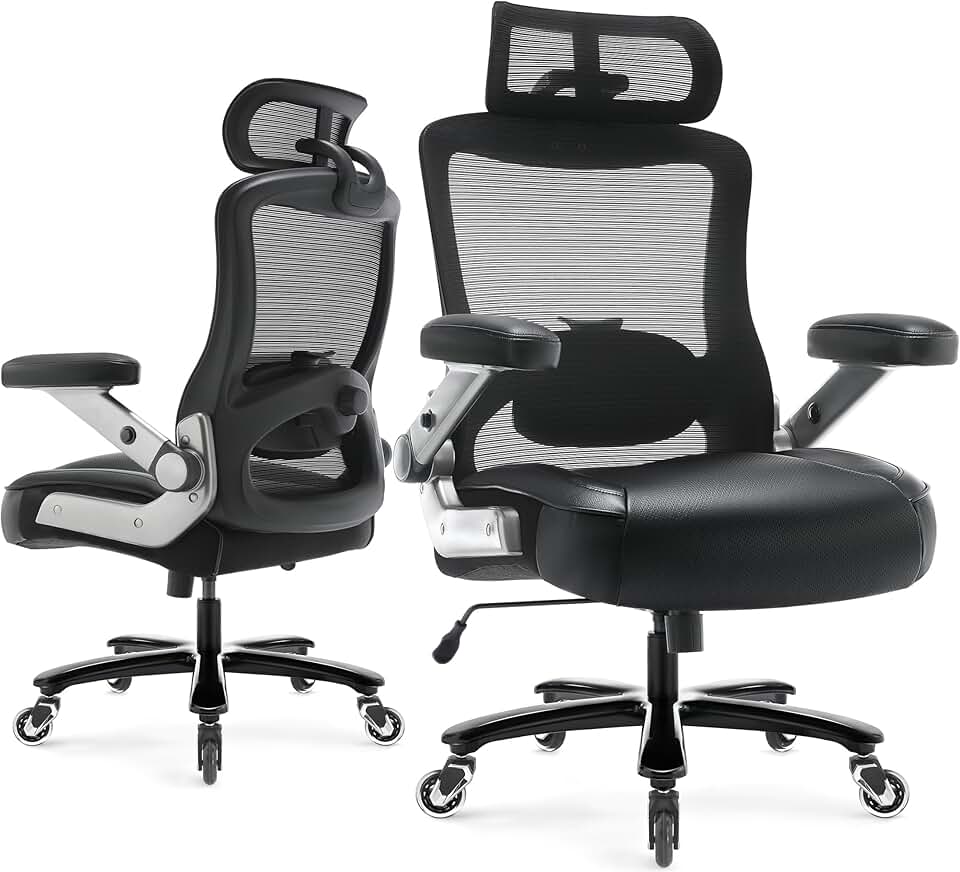
The 2mm PU leather is the one area where the build tells you this is a $229 chair and not a $500 chair. It looks the part of an executive chair and wipes clean easily, but 2mm is thin. Genuine leather executive chairs at $450+ run 3-4mm. Expect surface wear at the front seat edge within 18-24 months of heavy daily use. The quiet rubber caster wheels are a genuine improvement over the hard plastic wheels on cheaper alternatives, protecting hardwood floors without the drag of felt pads.
Comfort & Ergonomics
The 6-inch thick seat cushion is the comfort headline. Most big-and-tall chairs in this price range use 3-4 inches of medium-density foam that compresses to 2 inches under sustained 400+ lb loads. The pocket spring layer underneath the foam in several variants of this chair changes that equation - springs do not compress the same way foam does, which means hour 7 feels closer to hour 1 than in a foam-only chair.
The inflatable lumbar support is adjustable via a hand pump, which sounds gimmicky but is genuinely more precise than the fixed or slider-only lumbar pads on the FlexiSpot C3 and L4. You can add or release pressure in small increments until the support sits exactly at your L3-L5 vertebrae. Tall users over 6'2" will appreciate the 30-inch backrest reaching their upper back rather than stopping at shoulder-blade level.
Heat is a real issue. The PU leather surface does not breathe. In a room above 72°F without air conditioning, expect noticeable warmth buildup at the back and thighs within 90 minutes. This is not a flaw unique to this chair - it is the trade-off for PU leather's durability and wipe-clean surface over mesh.
Adjustability
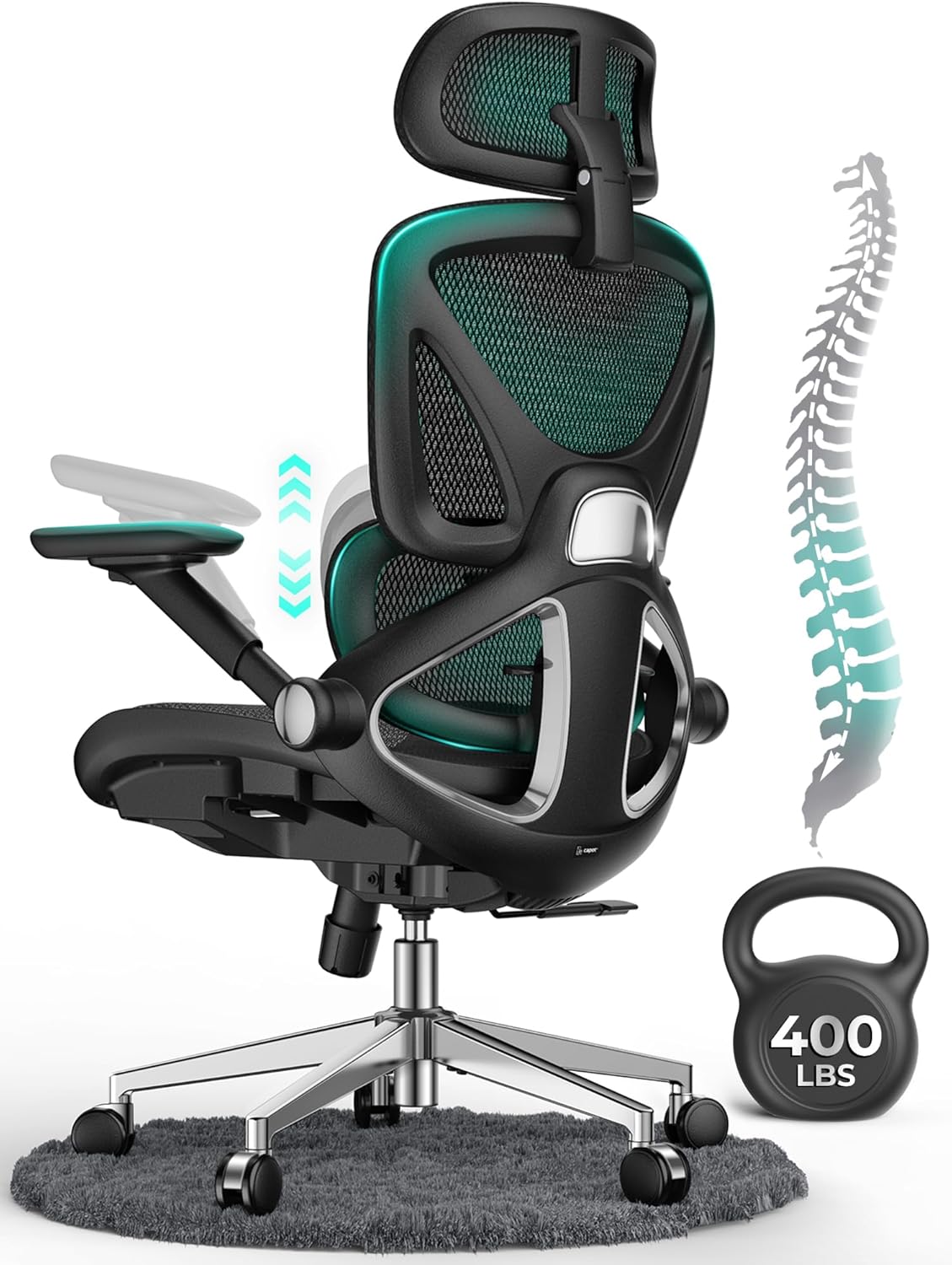
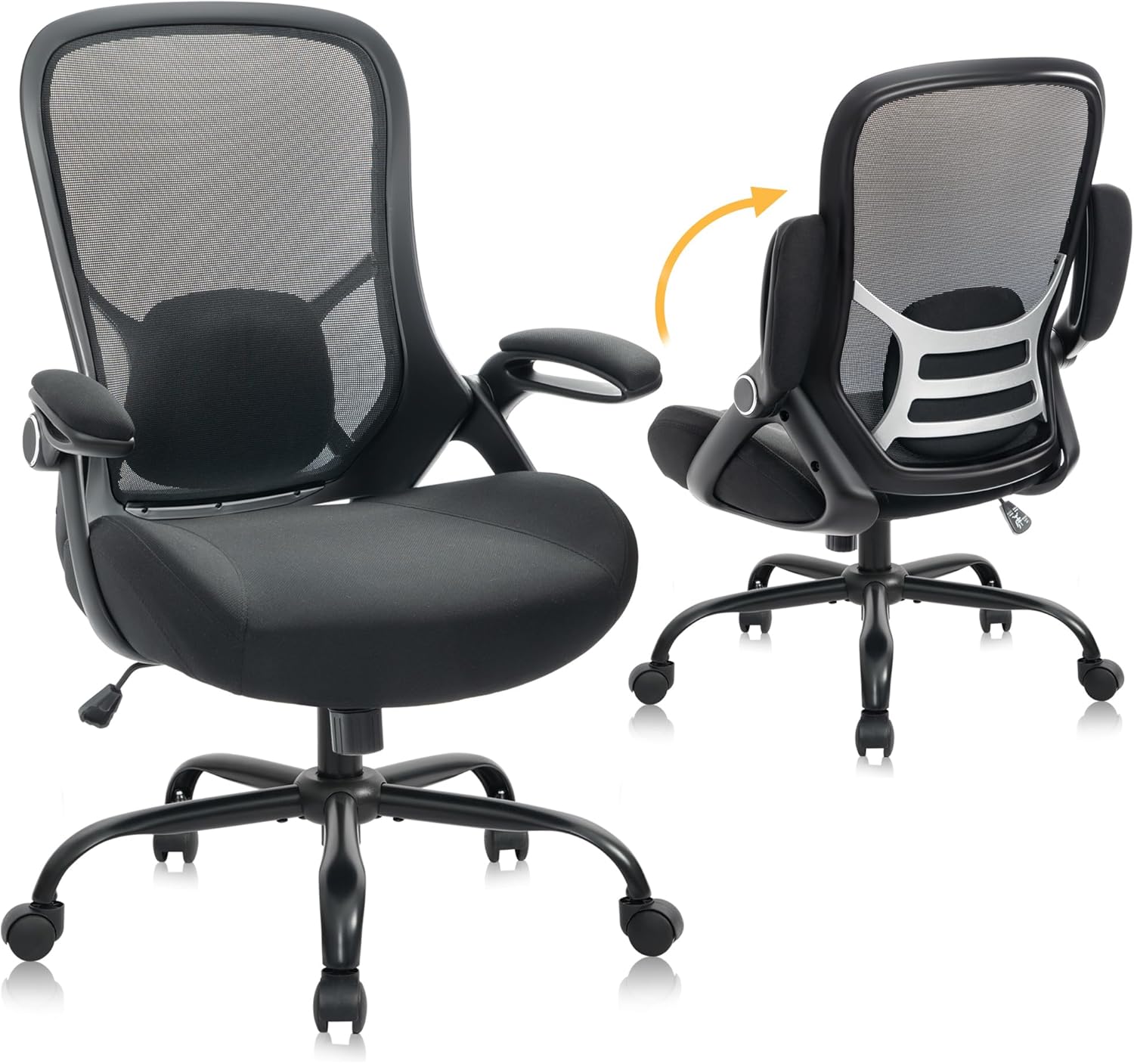
The flip-up armrests are the most practically useful feature on this chair. They rotate 90 degrees upward and lock, clearing desk edge and wheelchair transfer space. Beyond flipping, each armrest adjusts vertically up and down, rotates 360 degrees, and slides forward and back. That is 4 axes of armrest movement at a $229 price point. The FlexiSpot L5 at $229.99 does not match this armrest specification.
Seat height adjusts via standard pneumatic lift. Rear tilt recline engages with a tension knob. These are table-stakes adjustments, but they work without the stiffness complaints that plague cheaper pneumatic cylinders. The cylinder itself is rated for 600 lbs, which is the component that fails first on undersized chairs used by heavier individuals.
Assembly
No independent assembly time data was available at publication. Based on the component count (base, cylinder, seat, back, armrests, headrest if included), plan for 45-60 minutes with two people. The chair ships heavy - a 600 lb rated steel frame and dense cushioning add up. Clear floor space before unboxing. No complaints about missing hardware surfaced in early 2026 user reports, but verify all bolts before your first sit.
Value for Money
The $229.49 street price is competitive against the only meaningful comparison point: the FlexiSpot L5 at $229.99, which carries a lower weight capacity at essentially the same price. The FlexiSpot C3 at $199.99 saves you $30 but is genuinely lighter-duty and mesh-only. If you are a 600 lb user, $30 is not the deciding factor - structural capacity is. This chair is the value choice in its weight class because it is nearly the only choice in its weight class below $280.