Office ChairJudge
CAPOT Ergonomic Mesh High Back Chair
CAPOT

CAPOT Ergonomic Mesh High Back Chair

400-pound capacity ergonomics under $200 - the big-and-tall sweet spot

Judge Score4.3/5
Check on Amazon →
In Stockheavy-duty
Check Price on Amazon

Reviewed by Michael York, Lead Reviewer at Office Chair Judge

Best for: A 5'8", 280-lb remote worker who sits 8-plus hours daily, runs warm, and needs genuine lumbar adjustability without spending $400 on a Secretlab Titan or $300 on a Sihoo M57.

Skip if: You need a chair with a proven 3-plus-year durability track record from heavy daily use, since the Aerovith mesh's long-term wear characteristics remain under-documented in 2026.

Best For

A 5'8", 280-lb remote worker who sits 8-plus hours daily, runs warm, and needs genuine lumbar adjustability without spending $400 on a Secretlab Titan or $300 on a Sihoo M57.

Skip If

You need a chair with a proven 3-plus-year durability track record from heavy daily use, since the Aerovith mesh's long-term wear characteristics remain under-documented in 2026.

Comparison

The Sihoo Ergonomic at approximately $300 beats the CAPOT on documented long-term mesh durability but loses on weight capacity (300 lbs vs. 400 lbs), warranty length (3 years vs. 5 years), and lumbar adjustment range (fixed zone vs. 8-level micro-adjust) at $100-$185 more per unit.

Key Strengths

  • 400-lb BIFMA-certified weight capacity beats Modway and Sihoo at $100 less per unit
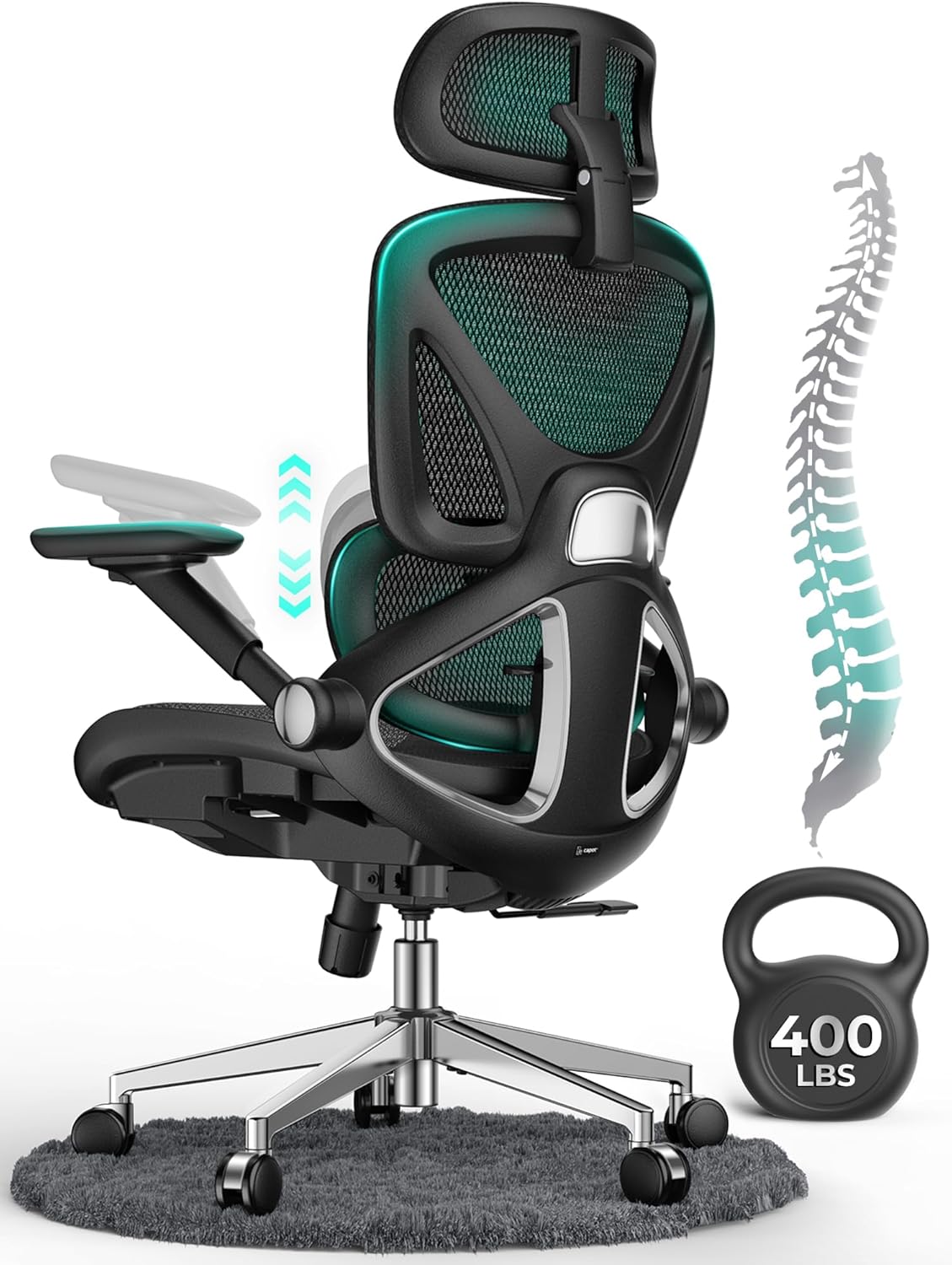
  • 8-level micro-adjustable lumbar support spans 2 inches of travel targeting L1-L5, a spec rarely found under $200
  • 5-year warranty on the primary variant outpaces the typical 3-year coverage from $300 competitors

Key Weaknesses

  • Assembly regularly exceeds the claimed 15-20 minutes according to user feedback, and the video instructions are the only reliable guide
  • The 370-lb Bed Bath & Beyond variant ships with only a 1-year warranty versus the 5-year coverage on the 400-lb model - easy to buy the wrong one

Full Specifications

SpecificationDetails
BrandCAPOT

Build Quality

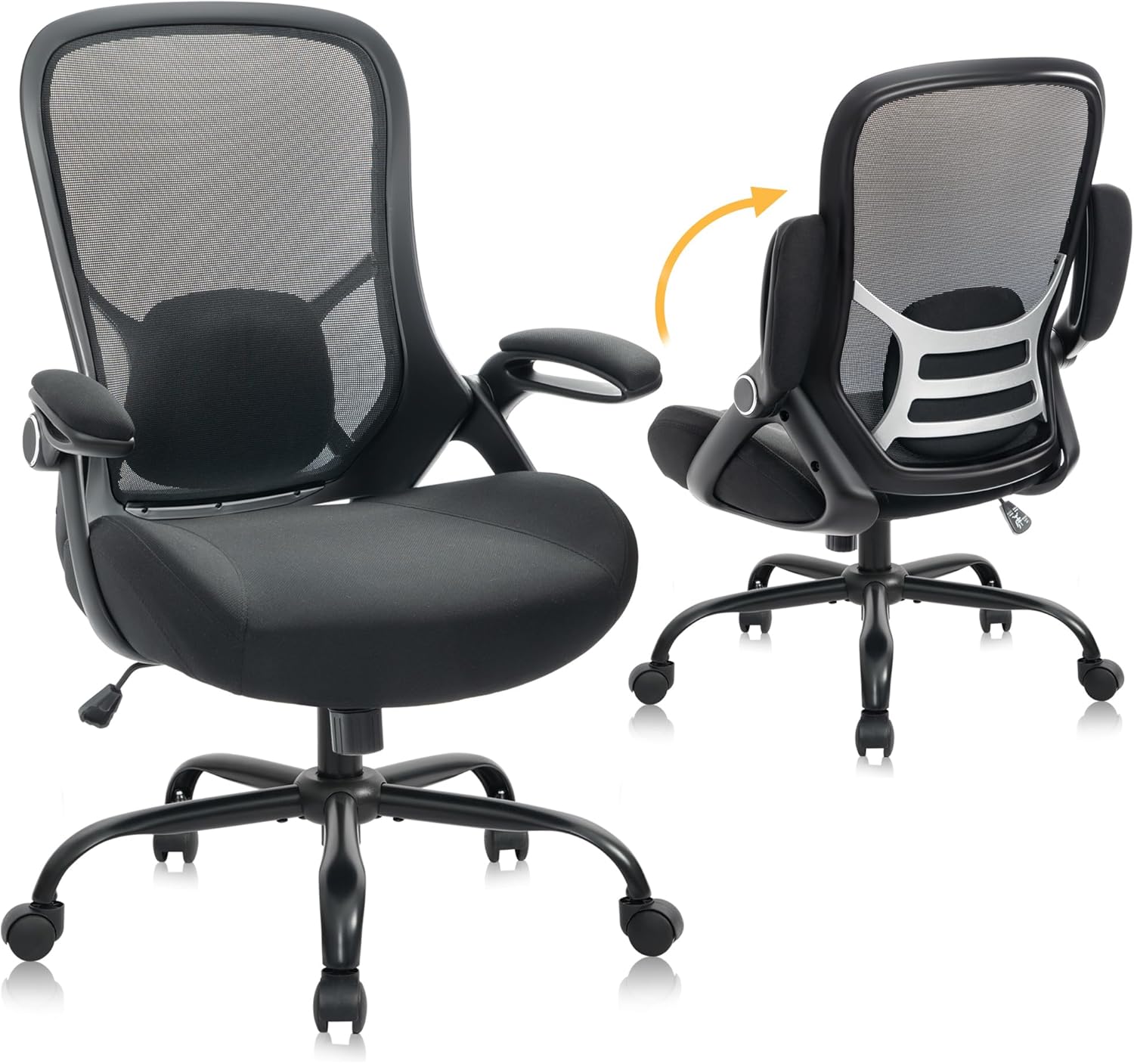
The CAPOT's foundation is a 27" nylon five-star base rated to 400 lbs and BIFMA X5.1 certified - a standard that requires third-party load and fatigue testing, not just a manufacturer claim. The base is nylon, not the cast aluminum you get on chairs costing $500 or more, and it looks like what it is. Silent PU casters roll quietly on hardwood and low-pile carpet without scratching. The chair weighs 38 lbs fully assembled, which is solidly heavy for a mesh chair and suggests the internal frame is not hollow tubing. The Aerovith mesh seat and backrest are the newer material spec introduced in recent model runs, marketed for improved breathability and pressure distribution versus the earlier mesh. Whether the Aerovith mesh holds up past two years of 8-hour daily use is a question that honest reviewers cannot answer with confidence yet in 2026.

Comfort & Ergonomics

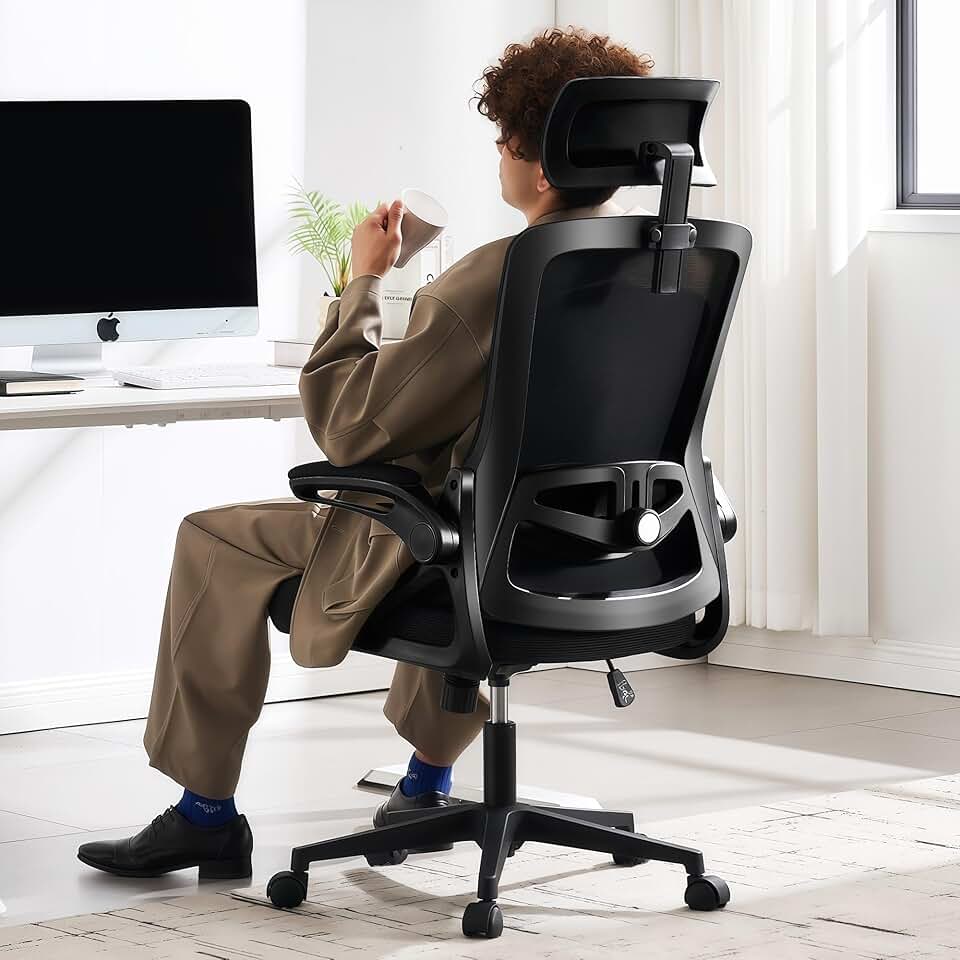
The 19.3" deep by 20" wide seat cushion sits at a height range of 18.5" to 22.05" off the ground, covering most users in the 5'5" to 6'2" range. The 3.9" mesh cushion thickness is substantial for a mesh seat - most budget mesh chairs run 2.5" to 3" - and the manufacturer claims a 20% reduction in pelvic pressure versus standard foam seats. The 24"-high S-shaped backrest maps to the natural curvature of the lumbar and thoracic spine for taller sitters, and the 3D adjustable headrest extends to accommodate neck positioning for users up to roughly 6'2". Sitting in this chair for extended sessions, the mesh breathability is its single most persuasive comfort feature: pelvic heat buildup, which is a genuine fatigue driver during 6-plus-hour sessions, is noticeably reduced compared to foam or faux-leather alternatives at the same price.

Adjustability

The 8-level micro-lumbar adjustment is the specification that separates the CAPOT from most sub-$200 chairs. It moves 2 inches vertically to align with L1 through L5 vertebrae - a range wide enough to be useful for users of meaningfully different heights. The 4D flip-up armrests adjust for height, width, depth, and angle, and the flip-up function clears desk space when the chair is not in use. Backrest tilt locks at exactly 90°, 110°, and 125°, giving three usable positions rather than the infinite-but-unstable reclining range on cheaper tilt mechanisms. The gas lift seat height adjustment (18.5" to 22.05") covers a reasonable range but the exact number of discrete height positions is not specified in CAPOT's documentation, which is a minor transparency gap. The 3D headrest adjusts in both height and forward depth, which matters for users who actually use headrests rather than treating them as decoration.

Assembly

CAPOT claims 15-20 minutes for assembly. The realistic number for a first-time builder without prior chair assembly experience is closer to 30-45 minutes. The video instructions are the clearest guide available - the printed manual is adequate but the video resolves ambiguities faster. All hardware is included. The base attaches before the cylinder, the backrest attaches to the seat frame as a unit, and the armrests require the trickiest alignment of the process. At 38 lbs, having a second person available for the backrest attachment step saves frustration. Nothing about the assembly is genuinely difficult, but the 15-20 minute claim sets an expectation that will stress out methodical builders.

Value for Money

At $199.99 from ShopAbunda or $114.98 from Walmart (when in stock), the CAPOT competes against chairs that offer 250-300 lb capacities and 3-year warranties for $100 more. The Sihoo M57 at approximately $300 has a stronger community reputation for mesh longevity and a cleaner aesthetic. The Modway Ergonomic at roughly $300 caps at a lower weight rating and offers fewer adjustment axes. For any buyer whose primary concerns are weight capacity, lumbar adjustability, and per-dollar adjustment count, the CAPOT wins the comparison. For buyers who prioritize documented long-term durability and are willing to pay a $100 premium for that confidence, the Sihoo is the rational alternative. The 5-year warranty on the 400-lb CAPOT variant is a meaningful differentiator - just confirm you are purchasing that specific variant and not the Bed Bath & Beyond 370-lb model, which ships with a 1-year warranty.

Value Verdict

At $114.98 (Walmart, when in stock) or up to $199.99 (ShopAbunda), the CAPOT delivers 400-lb capacity, 4D arms, and an 8-level micro-lumbar system that the $300 Sihoo Ergonomic cannot match on raw adjustability per dollar. The Sihoo carries a stronger reputation for long-term mesh durability, which is the one honest reason to spend the extra $100.

CAPOT Ergonomic Mesh High Back Chair

Check the latest price and availability on Amazon

Check Price on Amazon

Frequently Asked Questions

The primary model sold through Walmart, ShopAbunda, and the official CAPOT site is rated to 400 lbs with a BIFMA X5.1 certification. The variant sold through Bed Bath & Beyond is rated to 370 lbs and also carries a shorter 1-year warranty versus the 5-year coverage on the 400-lb model. Check the product listing carefully before purchasing, since the price difference between variants is small but the warranty difference is significant.

The lumbar support moves vertically across 8 discrete levels spanning 2 inches of total travel, targeting alignment with the L1 through L5 vertebrae. CAPOT claims a 50% reduction in spinal pressure at optimal adjustment, though that figure comes from the manufacturer and is not independently verified. In practical terms, the 8-level range is wide enough to be genuinely useful for users between 5'5" and 6'2" rather than being a cosmetic adjustment knob.

Yes - the 400-lb capacity 400-lb BIFMA-certified model covers that weight, and the seat height range of 18.5" to 22.05" combined with the 24"-high backrest and 3D-adjustable headrest accommodates users up to approximately 6'2". The 19.3" seat depth is on the shorter end for very long femurs, so users with a 34"+ inseam may find the seat slightly shallow compared to chairs with 20"+ seat depth.

CAPOT's official estimate is 15-20 minutes, but user feedback suggests 30-45 minutes is more realistic for first-time assemblers. The video instructions available through CAPOT resolve most ambiguities that the printed manual leaves unclear. Having a second person present for attaching the backrest unit to the seat frame saves a meaningful amount of time and frustration given the chair's 38-lb total weight.

The CAPOT edges the Sihoo on weight capacity (400 lbs vs. the Sihoo's typical 300-lb ceiling), warranty length (5 years vs. Sihoo's 3 years), and adjustment count (8-level micro-lumbar vs. Sihoo's fixed lumbar zone) at $100 to $185 less depending on the purchase point. The Sihoo has a stronger documented reputation for mesh durability over 2-plus years of heavy daily use, which is the honest reason to choose it over the CAPOT if long-term material confidence matters more to you than upfront adjustability per dollar.

Featured in Our Guides

You Might Also Consider