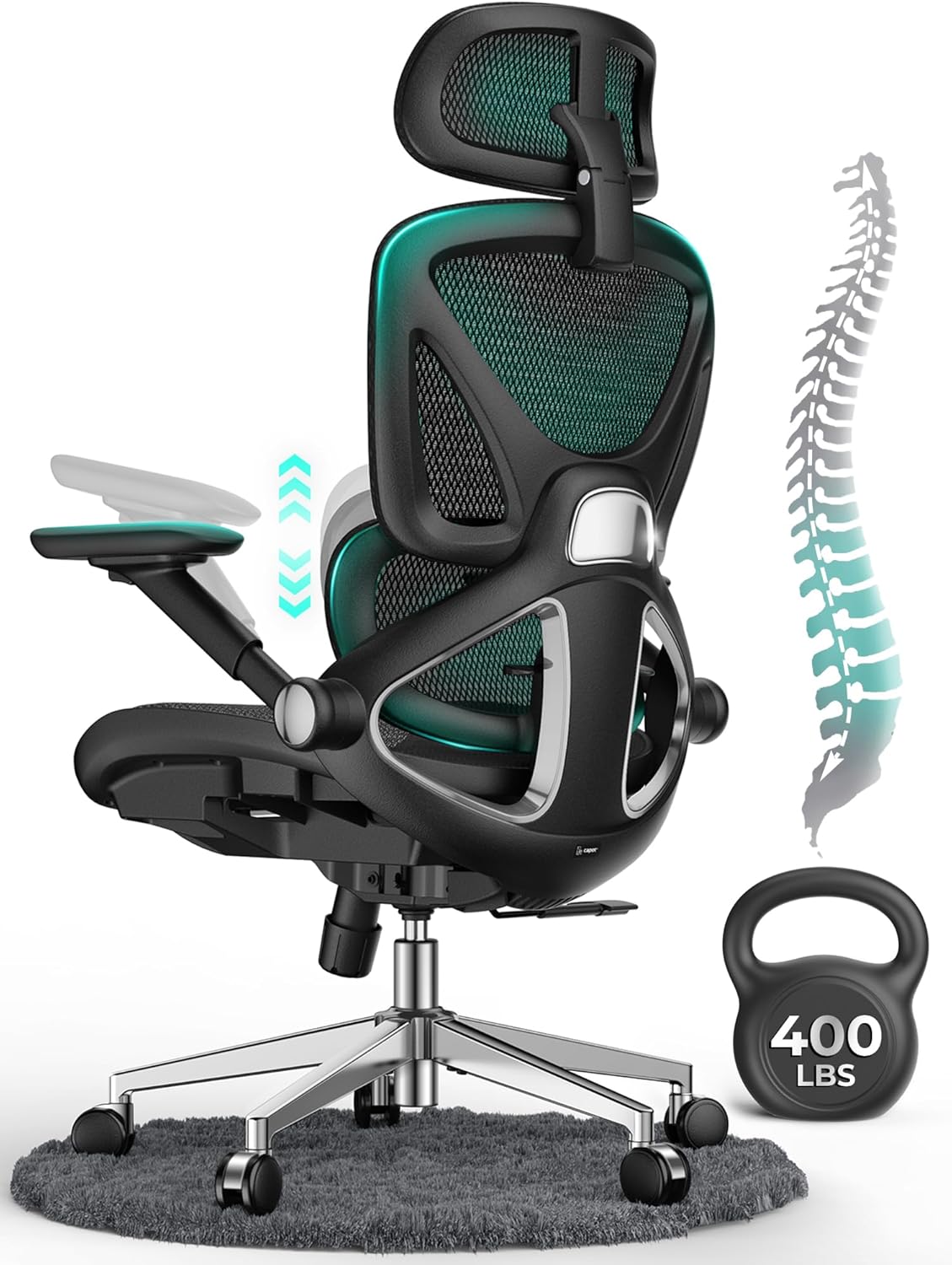
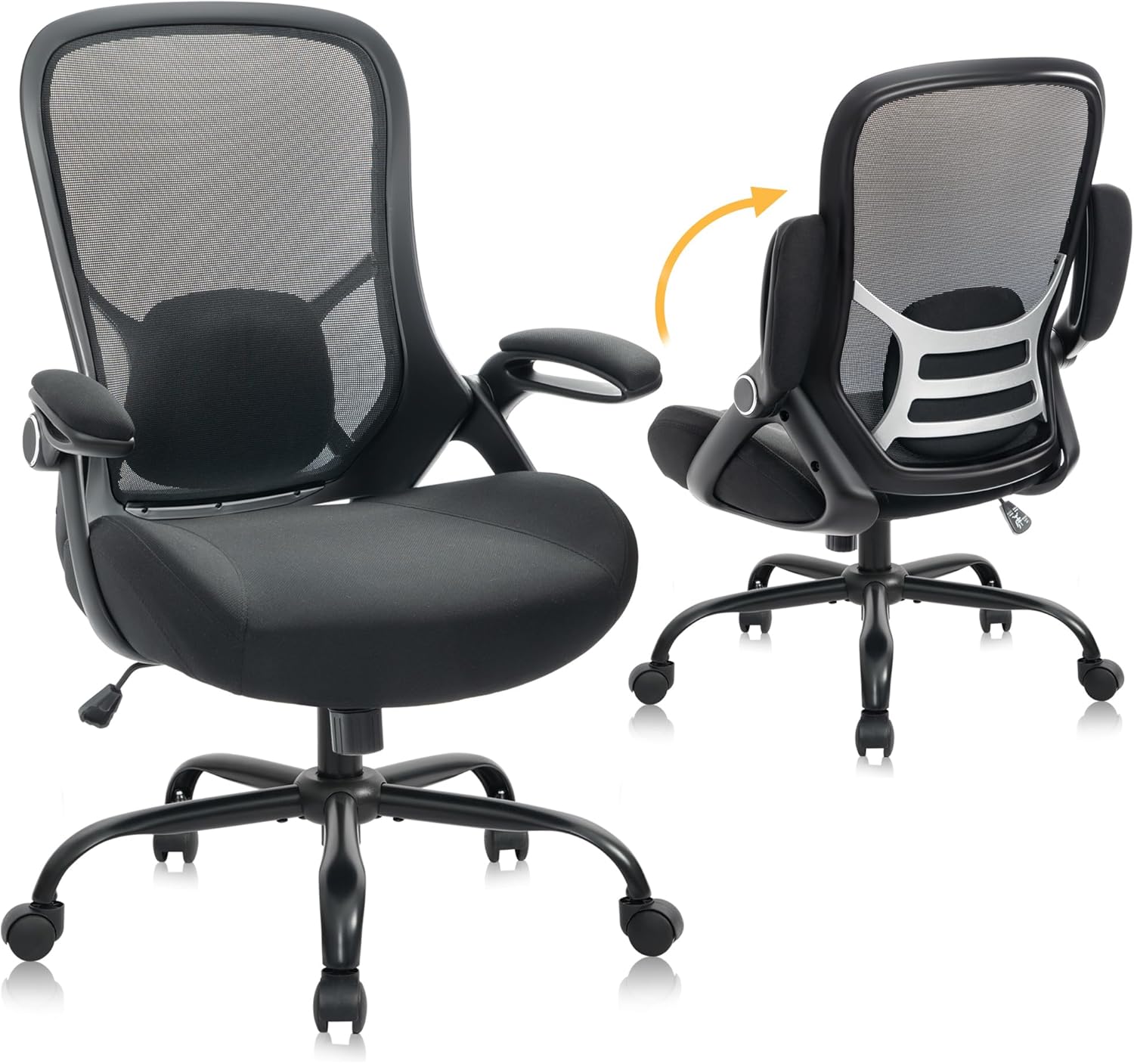
Build Quality
The steel frame underneath this chair is its strongest argument. Where standard office chairs rated to 250-275 lbs use thinner-gauge steel that audibly flexes under 320+ lbs, the reinforced frame here stays quiet and stable. The heavy-duty nylon five-star base spans approximately 27 inches, wide enough to keep the chair from tipping during lateral shifts - a real concern when a 380 lb user leans to grab something off a side table. The gas lift cylinder is BIFMA-referenced in similar models at this price tier, meaning it meets a baseline industrial standard rather than being entirely unrated.
That said, the plastic components - armrest caps, tilt mechanism housing, and lumbar knob - feel exactly like $109 plastic. They won't shatter immediately, but they telegraph their budget origins every time you touch them. The BTOD GO-99-3-GG at $548.99 uses aluminum reinforcement throughout its mechanism housing. You won't confuse the two blindfolded.
Comfort & Ergonomics
The seat width of 24-25.5 inches is the genuine differentiator from standard market chairs, which typically max out at 20-22 inches. Users with 42-50 inch hip measurements who have spent years uncomfortable in narrow seats will notice the difference within the first hour. The seat depth of 20-22 inches suits users with inseams of 30 inches or longer without causing the edge-of-seat pressure that shorter depths create.
The high back reaches approximately 25-30 inches above the seat, supporting the mid and upper back to shoulder height for users up to 6'3". The lumbar support is fixed or minimally adjustable depending on the specific model variant - it lands in the right anatomical zone for users roughly 5'10" to 6'2", but taller or shorter users will find it either too low or pressing into their mid-back. The 4-inch seat cushion feels adequate on day one. By month six under 350+ lbs of daily use, expect 20-30% compression based on the foam density typical of chairs in this price range.
Adjustability
Seat height adjusts from approximately 17 to 21 inches via a pneumatic lever, covering most standard 28-30 inch desk heights for users up to 6'4". The tilt tension knob lets you set resistance for reclining, and the tilt lock holds the seat at your preferred angle - both work reliably. Flip-up armrests are a practical choice for users who need clearance to pull close to a desk; they're not height-adjustable in most variants at this price, which is a limitation for users whose elbows don't naturally hit the 27-29 inch range.
If you need a drafting-height configuration for a standing desk, look at the BOLISS Big & Tall Drafting Chair which adds a foot ring and extended cylinder for seat heights up to 24 inches. This model tops out at 21 inches, which works for sitting desks but not counter-height or standing desk setups.
Assembly
Assembly takes 20-35 minutes for one person with a Phillips head screwdriver. The five-star base, cylinder, seat plate, and back are the primary components. Hardware is typically pre-bagged and labeled. The most common assembly complaint in this category is misaligned back-to-seat bolt holes requiring slight manual alignment before tightening - expect to spend an extra 5 minutes on this step if it occurs. No tools beyond a basic screwdriver are required.
Value for Money
At $109.99, this chair costs $30 more than the JONPONY at $79.99 and buys modestly better cushion density and frame finish. It costs $115.57 less than the Costway Leather at $225.56, which returns that investment in longer cushion life and better upholstery durability. The honest position is that $109.99 sits in the worst part of the value curve - not cheap enough to be disposable, not expensive enough to be durable. If your budget is firm at $110, this is the right choice. If you can stretch to $225, the Costway holds up meaningfully longer. If you work full-time and sit 8 hours daily, neither is the answer - the BTOD GO-99-3-GG at $548.99 amortizes to a lower annual cost over 5-7 years of heavy use.