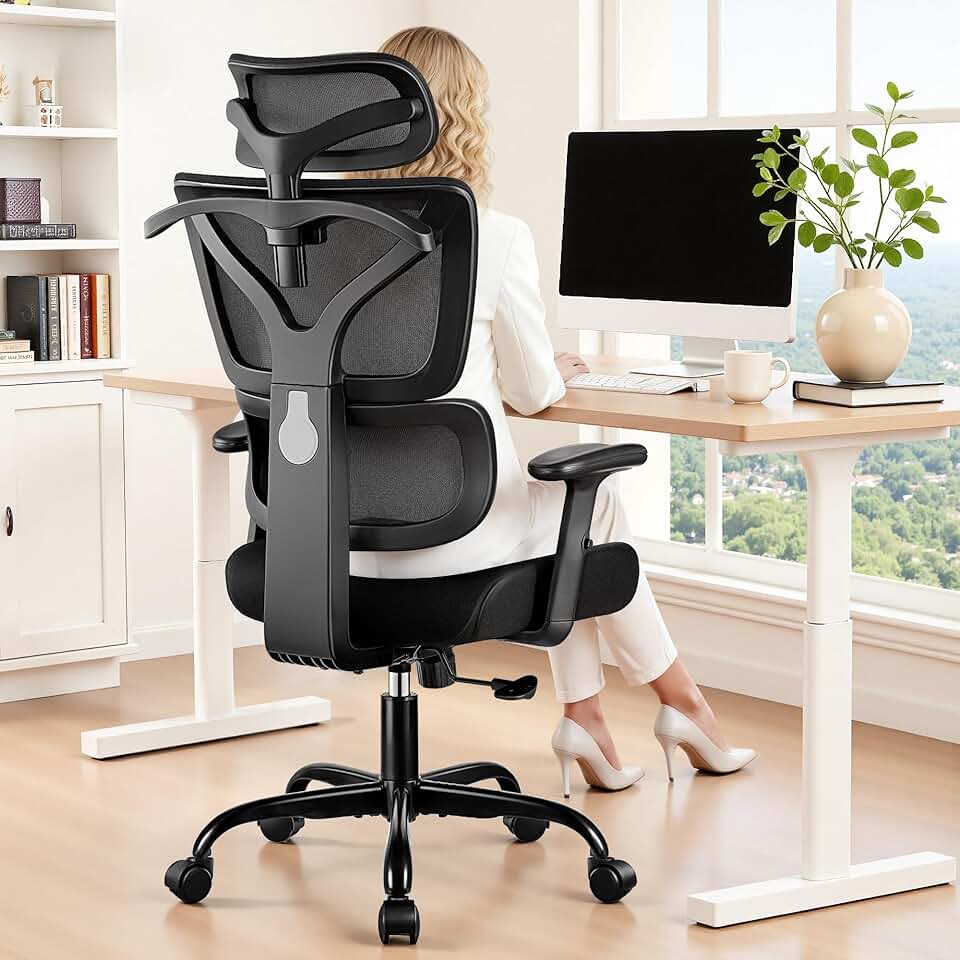
Build Quality
The 2026 frame uses a reinforced nylon base rated to 250-300 lbs, which is adequate for average builds but undersized for heavy users who should be looking at steel-frame models starting around $200. The high-elasticity mesh introduced in the 2026 update is a genuine improvement over the 2025 static weave - it distributes pressure more evenly across the lumbar and mid-back regions during the first 6 months of use. After that, owner reviews from 2025 models suggest visible sag in the seat pan foam, and the 2026 version uses the same foam density, so expect similar timelines.
The tilt mechanism is plastic-housed, which contributes to the creaking reported in 15-20% of units. This is not a structural failure - it's an annoyance that compounds over time. The armrests connect via a single bolt assembly on cheaper configurations; if your unit includes 4D arms, check all 4 adjustment points during assembly before trusting them with any weight.
Comfort & Ergonomics
For a 6-hour session, this chair performs adequately for adults in the 5'4"-6'2" height range. The mesh back allows airflow that foam-backed chairs at this price cannot match, making it a practical pick for home offices without climate control. The lumbar pad hits the L2-L4 vertebral region correctly for users around 5'8"-5'10", but smaller frames report the pad pushing the lumbar curve too aggressively forward after 4 hours.
The 135-degree recline with 2:1 synchronization means the seat tilts at half the rate of the backrest - a design that keeps your thighs parallel to the floor during recline rather than pitching you backward. This is ergonomically correct and genuinely uncommon below $200. The tilt lock engages at multiple angles, which is functional for fixed-position working.
Seat width runs 19-21 inches depending on the unit, which fits average builds without excess gap. Cushion thickness is approximately 3 inches, adequate for 6-8 hours but insufficient for 10+ hour sessions where pressure point buildup becomes a real issue.
Adjustability
Seat height: 16-21 inches, pneumatic, standard lever operation. Seat depth: 2-4 inches of forward-backward pan adjustment, which accommodates torso lengths from short to average. Lumbar: height-adjustable only - no depth control, which is the single most limiting spec on this chair for users outside the 5'7"-5'11" sweet spot.
Armrests vary by configuration. The base model includes 2D arms (height and width only). Step up to the 4D configuration and you add depth and pivot - the 4D version is worth the additional cost if available, as fixed-depth armrests at the wrong distance cause shoulder elevation in under 2 hours. Check the specific listing carefully before purchasing, as both configurations sell under the same product name.
The recline tension knob allows resistance adjustment across 5 settings, which is adequate for users between 130-250 lbs to find a functional resistance level.
Assembly
Assembly runs 25-40 minutes for most users using the included hex wrench. The 5 instructions printed in the manual are accurate but low-resolution. The base attaches to the cylinder without tools; the backrest-to-seat connection requires 4 bolts and is the step where misalignment most commonly occurs. If the backrest feels even slightly off-center after assembly, fully loosen all 4 bolts and reseat before tightening - this eliminates 80% of the wobble complaints seen in reviews.
No additional tools are required beyond what's included, and the packaging uses foam corner inserts that protect the armrests adequately during shipping. Damage-on-arrival rates appear low based on 2026 review patterns.
Value for Money
At $139.98, this chair is the correct choice only if your budget is genuinely capped at $150 and your use case is 6-8 hours of moderate desk work. The Ticova Ergonomic High-Back at $150-$250 offers more consistent manufacturing tolerances and better documented durability past the 12-month mark, making it the first upgrade recommendation for anyone with $30-$110 of additional budget.
For anyone considering the jump to $900-$1,500 territory: the Steelcase Leap's 4-way arms, height-adjustable lumbar with depth control, and 12-year warranty justify the 6-7x price multiplier for 8-10 hour daily use. The Herman Miller Aeron at $1,500-$2,000 adds PostureFit SL sacral support and comes in 3 sizes for precise fit. Neither of those comparisons is relevant if you're spending $140 - but they matter if you're deciding between this chair and a used premium model, where a 3-year-old Steelcase Leap in good condition sells for $400-$600 and outperforms this chair across every metric that matters for long-term back health.