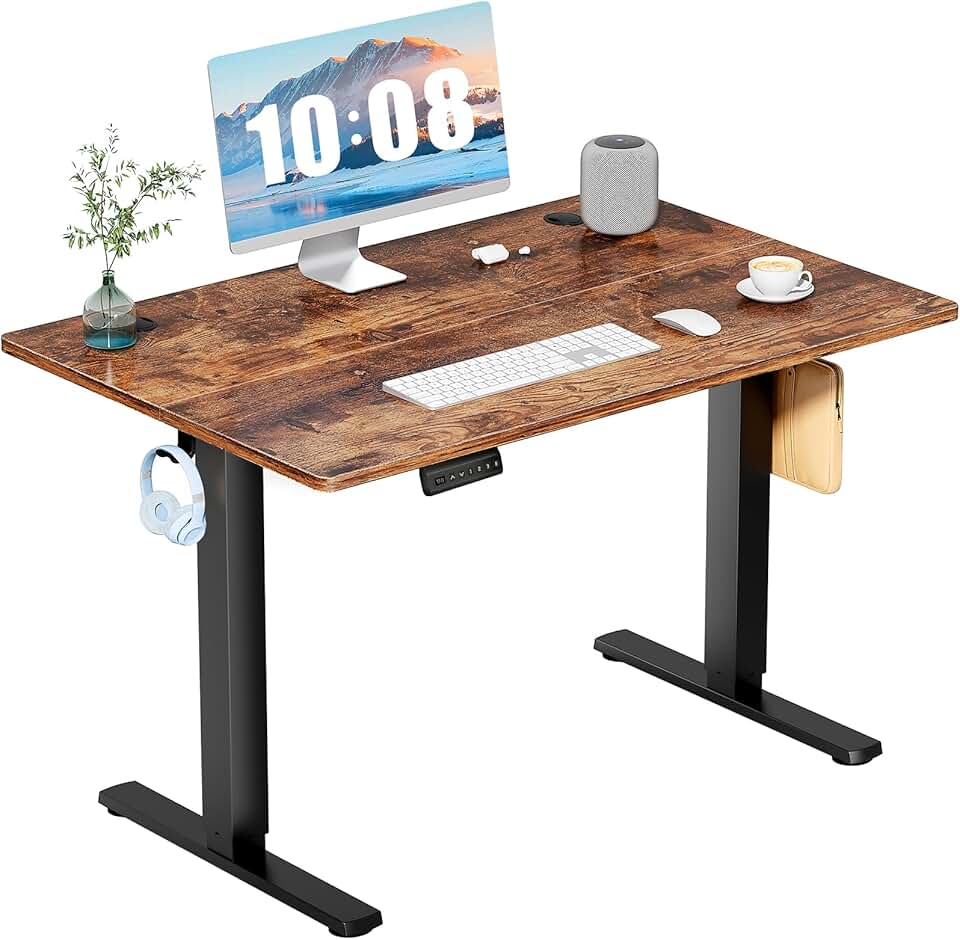
Build Quality
The DUMOS 40-inch uses a reinforced steel T-leg frame, and across multiple video reviews of the 55-inch variant, zero reports of wobble or motor failure have surfaced. That's not a lifetime warranty - it's a data point. At $65.99, you are buying a budget frame, and budget frames from emerging brands typically reveal their weaknesses after 18-24 months of daily use. No quality control recalls or production issues have been logged as of 2026. The dual-panel desktop surface is available in Oak, Rustic, and White finishes, and the construction is consistent enough that deal trackers have reported stable pricing without redesigns - usually a sign the manufacturer isn't rushing to fix field complaints.
The T-leg base is the limiting factor here. A T-leg is inherently less stable than a 4-leg or C-leg frame at higher weights. DUMOS rates this desk at 176 lbs, which is honest headroom for a single-monitor home office setup. Push past 150 lbs of equipment and you're asking the frame to prove itself. For 1 monitor, a laptop, and standard desk accessories, the build is more than sufficient.
Comfort and Ergonomics
The 28.7" to 46.5" height range is the headline ergonomic specification, and it covers the standard sitting range of 28" to 30" and the standing sweet spot of 42" to 46" for users between 5'0" and 6'2". If you're taller than 6'2" and need a standing height above 46.5", this desk will leave you hunching, and you should look elsewhere. The 40" x 24" surface depth gives you 24 inches of front-to-back reach - adequate for a single monitor at proper distance, tight if you're adding a second screen behind the first.
The 3 memory presets on the LED controller are the most underrated feature at this price. You program your sitting height once, your standing height once, and the desk returns to either position in under 20 seconds without button-holding. That frictionless transition is the difference between a standing desk you actually use and one you adjust twice a week.
Adjustability
The electric motor operates at under 55 dB - measurably quieter than a typical office conversation at 60 dB. If you share a wall with a roommate or work on calls while adjusting, this matters. The travel range of 17.8 inches (28.7" to 46.5") is standard for budget desks. The 55-inch DUMOS variant appears to reach 28" to 48", a slightly wider 20-inch range, which suggests minor engineering differences between SKUs. If maximum standing height is a priority, the 55-inch at $79.99 is worth the extra $14.
There are no tilt or angle adjustments on the surface itself - the desk goes up and down, nothing else. For most users this is fine. For anyone doing drafting work or needing a tilted writing surface, this is a hard limitation.
Assembly
The tool-free assembly uses pre-labeled parts and takes under 30 minutes by all available accounts. The one awkward step: the assembly process requires flipping the base onto the desktop surface, which is clunky in a small room. If you're assembling solo in a 10x10 bedroom, clear a 6-foot floor zone first. No tools are required beyond what ships in the box. For a budget desk, this is a genuinely smooth out-of-box experience.
Value for Money
At $65.99, the DUMOS 40-inch is the lowest credible entry point for an electric standing desk in 2026. The Smug 40-inch sits at roughly $70 without documented memory presets or a verified weight rating at 176 lbs. Generic T-leg electrics with coupons hit $68-$90 but offer no clear differentiation. The Vari ComfortEdge enters at $300+ and justifies that price with superior frame engineering and verified long-term durability - but it is not competing for the same buyer.
If you are spending $66 to test whether a standing desk changes your work habits, this is the right experiment to run. If you already know you want a premium desk, skip this tier entirely and save toward the Vari. The DUMOS 40-inch is honest about what it is: a functional, no-frills sit-stand surface at the lowest defensible price.


