Photo by Vitaly Gariev on Unsplash
The Best Office Chair for a Petite Person - Tested Picks for Under 5'6" in 2026
Most office chairs are engineered for someone around 5'9" to 6'1". If you're 5'4" or shorter, that means your feet hover above the floor, the seat pan digs into the backs of your thighs, and the lumbar support lands somewhere between your shoulder blades and nowhere useful. It's not a comfort issue - it's a posture and circulation problem.
The chairs in this guide were selected specifically for frames between 4'8" and 5'6". The hard cutoffs we used: minimum seat height at or below 17 inches, seat depth at or below 17 inches (or adjustable to that range), and lumbar support that can be positioned low enough to actually reach your lumbar spine. Chairs that fail any of those criteria aren't on this list, regardless of how many five-star reviews they have from taller users.
 Photo by EFFYDESK on Unsplash
Why Standard Chairs Fail Petite Users
The core problem is seat height. Most standard office chairs bottom out at 18 to 19 inches - fine if your inseam is 31 inches, useless if it's 25 inches. When your feet can't rest flat on the floor, your body compensates by tilting your pelvis posteriorly, which flattens your lumbar curve and loads your lower discs unevenly. Research published in Ergonomics (2020) found that feet-flat positioning at a 90-degree knee angle reduces low-back pressure by 20 to 30% compared to dangling-feet posture.
The second issue is seat depth. Standard seats run 18 to 20 inches deep. For someone with a shorter femur, sitting fully back means the seat edge cuts into the popliteal area (behind your knee), restricting blood flow. A 2018 study in Applied Ergonomics specifically linked oversized seat depth to ischial pressure and discomfort in petite users. You need a chair that goes to 16 to 17 inches of usable depth - either fixed at that measurement or adjustable via a seat slider.
Third: lumbar placement. Most chairs put lumbar support at a height designed for taller spines. If you're 5'2", your L4-L5 lumbar region sits noticeably lower than the designer assumed. Adjustable lumbar height isn't optional - it's essential.
How to Know if a Chair Actually Fits Your Body
Before buying anything, take these three measurements at home with a tape measure:
1. Popliteal height (seat height needed)
Sit in a regular chair with feet flat. Measure from the floor to the back of your knee. This is your ideal seat height. For most people between 4'10" and 5'4", this lands between 14.5 and 16.5 inches.
2. Seat depth needed
Sit fully back. Measure from the back of your knee to the front of your seat. You want 1 to 2 inches of clearance between the seat edge and your knee. If a chair's seat depth minus your thigh length is less than 1 inch, the seat is too deep.
3. Lumbar height
With a tape measure, find the distance from the seat surface to your natural lumbar curve (roughly where your back curves inward). This tells you the minimum lumbar adjustment range a chair needs to reach your spine.
For most users in the 4'10" to 5'4" range, these numbers are approximately: seat height 15 to 16.5 inches, seat depth 15 to 16.5 inches, lumbar height 6 to 8 inches above seat.
 Photo by Zesan H. on Unsplash
The Best Office Chairs for Petite People in 2026
Price: $345.05 | ASIN: B006TILUBU
The Alera Etros Petite is one of the few chairs on the mainstream market that was actually designed around a smaller body from the start - not retrofitted with a lower gas cylinder and called "petite." The seat height range is genuinely low, the seat pan is narrower than standard, and the multifunction mechanism allows seat tilt, back recline, and tilt tension adjustment independently.
The mesh back keeps airflow reasonable during long sessions. The mid-back design suits users whose torso height doesn't fill a full high-back. Lumbar support is built into the lower mesh section rather than a separate adjustable pad, which some users love (consistent, no sliding) and others don't (can't reposition it). At $345, it sits in the mid-range but offers features that justify the cost for serious all-day use.
Who it's for: Daily 6-8 hour users between 4'10" and 5'4" who want a chair designed specifically for their body, not adapted from a larger frame.
Catch: No adjustable lumbar height. If the fixed lumbar position doesn't land at your L4-L5, you'll need an add-on cushion.
Price: $84.99 | ASIN: B0DWKCCBTY
At under $90, the Marsail Ergonomic Mesh Office Chair punches well above its price point for petite users. The seat height adjusts to a minimum that works for shorter inseams, the mesh back has a built-in lumbar curve, and the overall frame dimensions are trim rather than oversized. It won't last eight years like an Aeron, and the armrests have limited adjustment range - but for a home office user who sits three to five hours a day, it's a genuinely functional choice.
The mesh seat and back both allow airflow, which matters for summer or heated home offices. Assembly is straightforward, and the weight capacity is adequate for the petite user this chair is sized for.
Who it's for: Remote workers or students on a tight budget who need a step up from a dining chair without spending $300+.
Catch: Armrests only adjust for height, not width or pivot. If you use armrests heavily for typing, this will frustrate you quickly.
Price: $191.50 | ASIN: B0FL7NTDGC
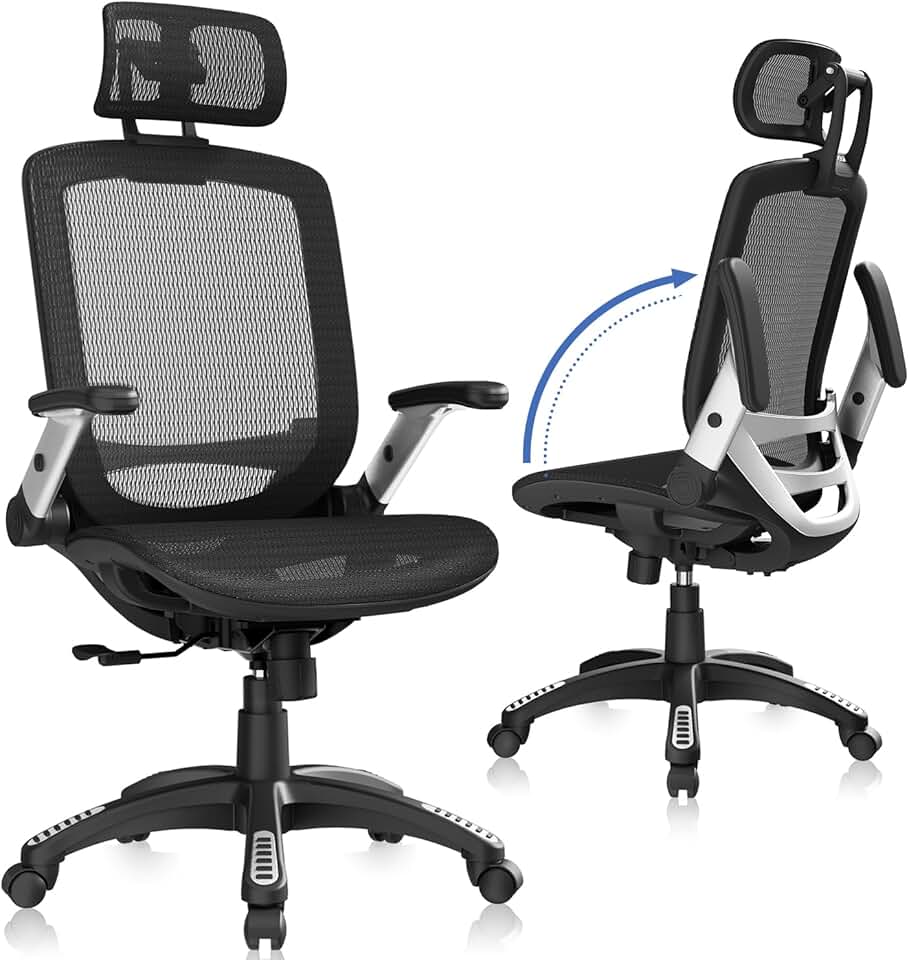
The GABRYLLY Ergonomic Office Chair at $191.50 offers an adjustable seat slider - the single most important feature for petite users that most chairs in this price range skip entirely. Sliding the seat pan forward shortens the effective seat depth, which eliminates the knee-edge pressure that plagues shorter-legged users in standard chairs.
The high-back mesh design includes height-adjustable lumbar support and a headrest, which is repositionable enough to land at the right height for users under 5'4". Recline locks at multiple angles. Build quality feels solid for the price point - the base and casters handle daily rolling without wobble.
Who it's for: Users between 5'0" and 5'5" who know their seat depth is the primary fit issue and want a chair that actually lets them fix it without spending $400+.
Catch: The headrest adjustment range is limited. If you recline frequently and want neck support, you may find it sits slightly too high.
Price: $192.50 | ASIN: B07Y8BXBX8
A close relative to the above, the GABRYLLY Ergonomic High Back Mesh Chair offers a refined mesh back with a separate, height-adjustable lumbar pad that slides up and down independently of the backrest. This is the key spec that makes it work for petite frames - you can drop the lumbar pad low enough to actually support your spine rather than your mid-back.
Seat height adjustment covers a useful range for shorter users, and the S-curve mesh backrest follows the spine's natural shape reasonably well. The flip-up armrests are a nice touch if you prefer to pull close to a desk without arm padding in the way.
Who it's for: Petite users who run hot, work in a warm home office, or simply find foam seats uncomfortable after a few hours.
Catch: The seat pan itself is not adjustable in depth. If you need seat depth adjustment specifically, look at the model above.
Best Splurge - Alera Etros Series (or Herman Miller Aeron Size A)
If budget isn't a constraint, the Herman Miller Aeron Size A (approximately $1,200 to $1,500 depending on configuration) remains the gold standard for petite ergonomics. Its minimum seat height of 14.75 inches is the lowest available on a premium chair, the PostureFit SL lumbar system adjusts for both the sacrum and lumbar simultaneously, and the Size A seat is genuinely compact - 15.75 inches wide versus the standard 18.25 inches of the Size B/C.
Research cited in Spine Journal (2022) links customized lumbar support to a 15 to 25% reduction in musculoskeletal disorders during prolonged sitting. The Aeron Size A is one of the few chairs that delivers on that research in practice. It's not available in our Amazon catalog, but worth the direct purchase from Herman Miller for users who sit eight-plus hours daily.
Price: $59.99 | ASIN: B0CCNHWBWL
For students or light-use home office setups, the Naspaluro Ergonomic Mesh Office Chair in pink fills a genuine gap at under $60. The frame is compact, the seat sits lower than most chairs at this price, and the mesh back avoids the foam compression issues that kill cheap padded chairs within six months.
Manage expectations here - this is not an eight-hour ergonomic solution. The lumbar support is fixed, armrests don't adjust, and the overall build isn't designed for heavy daily use. But as a secondary chair, a dorm chair, or a starter option for someone unsure whether they need better ergonomics, it's a reasonable spend.
Who it's for: Students, occasional users, or anyone furnishing a small secondary workspace on a strict budget.
Catch: Everything. Fixed lumbar, fixed arm width, limited recline. Fine for two to three hours; not fine for full workdays.
 Photo by Daniel Romero on Unsplash
Price: $124.99 | ASIN: B0914NC8WN
The name tells you everything you need to know. The BestOffice Big Tall Mesh Chair is engineered for users over 5'10" and 200+ lbs. Its minimum seat height starts above 18 inches, the seat depth is oversized, and the lumbar support is positioned high on the backrest. For a petite user, sitting in this chair means feet that dangle, knee pressure from a deep seat pan, and lumbar support that lands at mid-back rather than the lumbar spine.
It shows up frequently in search results because it's cheap and has high review volume - most of those reviews are from the tall users it was built for. If you're under 5'6", skip it entirely. The same money buys you the Marsail Ergonomic Mesh Office Chair, which was sized for a normal human frame.
How to Choose the Right Chair - A Practical Framework
Prioritize These Specs in Order
1. Minimum seat height first. If a chair's lowest setting is above your popliteal height measurement, nothing else matters. Move on.
2. Seat depth second. Either the seat needs to be 16 to 17 inches deep at its shortest, or it needs a seat slider that lets you shorten it. No slider on a 19-inch seat pan is a dealbreaker for petite users.
3. Lumbar adjustability third. Height-adjustable lumbar beats fixed lumbar every time for users who haven't been fitted by an ergonomist. If lumbar is fixed, confirm the chair's own sizing documentation says it suits shorter users.
4. Armrest range fourth. Width-adjustable armrests matter if you want to pull close to a desk. Most budget chairs only adjust for height.
What to Skip
- High-back chairs marketed as "executive" or "big and tall." These use larger seat pans and higher lumbar positioning by design.
- Gaming chairs as a petite solution. Racing-style side bolsters are designed for broader bodies and actively restrict movement for narrower frames.
- Any chair without published minimum seat height specs. If a brand won't tell you, the number is probably 18+ inches.
If you find a chair with great ergonomics but the seat height is still 1 to 2 inches too tall for full feet-flat contact, a footrest is a legitimate fix - not a compromise. Keeping your knees at 90 degrees matters more than whether you achieve it via floor contact or a footrest platform. Several affordable footrests exist in the catalog if you need one.
Desk Height Matters Too
A well-fitted chair only solves half the problem. If your desk surface is fixed at 30 inches (the standard height, designed for 5'9" users), you'll be forced to raise your chair to reach it - which puts you right back to dangling feet.
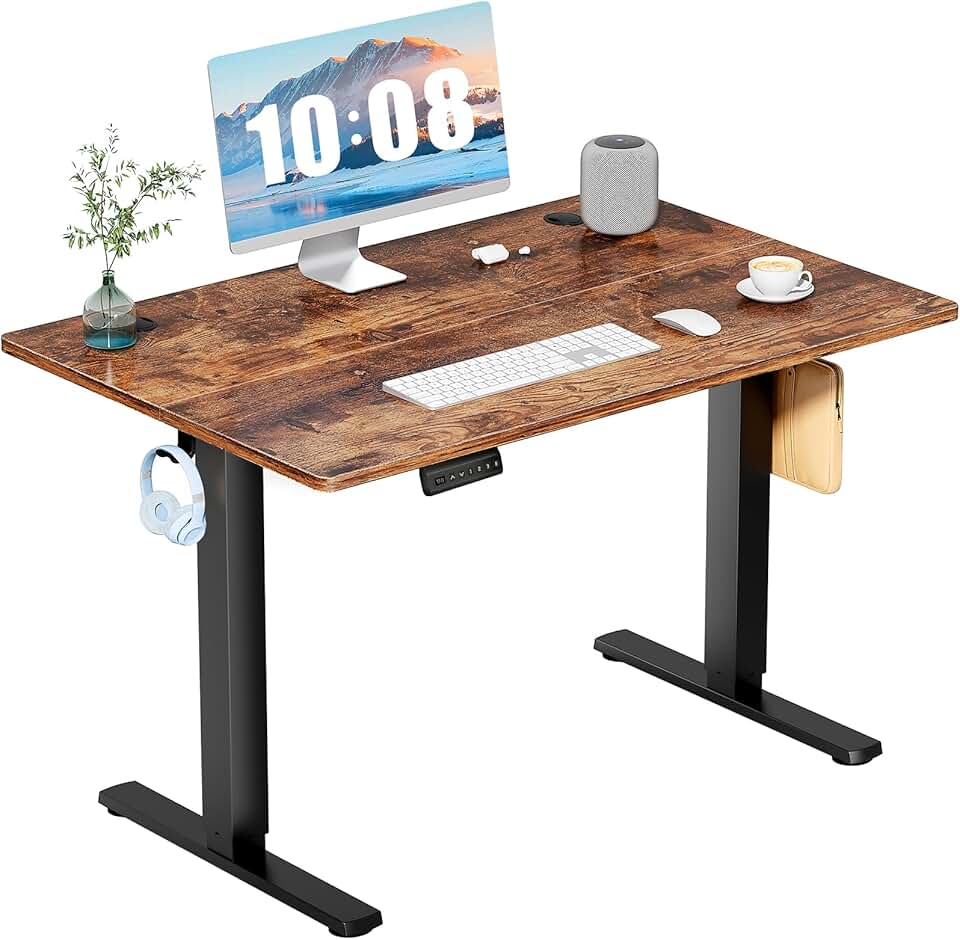
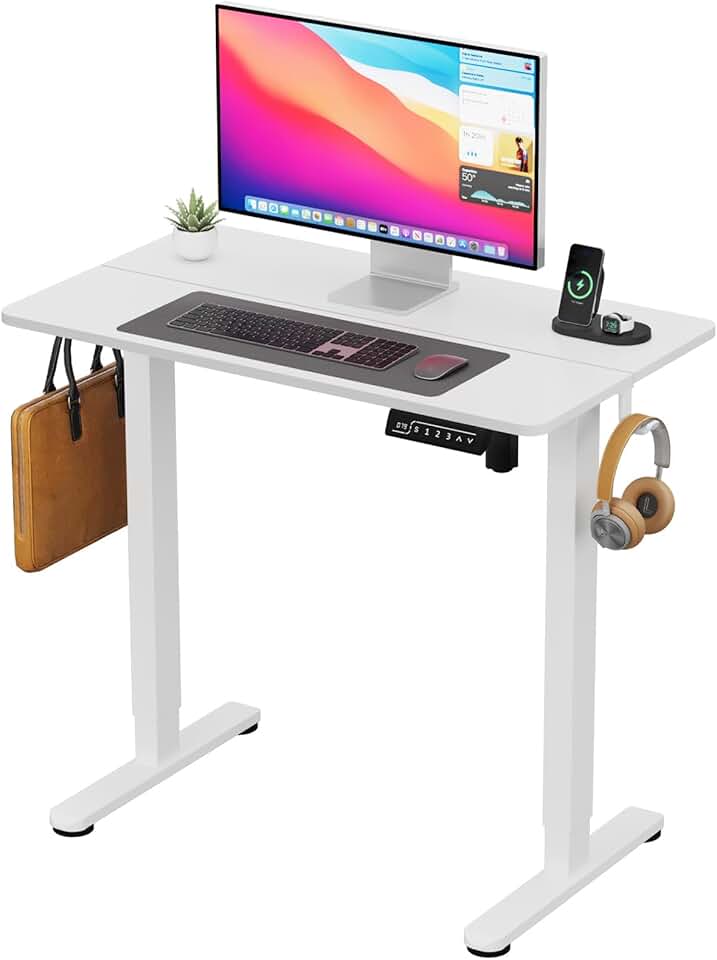
The real long-term solution for petite users is pairing a properly fitted chair with a height-adjustable standing desk. A desk that lowers to 24 to 25 inches lets you keep your chair at the right seat height and still have your keyboard and monitor at proper ergonomic positions. The [DUMOS 40 Inch Electric Standing Desk Height Adjustable](/desks/dumos-40-inch-electric-standing-desk-height-adjustable-x3jsxk) ($65.98, ASIN B0G3X3JSXK) or the HUANUO 32" Small Electric Standing Desk Adjustable Height ($79.97, ASIN B0F9X3FDYY) both reach lower minimum heights than most standard desks and pair well with a compact chair setup.
The Bottom Line
For most petite users, the GABRYLLY Ergonomic Office Chair at $191.50 is the practical starting point - it has the seat slider that shorter thighs genuinely need, adjustable lumbar, and a price that doesn't require a business expense justification. If you're doing eight-hour days and want something built specifically for a compact frame, the Alera Etros Series Petite Mid-Back Multifunction Mesh Chair at $345.05 is the most purpose-built option available on Amazon.
If you can stretch to a Herman Miller Aeron Size A, do it. No chair in this price range replicates 14.75-inch seat height combined with a seat pan that's actually sized for a smaller body.
The chairs to avoid aren't necessarily bad chairs - they're just chairs built for someone else. Buying the wrong size wastes money and, over time, creates the exact posture problems you were trying to solve.