

How to Choose the Right Manual Standing Desk for Your Home Office
Buying a manual sit stand desk involves a few more trade-offs than picking an electric model. There's no motor to cover up a wobbly frame or a narrow height range, so the basics matter more here. Here's what to evaluate before you spend a dollar.
Height Range - Find Your Sit-to-Stand Span
A usable manual standing desk needs to reach your seated elbow height (typically 26-30 inches for most adults) and your standing elbow height (roughly 38-46 inches depending on your height). Look for a range of at least 28-46 inches to cover the majority of users. The Stand Up Desk Store crank desk advertises coverage across multiple user heights with its steel telescoping frame. If you're under 5'4" or over 6'2", measure your own elbow heights before buying, because a range that misses your standing height by even 2 inches makes the whole point moot.
Crank Mechanism Quality - Speed and Effort Matter
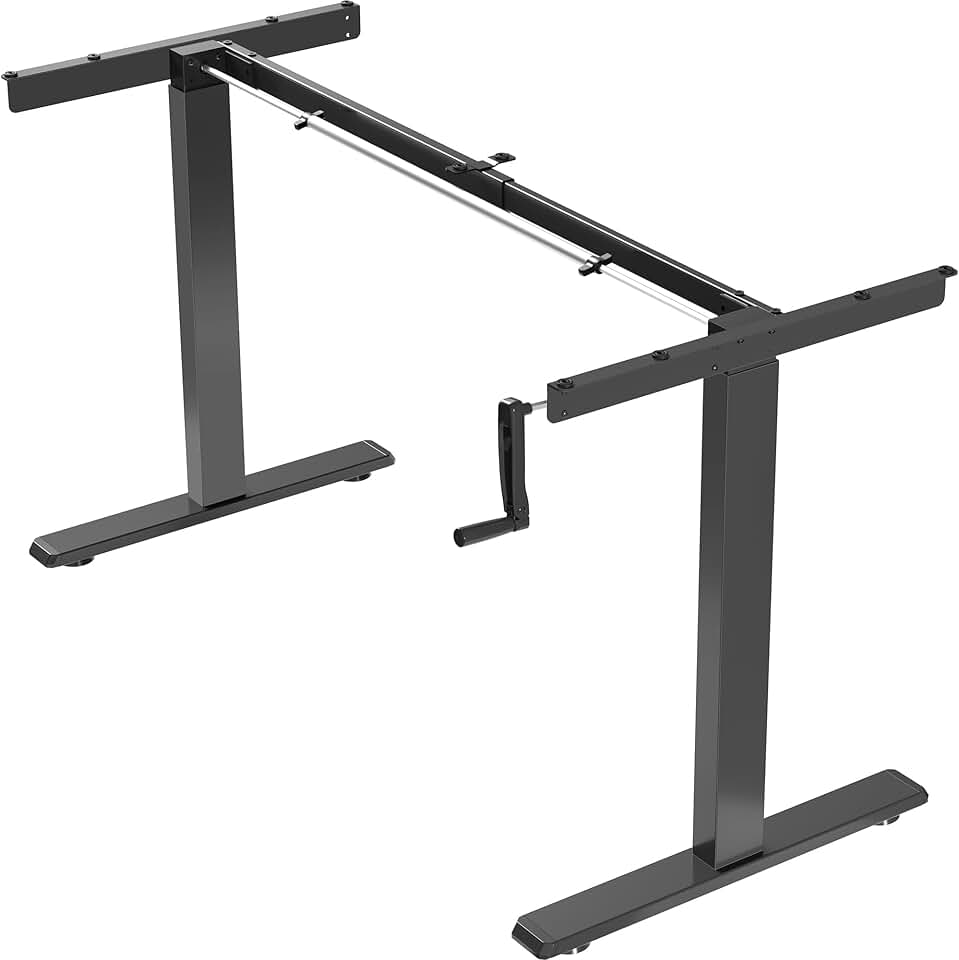
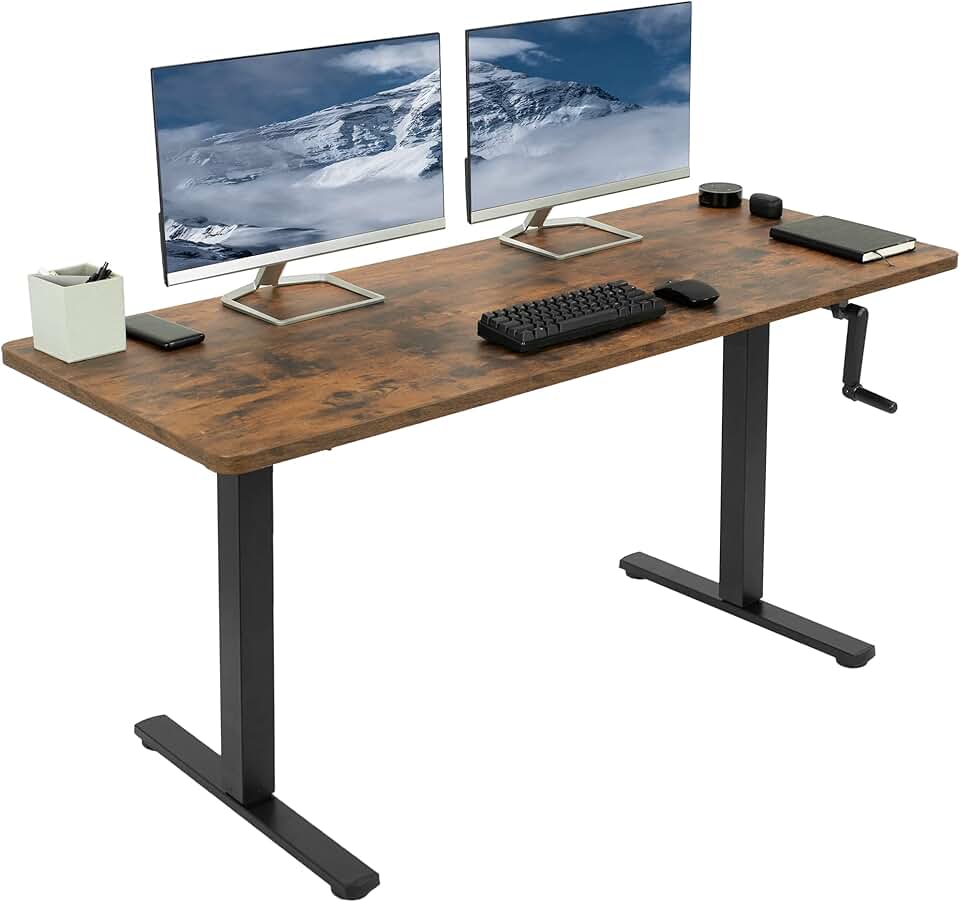
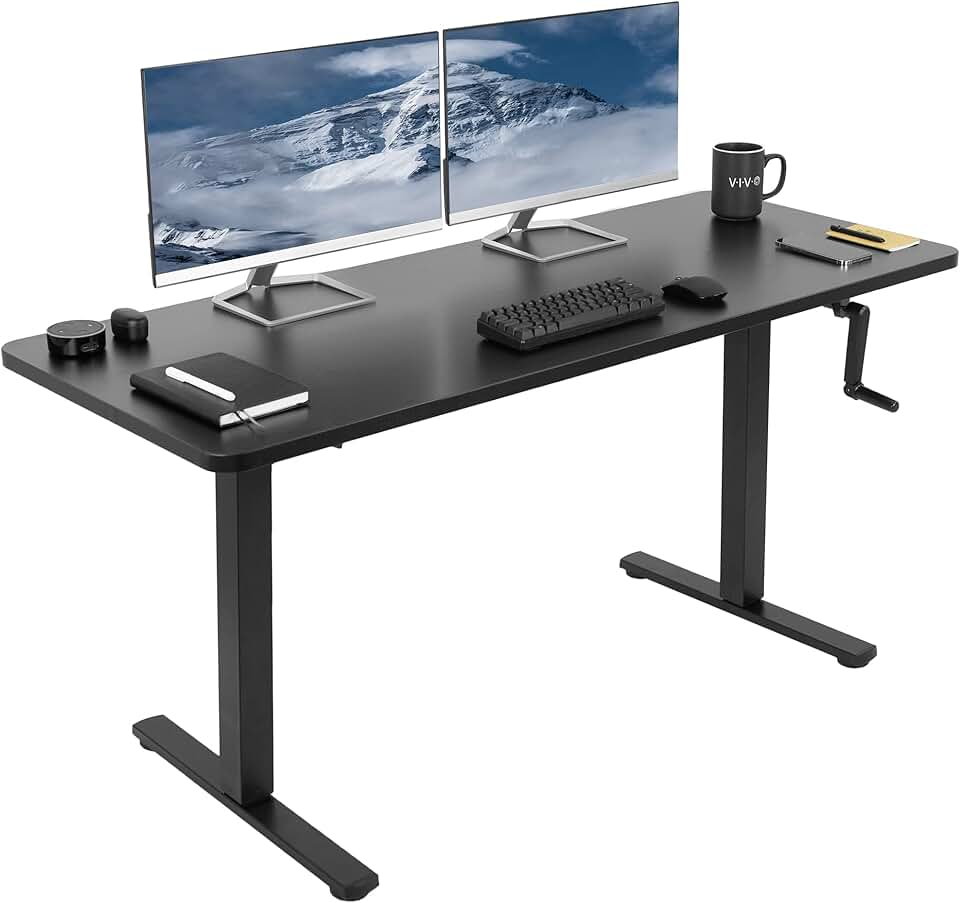
Not all hand crank standing desks are equal in cranking effort. A high-speed crank - like the one on the Stand Up Desk Store model - moves the desk faster per rotation, so you're not spinning for 30 seconds every time you stand up. VIVO desks use a side-mounted crank handle that's accessible without reaching awkwardly. The IKEA Trotten has a functional crank but reviewers consistently note it feels slower and less refined than dedicated standing desk brands. If you plan to adjust even once a day, a high-speed crank mechanism is worth prioritizing.
Frame Stability and Weight Capacity
A steel frame is non-negotiable for a manual standing desk. Look for a weight capacity of at least 110 lbs to safely support dual monitors, a laptop, and accessories. Locking casters (found on the Stand Up Desk Store model) are a practical bonus if you want to reposition the desk without fully lifting it. Wobble at standing height is a known weakness in budget manual desks, so check buyer reviews specifically mentioning stability at the maximum height setting - that's where frame flex shows up most.
Surface Size and Material Options
For a proper home office setup, aim for a minimum desktop surface of 48 inches wide by 24 inches deep. Wider options (55-63 inches) are better for multi-monitor setups. The Stand Up Desk Store offers an optional bamboo top, which is more sustainable and visually warmer than MDF. VIVO desks come in several finishes including light wood, dark walnut, and vintage brown, which helps match existing furniture without buying a separate desktop. IKEA Trotten keeps a clean, minimalist Scandinavian look that works in most home offices.
Watch out for: Desks that advertise a wide height range but have only a single-stage frame. Single-stage frames often sacrifice either the low end or the high end of the range to hit a target price. Always check the actual minimum and maximum height specs in the product listing, not just the marketing headline.