Build Quality
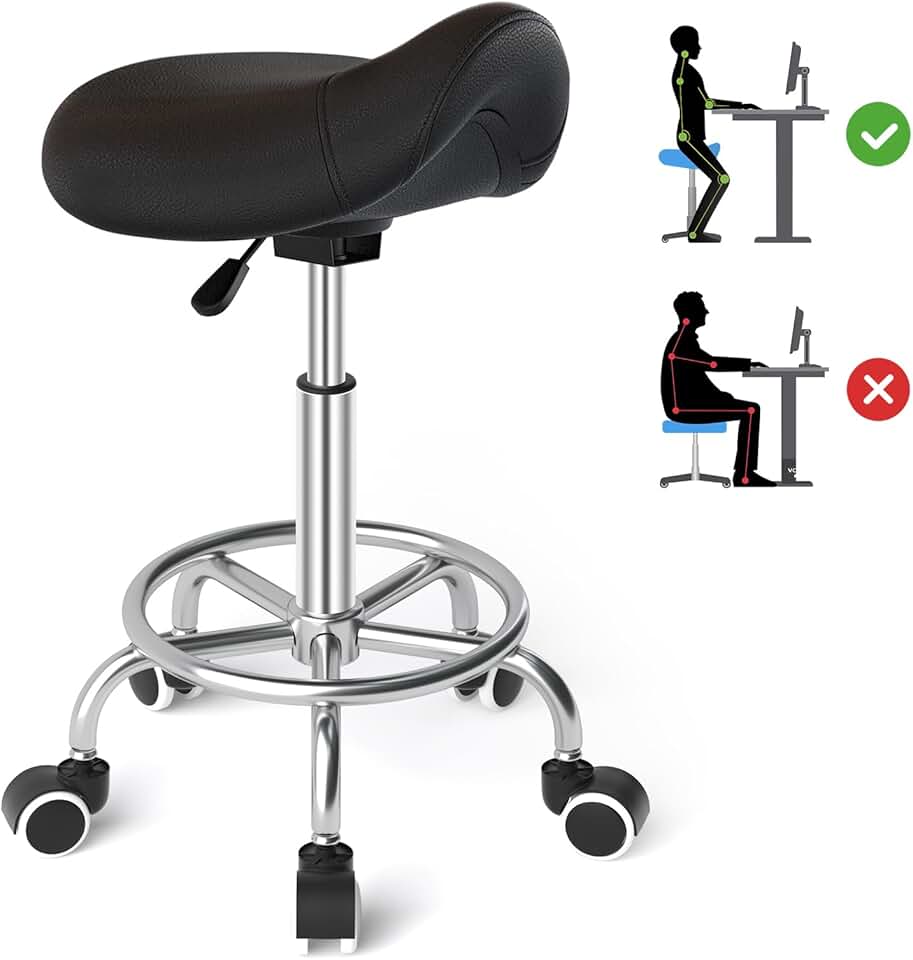
The Antlu's steel base is the first thing you notice when unpacking. At 12.87-19.96 lbs depending on variant, it is heavier than plastic-base competitors and feels proportionally more stable on uneven flooring. The five-caster configuration uses soft polyurethane wheels that handle the transition from hardwood to area rug without catching or scratching. The hydraulic cylinder - the single most failure-prone component on any pneumatic stool - has no reported pressure loss or jerking issues in 2025-2026 Amazon reviews covering hundreds of units. The faux leather upholstery over molded PU foam is thicker than what you find on $60-80 competitors, and while it will not survive a dental office's daily disinfectant wipe-downs indefinitely, it holds up well under normal home-office or light commercial use.
The 400-lb weight capacity is structural, not marketing. The steel base and cylinder are rated for that load, and the seat dimensions (14 inches depth, 18.1 inches width) are wide enough to distribute that weight appropriately - provided the user's hip width fits within that surface.
Comfort & Ergonomics
Saddle chairs work by tilting the pelvis forward 10-15 degrees, which reduces lumbar compression and opens the hip angle from 90 degrees to roughly 110-135 degrees. The Antlu does this correctly. Users transitioning from a standard task chair typically report reduced lower-back tension within the first week, assuming their core strength is adequate to maintain the posture.
The honest caveat is seat width. The 18.1-inch measurement is accurate, but the saddle's downward curve toward the centerline means anyone with hips wider than approximately 15-16 inches will feel pressure on the outer thighs rather than the sitting bones. Multiple Amazon reviewers and independent testers flag this specifically, and it is not a subjective complaint - it is geometry. Smaller-framed users report sustained comfort. Larger-framed users report discomfort starting at 45-60 minutes. There is no padding workaround for a mismatch in width.
The absence of a backrest is a design choice, not a cost-cut. Saddle seating theory holds that a backrest encourages passive sitting that undermines the pelvic tilt benefit. That argument is valid for users with strong posterior chains. For everyone else, the lack of lumbar support is a genuine ergonomic liability after 2 hours.
Adjustability
Height adjustment runs from 21 to 28 inches via a pneumatic lever on the right side of the cylinder. This range covers seated desk work at counter height (35-36 inches) and most standing-desk configurations at 42-44 inches when the user is on a standard stool. The mechanism responds in under one second with no secondary locking step required. There are no tilt or seat-angle adjustments - the saddle angle is fixed. Users who want to modulate pelvic tilt further will need a model from a different brand. The 360-degree rotation is smooth and unobstructed at all height settings.
Assembly
Two steps: insert the cylinder into the base, attach the seat to the cylinder. No tools required. Total time is under 5 minutes for any adult. There are no reported misalignment issues between the seat plate and cylinder across current production units.
Value for Money
At $120 from Select Furniture Store, the Antlu sits at the upper end of budget saddle stools and the lower end of mid-range ones. The OHF Aloria runs $200-$300 and adds backrest variants. The HAG Capisco starts at $1,000 and adds a wider seat, tilt adjustment, and substantially better long-term durability. If you sit 6-8 hours daily in a commercial setting, the Capisco's price is justified over a 5-year lifespan. If you sit 2-4 hours daily at a home office or treatment table and your hip width fits the seat, the Antlu at $120 is a rational purchase with no meaningful competitor at the price point.