Build Quality
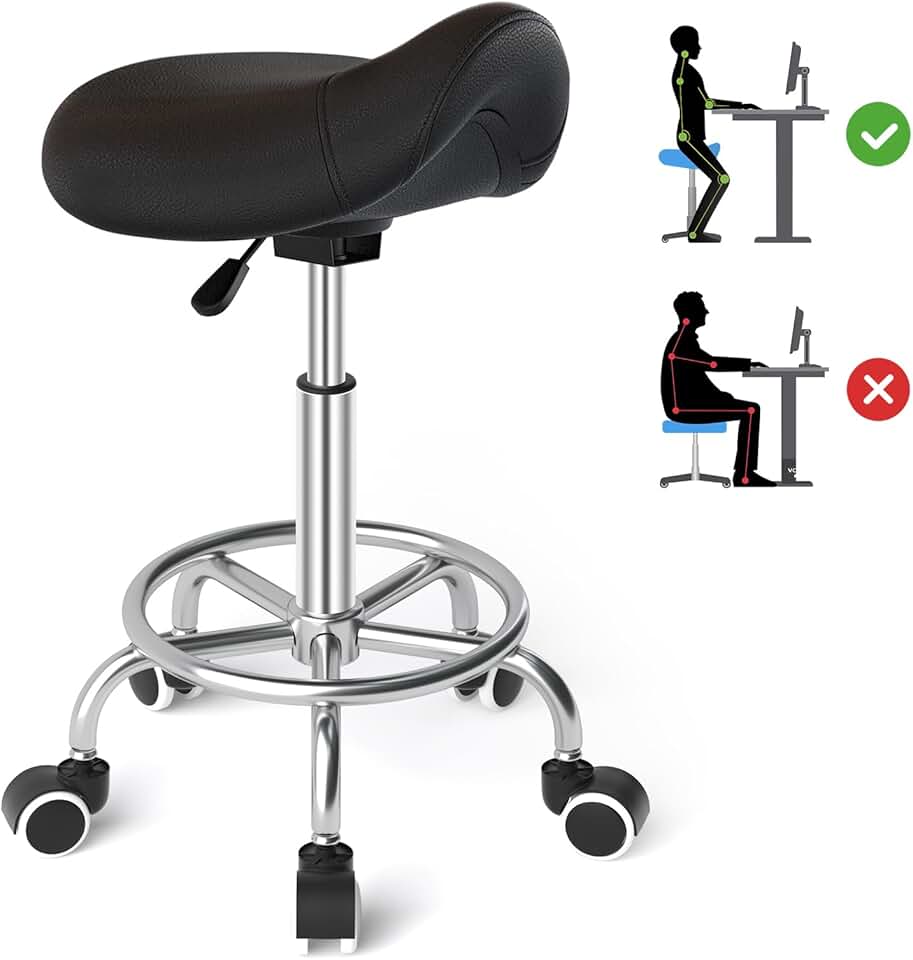
The iron base is the first thing worth examining when this arrives - run your hand under each of the 5 caster arms and check the weld seams. Iron construction at this price point ($195.46) means you're getting real structural rigidity compared to the nylon or aluminum-alloy bases on $99 saddle stools, but it also means any manufacturing defect at the welds is a safety issue, not just a cosmetic one. The gas lift cylinder uses a standard pneumatic mechanism rated for the 400-lb capacity claimed by Dr. Lomilomi. The seamless rubber casters are a genuine upgrade over the hard plastic wheels on entry-level stools - they roll quietly on hardwood and don't score vinyl flooring. The eco-friendly vinyl leather covering looks presentable in photos, but vinyl at this thickness (estimated 0.8-1.2mm based on category norms) will show seat-crease wear within 18 months of 6-hour daily use. Plan for a $15-$25 seat cover investment around year 2.
Comfort & Ergonomics
The saddle shape divides the seat into two lobes that position your thighs at roughly 45 degrees below horizontal, tilting the pelvis forward and naturally encouraging lumbar lordosis. For professionals who work bent forward - dental hygienists hovering over a patient, massage therapists reaching across a table - this pelvic tilt reduces the posterior pelvic tuck that causes disc compression in standard chairs. The high-resilience molded foam is a meaningful spec: standard polyurethane foam in $99-$139 competitors compresses 30-40% within 6 months, turning a saddle chair into a hard plastic experience. High-resilience foam retains 90%+ of its original height for 3-5 years under normal use. There is no lumbar support, no armrests, and no backrest - this is not a compromise or a missing feature, it is the entire ergonomic premise of saddle seating. Your core muscles do work a conventional chair handles passively. Budget 3-4 weeks of gradual adaptation before going full-time on this chair.
Adjustability
The pneumatic height adjustment is the primary - and only - adjustability mechanism on this chair. There are no seat angle adjustments, no tilt tension controls, and no armrest configurations. The gas lift operates via a standard lever on the right underside of the seat. The exact height range is not published by any verified retailer as of early 2026, which is a legitimate buyer concern. Saddle chairs require a higher seat position than conventional chairs - most users set them 2-4 inches above their standard desk chair height to maintain proper thigh angle. If your desk is fixed at standard 29-30 inches, measure your sitting-to-floor height in your current chair and add 3 inches before assuming this chair will fit your workstation.
Assembly
Saddle chairs in this category typically require 10-15 minutes of assembly: attach the caster base to the gas lift cylinder, insert the cylinder into the base, and mount the seat. No tools are usually required beyond what's included. The iron base weight (estimated 8-12 lbs) makes this straightforward for one person. Inspect the cylinder clip - the retaining ring that locks the seat to the gas lift is the most common failure point on chairs in this price tier across all brands.
Value for Money
The $195.46 price sits in an awkward spot. The Walmart listing for the Dr. Lomilomi shows $139.99 for what appears to be an identical model - a $55.47 difference (39% premium) with no documented specification difference between the two listings. If you're comparing this against the HOMCOM at Home Depot or the Latitude Run at Wayfair, the 400-lb weight capacity is the deciding factor: most competing saddle stools in the $150-$220 range cap at 250-275 lbs. For users who need that capacity, the premium is justified. For users under 220 lbs, verify the Walmart price hasn't disappeared before paying $195.46 for identical specs.