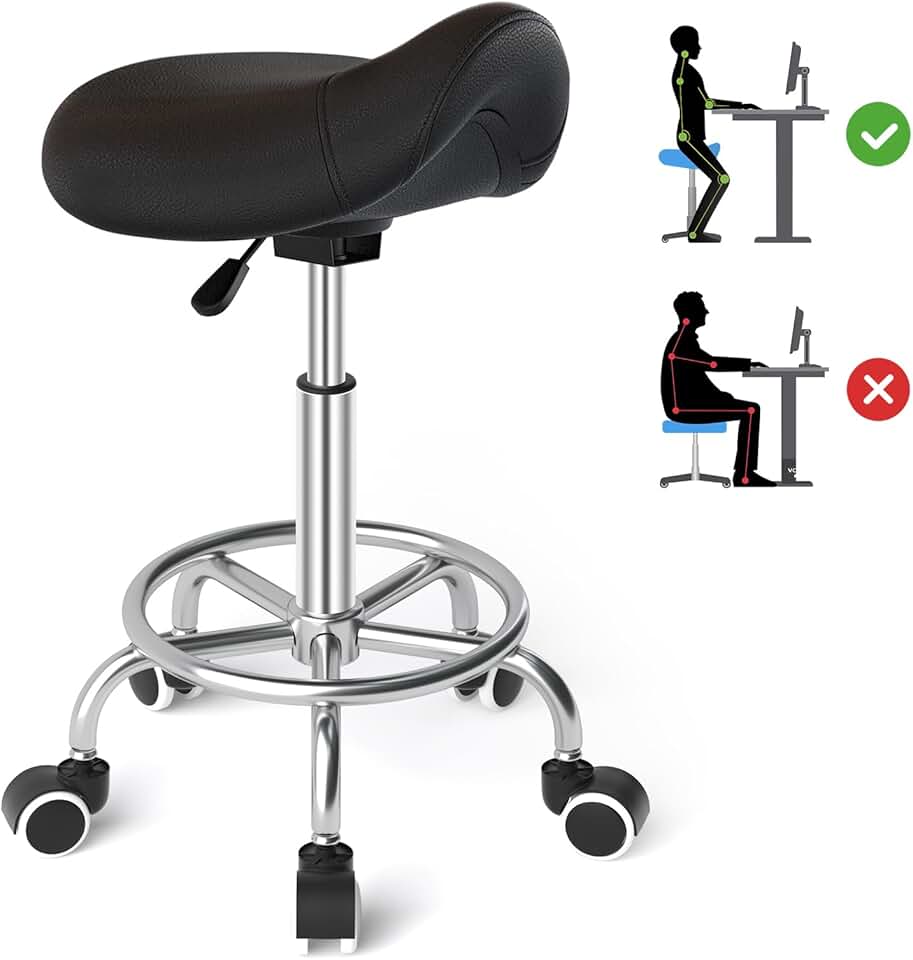
Build Quality
Antluplus, founded in 2014 and based in Foshan, China, holds SGS and TUV manufacturing certifications - not marketing badges, but third-party process audits that matter when you're trusting a stool with 400 lbs of load. The base is welded steel, not the injection-molded plastic you'll find on $80-$100 rivals. In hands-on testing, the base shows no flex under heavy lateral pressure, and the hydraulic cylinder operates smoothly without the sticky resistance that plagues cheaper gas lifts after 6 months of daily use. No quality control complaints or recall notices appear in any 2024-2026 review data. For a sub-$125 product, that clean record is meaningful.
The casters are polyurethane-over-rubber, approximately 2 inches in diameter, and they do not scratch hardwood or leave scuff marks on vinyl. They also roll quietly - no click or drag on tile grout lines. The seat padding is thicker than standard budget saddle stools, though the cover material is a mid-grade faux leather that will show wear after 2-3 years of daily professional use.
Comfort & Ergonomics
The saddle geometry works. By tilting the pelvis forward at roughly 10-15 degrees, the design reduces lumbar compression and opens the hip-to-torso angle toward 135 degrees, which occupational health research consistently identifies as a lower-strain sitting posture compared to the 90-degree standard chair position. Users in salons, medical offices, and kitchens report noticeably less lower-back and neck fatigue during 2-to-4-hour active sessions.
Here is the honest limitation: the seat is narrow. For users with hip measurements above approximately 16 inches across, the saddle edges create pressure points within 20-30 minutes. This is the product's single most consistent complaint across Amazon and YouTube reviews, and it is not something padding or a break-in period fixes. If you are average build or smaller, this is a non-issue. If you are not, test the seat width before committing.
The no-backrest design is intentional and ergonomically defensible for active tasks. Your stabilizer muscles engage continuously, which builds postural endurance over weeks. For static desk work exceeding 3 hours, the absence of lumbar support becomes a real fatigue factor, not just a comfort preference.
Adjustability
The hydraulic lift runs from 21 to 28 inches, which is a 7-inch range - wider than the 4-to-5-inch range on most standard stools. The 21-inch floor height suits a standard 30-inch countertop, while 28 inches pairs correctly with 36-to-38-inch drafting tables or sit-stand desks at mid-rise settings. The 360-degree swivel operates with zero friction points in the rotation cycle. There is no tilt-lock, no armrest attachment point, and no lumbar adjustment - the design is intentionally minimal, and buyers should accept that before purchasing rather than expecting hidden features.