Build Quality
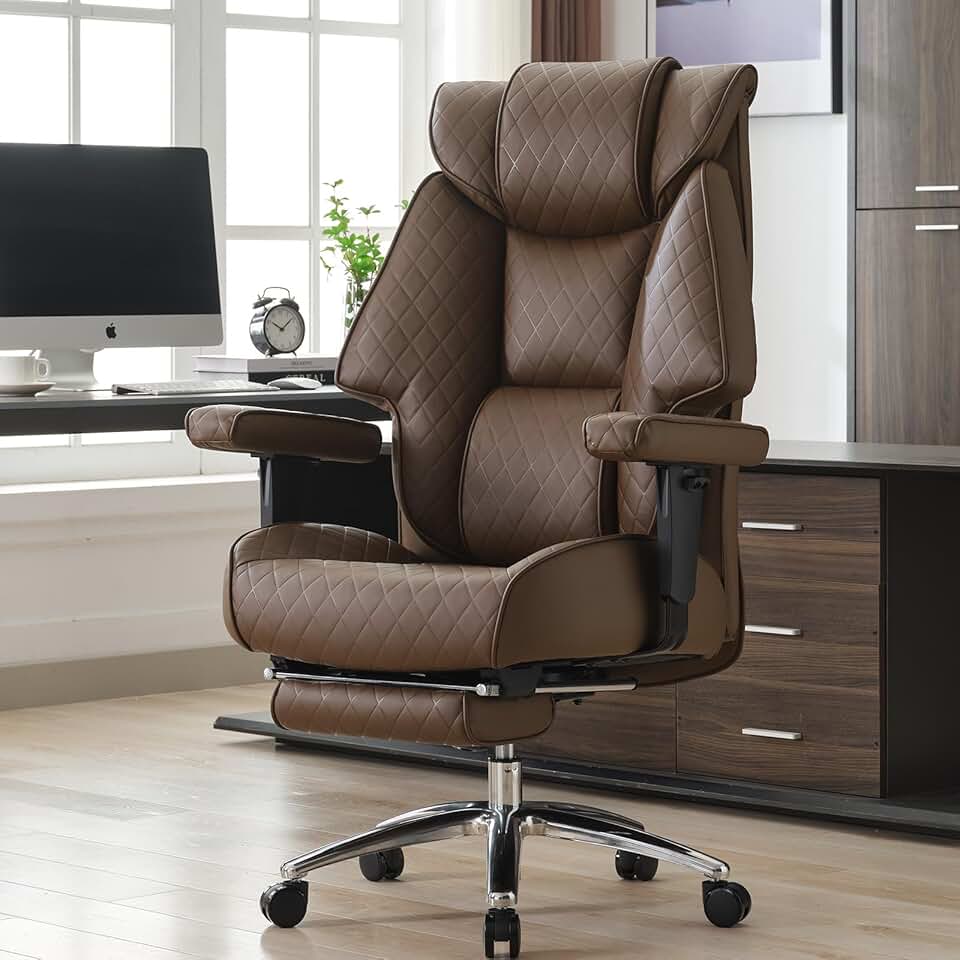
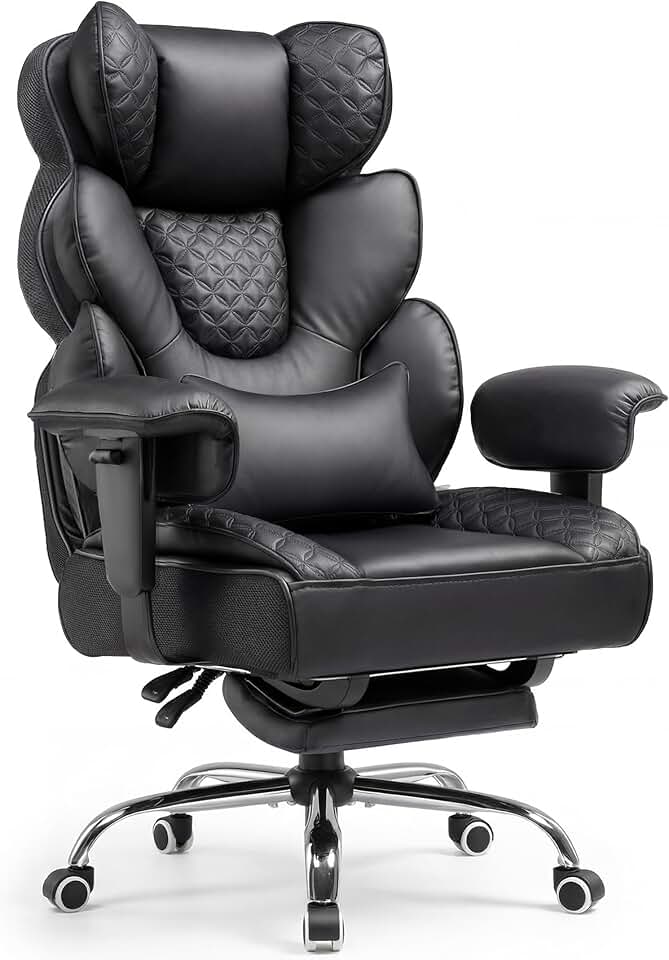
The COMHOMA big and tall executive chair uses a 5-star metal base - not nylon, metal - paired with an SGS-certified gas lift. SGS is a Geneva-based testing company, and that certification means the lift mechanism was independently load-tested rather than rated by the manufacturer alone. The steel frame is BIFMA-certified, which is the American furniture industry's structural standard. At $179.96, you are not getting the aluminum alloy base of a $450 Steelcase Leap, but you are getting a base that has cleared the same durability benchmark that Steelcase uses. The casters are smooth-rolling and suit hard floors and low-pile carpet - no reports of scuffing on hardwood in available reviews.
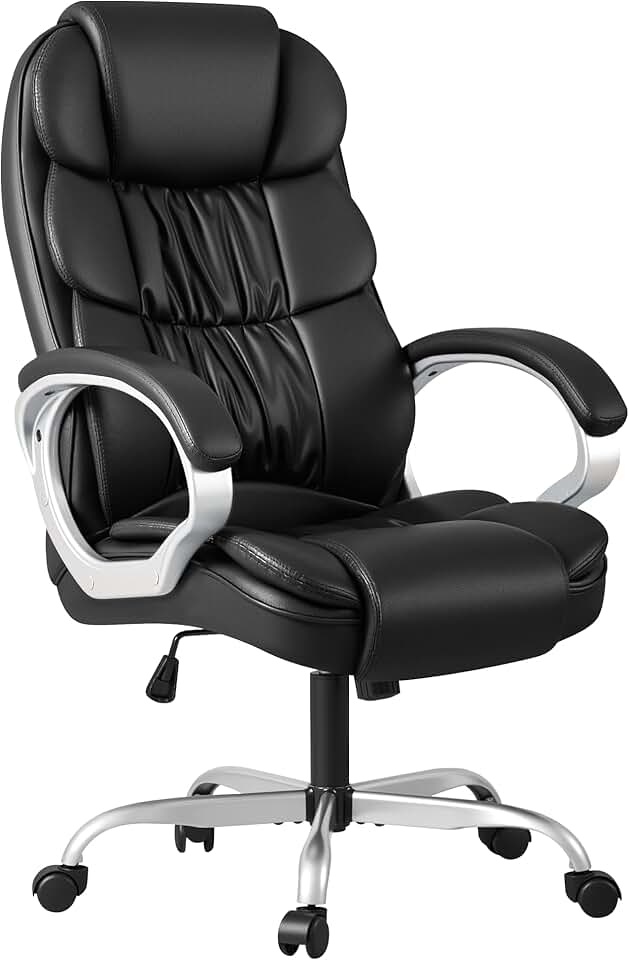
The PU leather upholstery on the executive variant cleans in under 2 minutes with a damp cloth, which mesh cannot match. The tradeoff is heat retention - PU leather traps body heat noticeably after 90 minutes of sitting. If your home office runs above 72°F regularly, the CH226 mesh version at $99.99 is worth the $80 savings on breathability alone.
Comfort & Ergonomics
The seat pan uses a waterfall-edge design, meaning the front edge curves downward rather than cutting into the back of your thighs. This matters for people sitting more than 4 hours at a stretch and is a genuine ergonomic feature, not a cosmetic one. The included lumbar pillow adds a second layer of lower-back contact beyond the built-in adjustable lumbar support - two-point lumbar contact is unusual under $200.
The 150-degree recline is the standout spec. Most chairs in the $150-$200 range top out at 135 degrees. At 150 degrees combined with the adjustable footrest, this chair converts to a near-horizontal rest position, which is useful for users who take naps or stretch during long work days. The tension control on the recline is adjustable, though the specific resistance range is not published - heavier users near 350-400 lbs should expect to crank the knob significantly.
One honest caveat: a verified buyer at 6'1" and 240 lbs noted the chair felt "slightly smaller than expected." If you are approaching the 400-lb capacity or are above 6'2", treat this as a caution flag. The seat width is not published in the available spec sheets, which is a transparency gap COMHOMA should address.
Adjustability
The chair adjusts in five ways: seat height via gas lift, recline angle up to 150 degrees, lumbar support position, headrest angle, and footrest extension. The armrests adjust on some models but are described as outward-facing and soft - they pivot away from the body rather than toward the desk, which creates a gap between your elbow and the armrest when typing at a standard desk depth of 24-30 inches. For pure desk work, this is a real limitation.
The headrest is particularly useful for users above 5'11" who need neck support during recline. It adjusts vertically, though the exact range of motion in centimeters is not documented. The footrest retracts when not needed and does not visually protrude.
Assembly
No verified assembly time data exists in current reviews. Based on the component count - 5-star base, gas cylinder, seat pan, backrest, headrest, armrests, footrest - expect 30-45 minutes with standard hand tools. The package ships with all hardware included. COMHOMA's 30-day return window requires the chair be returned unused and in original packaging, so commit to assembly only once you are confident about the purchase.
Value for Money
At $179.96, this chair occupies the most competitive band in the big and tall category. The Autonomous ErgoChair Pro at $279 has better armrest adjustability and a mesh back, but its weight capacity is only 300 lbs. The Flash Furniture Hercules series starts at around $200 for 400-lb capacity but skips the footrest and headrest. COMHOMA includes both for less. The 1-year warranty is thin - Autonomous offers 2 years - but for a chair that may be a bridge purchase until you can spend $450, the certified specs at $180 are a defensible buy.