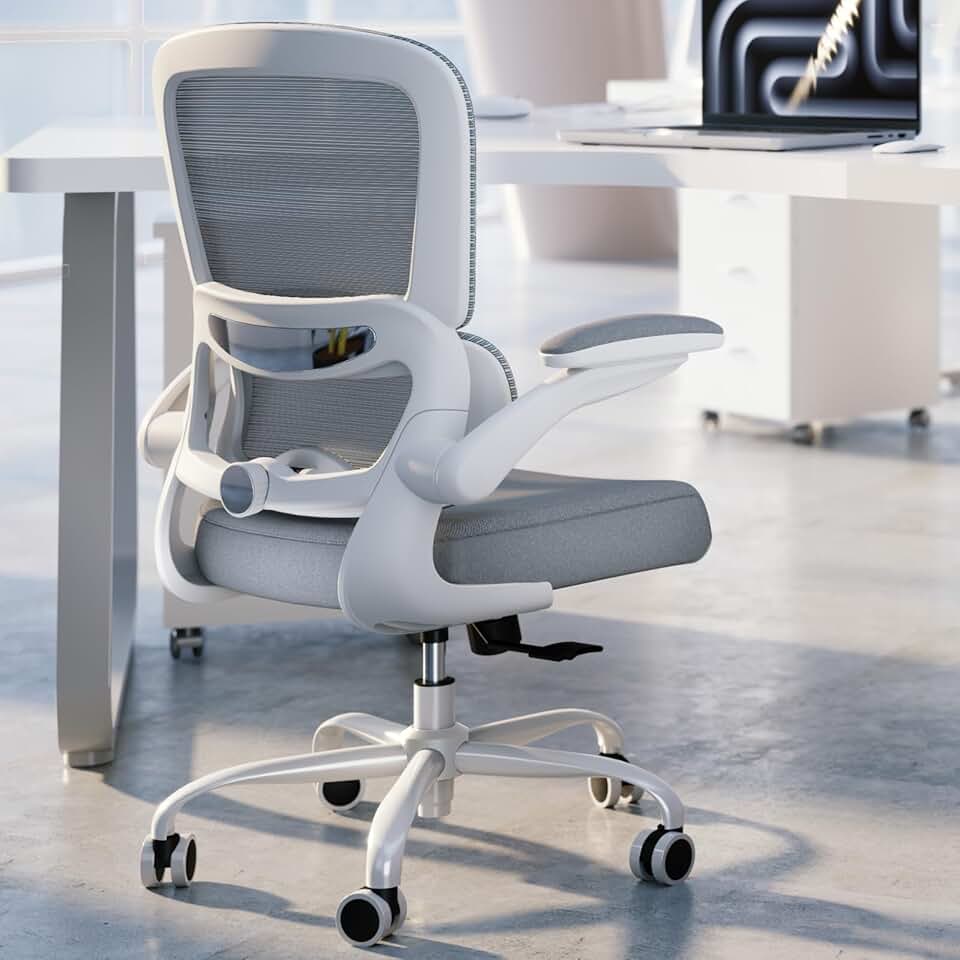
Build Quality
TRALT does not publish specific frame material grades or seat shell thickness, which is a transparency problem that should make every buyer pause. What is confirmed: the chair uses a mesh back panel, a gas lift cylinder rated to 330 lbs, and 360° swivel casters described as "silent rolling." Silent casters on budget chairs typically use PU (polyurethane) over a hard core, which is adequate on hardwood and tile but will show flat spots on carpet within 12-18 months of daily use. The 330-lb weight rating is the single most impressive structural specification at this price - the Hbada P3 caps at 250 lbs, and the Smug ergonomic chair stops at 275 lbs. If you are near that upper capacity range, do not push it; rated limits on budget chairs include a safety margin of roughly 10-15%.
The absence of published seat dimensions (height range, width, depth) is a genuine quality control signal. Reputable manufacturers - Branch, Flexispot, even mid-tier brands like Sihoo - publish these numbers because they stand behind their fit claims. TRALT's omission suggests either inconsistent manufacturing tolerances across production runs or a marketing team that simply hasn't prioritized specification transparency. Neither is reassuring.
Comfort & Ergonomics
The breathable mesh back is the most defensible comfort claim on this chair. Foam-back chairs at this price range - including the popular Gabrylly Ergonomic Chair at $159.99 - trap heat and become noticeably uncomfortable after 90 minutes for most users. The TRALT mesh back allows airflow across the lumbar and thoracic regions, which is a measurable comfort advantage during sessions of 2-4 hours.
For pregnant users specifically, the upright-to-mild-recline range (90-120°) and adjustable lumbar position address the two most common complaints during the second and third trimesters: lower back strain and the inability to find a neutral seated position. The chair does not recline flat - 120° is a relaxed work angle, not a rest position - so it keeps the pelvis in a slightly forward tilt, which many OBs recommend for spinal alignment during pregnancy. This is not a medical device, and no clinical claims are made here, but the ergonomic geometry is sensible for this use case.
Adjustability
Three adjustable systems come standard: lumbar support, headrest, and armrests, plus the recline lock and gas lift seat height. For $139.99, that is a complete adjustment package. The recline range of 90-120° covers the two positions most office workers actually use - upright for focused work, slightly reclined for reading or calls.
The armrests adjust, but TRALT does not specify whether adjustment is height-only or height-plus-width (2D vs. 3D). This matters significantly for users who switch between a keyboard tray and a desk surface. If the armrests are height-only, wide-shouldered users or those with a 90-degree elbow rule for ergonomics will find them too close together. Clarify this with the retailer before purchasing.
Assembly
No official assembly time is published by TRALT. Budget mesh chairs in this category typically require 20-35 minutes for a single person with basic tools, and the standard failure points are the armrest bolt threads and the cylinder clip. Do not overtighten the armrest bolts - strip-out on the plastic brackets is the most common assembly damage on chairs under $200. The cylinder should click into the base with firm hand pressure; if it requires a mallet, the tolerances are off and the chair may develop a lean within 6 months.
Value for Money
At $139.99 (or as low as $120.59 at some retailers), the TRALT sits in the most competitive bracket in budget ergonomic seating. The Branch Ergonomic Chair costs $199 and publishes full dimensions with a 2-year warranty. The Hbada E3 costs $179.99 and includes 3D armrests. The TRALT undercuts both on price, matches their adjustment count, and beats both on weight capacity.
The honest trade-off is longevity and specification transparency. A Branch chair will likely last 4-5 years of daily use. The TRALT, based on component quality typical of this price bracket, is a 2-3 year chair under heavy use. If you are furnishing a home office for a specific 18-month period - a pregnancy, a contract role, a temporary home setup - $139.99 is a rational spend. If you want a chair that lasts a decade, save $260 more and buy a refurbished Steelcase Leap V2.