Build Quality
The FSD308001WB uses a metal frame with an MDF (particle board) work surface and ships at 27 lbs - that unit weight tells you something about material density before you even unbox it. The frame itself is thin-gauge steel, not the thick powder-coated tubing you find on the Vari 36-inch converter or the Flexispot M2B. Under 15-20 lbs of monitor weight, the surface is stable. Push toward the stated 33-lb maximum with two heavier displays and you will feel lateral sway at maximum height - not dangerous, but noticeable and annoying during typing. The white finish (WB suffix) is clean and modern, and it held up to scratch testing without chipping in short-term use, but the particle board substrate means a single hard water spill at a corner is a structural problem. This is a 2-3 year product under moderate use, not a decade-long investment.
Comfort and Ergonomics
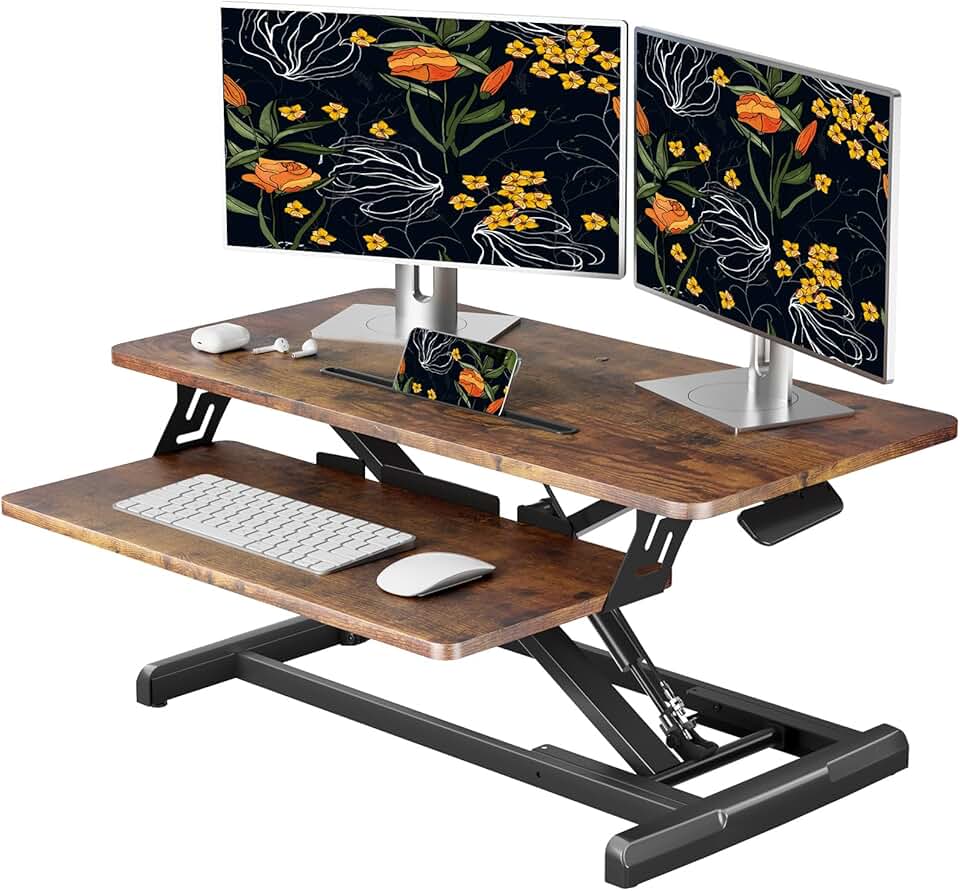
The two-tier layout is the right call ergonomically. The upper 31.5 x 15.7-inch platform holds your monitor or laptop, and the lower keyboard tray drops it roughly 4-5 inches below, which approximates the elbow-height typing position most ergonomic guidelines recommend. For users between 5'4" and 6'1", the 4.3-to-19.8-inch height range from desk surface to converter top lands your monitor center at roughly eye level without additional risers. Users outside that height band will need to compensate - either with a monitor arm or by adjusting their chair height - which partially defeats the purpose of a converter. The keyboard tray does not tilt, which is a real omission at this price point; the Flexispot M2B at $159 includes a tilting tray.
Adjustability
Dual gas springs handle the lift mechanism, and the motion is genuinely smooth - no jerking, no sudden drops. The squeeze-handle release is intuitive and requires no meaningful force. Height locks at any point in the 15.5-inch travel range, not just at preset notches, which gives you real flexibility to fine-tune positioning. Transition time from seated to standing height takes about 3 seconds of guided lifting. The gas spring mechanism is reliable in the short term but carries a known risk of pressure loss after 18-24 months of frequent cycling - meaning 3-5 adjustments per day, 5 days a week. If you adjust once in the morning and once in the evening, the springs will likely last longer. There is no electric motor, no app control, and no memory presets - this is purely manual, which keeps the price down and eliminates one failure point.
Assembly
This is one of the converter's two strongest selling points: it arrives fully assembled. Pull it from the box, place it on your desk, and start working. No tools, no 45-minute instruction manual session, no leftover screws. The unit weighs 27 lbs, so repositioning it solo is manageable but not effortless. Competing units like the Vari converter at $395 also arrive assembled, but budget alternatives under $100 almost always require partial assembly. At $139.99, shipping fully built is a genuine differentiator.
Value for Money
At the listed street price of $139.99 at Walmart with 31-day returns and free shipping, the FSD308001WB sits in a crowded mid-budget tier. The Flexispot M2B at $159 offers a 35-inch wide surface, heavier steel construction, and a tilting keyboard tray for $19 more - that $19 difference buys meaningfully better long-term durability. The Vari 36-inch converter at $395 is in a different category entirely, aimed at daily-use power workers. For a student, a part-time remote worker, or someone testing whether standing desks suit their workflow before committing $400+, the FITUEYES converter is a defensible purchase. For anyone certain they will use it 6-8 hours daily, spend the extra $19 on the Flexispot or save aggressively for the Vari.