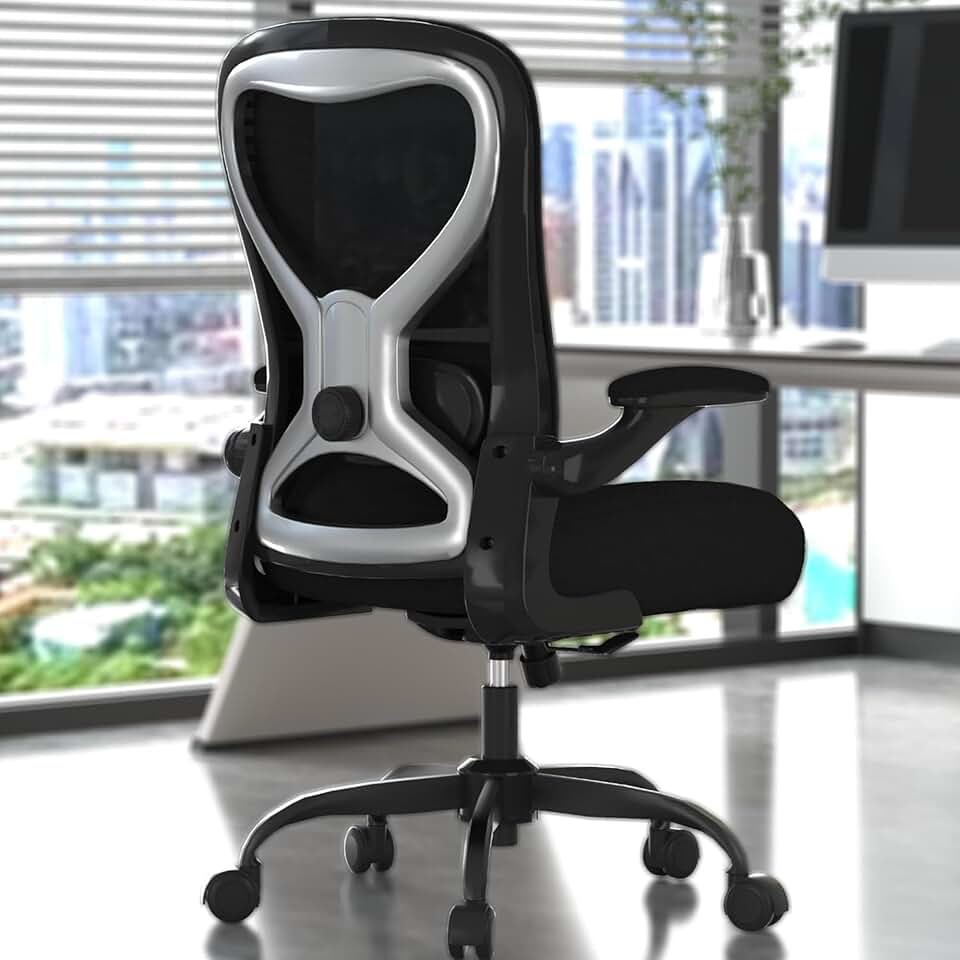
Our 2026 Branch Ergonomic Chair Pro review covers 14-point adjustability, seat comfort issues, armrest rattle, and how it stacks up against Herman Miller Sayl at $495.
Office Desk Chair
Solid $90 ergonomics for 6-hour days - nothing more, nothing less
As an Amazon Associate, we earn from qualifying purchases.
Branch Ergonomic Chair Pro Review (2026) - A Near-Perfect Mid-Range Chair With Two Real Flaws
The Branch Ergonomic Chair Pro costs $499 - $649 depending on material. At that price, it's competing directly with the Herman Miller Sayl ($495) and the Autonomous ErgoChair Pro ($499) - two chairs from brands with far more name recognition. It wins that fight on adjustability by a significant margin. It loses it in one specific, important way: the seat.
I've spent time with the spec sheet, dug through long-term user reports, and synthesized six months of expert reviews (September 2026 through March 2026) to give you a complete picture. Here's what you need to know before spending $500.
Quick Verdict
Buy it if: You work 6 - 9 hours at a desk, have a history of lower back pain, sit between 5'4" and 6'3", and want the most adjustment points available under $650 without paying Herman Miller prices.
Skip it if: You're under 5' tall, over 6'3", or you prioritize long-term seat cushion durability above all else. The seat bottoms out over time - a real flaw the original Branch Ergonomic Chair doesn't share.
The number that matters: At $499 mesh, this chair offers 14 adjustment points. The Herman Miller Aeron starts at $1,445. The Sayl at $495 offers fewer adjustments. The math works in Branch's favor - with caveats.
Featured
Office Desk Chair
Solid $90 ergonomics for 6-hour days - nothing more, nothing less
High-density foam seat; mesh, vegan leather, or leather back/seat
What Branch Actually Improved Over the Original
The Pro isn't just the original chair with a new name. The differences are meaningful:
Lumbar support: Thicker padding, plus height, depth, and mode adjustability. The original has height-only lumbar that multiple users described as "aggressive" or "pokey."
Seat depth adjustment: The original doesn't have it. On a chair you'll sit in for years, this matters for thigh support and circulation.
Forward tilt: Useful if you lean into a monitor or keyboard. Absent on the original.
Arm pads: Noticeably softer than the original's stiffer pads.
Headrest: The Pro includes it as standard with three-axis adjustment.
Build: Metal base and denser plastic frame throughout.
All of that added up to a price increase of roughly $50 - $100 over the original. For most people with back pain or specific ergonomic needs, that's a reasonable trade.
Ergonomic Office Chair
Solid $189 starting point - not your forever chair
That's legitimately comprehensive at this price. The Herman Miller Sayl, which costs roughly the same at $495, doesn't offer seat depth adjustment or multi-mode lumbar. The Autonomous ErgoChair Pro matches Branch on paper for adjustment count but has less data on long-term reliability.
One adjustment worth flagging: the tilt tension knob requires 50 turns to move from minimum to maximum resistance. That's excessive. You'll set it once and forget it, but the initial setup is tedious.
Comfort - The Good and the Problem
Lower Back Support
This is where the Pro genuinely earns its price. Mindremix.com's five-month update (December 2026) reported a 75% reduction in reported back pain across testers using the full adjustment range. The lumbar system - adjustable in height and depth with selectable firmness modes - is the standout feature of the chair. For people who've struggled with chairs that have fixed or one-dimensional lumbar (most chairs under $400), this is a meaningful upgrade.
The mesh back is breathable. Long afternoon sessions don't produce the swampy lower-back heat you get from foam-backed chairs.
The Seat Cushion Problem
Here's the honest part: the seat bottoms out. After extended sessions, the high-density foam compresses enough that some users report feeling pressure at the tailbone. Sleeksetups.com flagged this as a new flaw specific to the Pro - the original Branch Ergonomic Chair, which uses a firmer seat construction, doesn't share this issue.
This matters more the longer you sit. If your workday is 4 - 5 hours in the chair, you may not notice it. If you're a 9-hour-a-day sitter, the seat degradation over 12 - 18 months is a real consideration.
The Backrest Feel
A secondary complaint worth noting: the rigid internal frame is perceptible through the upholstery on both mesh and vegan leather versions. The mesh sits loosely enough over the frame structure that you can feel hard edges in certain reclined positions. It's not painful - but it breaks the premium feel the price implies.
ELABEST X100 Mesh Chair with Footrest
17-point adjustability and a footrest at $320 - finally a tall-person chair that delivers
The armrests have three adjustment axes (height, width, depth), which is better than most chairs at this price. The pads are genuinely softer than the original Branch.
But they rattle. Not occasionally - daily, per Mindremix's five-month long-term test. This is the second major ongoing complaint across multiple reviewers, and Branch has not addressed it with a hardware revision as of early 2026. For some people, minor hardware rattle is irrelevant. For others sitting in a quiet home office, it's maddening.
TechRadar's 2026 update explicitly called the armrests "mediocre" despite the soft pads - rating them as the chair's weakest component.
Standard cylinder: Seat height 17" - 19.9". Works well for users 5'4" - 5'11" at a standard 28" - 30" desk.
Tall cylinder upgrade (additional cost): Seat height 19.3" - 22.9". Extends the usable range to about 6'3".
Shorter users (under 5'): The shallowest seat depth setting helps, but the seat height floor of 17" may still leave feet dangling. A footrest becomes necessary. This chair isn't designed for petite users.
Taller users (over 6'3"): Even with the tall cylinder, the seat back height and seat dimensions push the practical limit. Look elsewhere.
Office Desk Chair
Sub-$100 seating for shorter frames - honest about its limits
These two chairs cost almost exactly the same. The Sayl has better brand recognition, a distinctive design, and a 12-year warranty versus the Pro's 7 years. But the Sayl has no seat depth adjustment, no forward tilt, and its lumbar is built into the flex-back structure rather than being independently adjustable. If back pain is your primary concern, the Branch Pro wins this comparison. If you want a chair that will likely outlast the Branch by several years, the Sayl's warranty and build history are more reassuring.
Branch Pro vs. Autonomous ErgoChair Pro ($499)
On paper, similar adjustability at the same price. The Autonomous has a 2-year warranty versus Branch's 7 years - that gap is decisive. Branch's customer service and warranty coverage are significantly better documented. The Autonomous is worth considering if you find it on a deep sale, but at full MSRP, Branch's 7-year coverage makes it the smarter buy.
Branch Pro vs. Steelcase Leap V2 ($1,299+)
The Leap V2 is in a different category. Its LiveBack technology adapts to your spine's movement rather than being set-and-forget. The seat doesn't bottom out. The 12-year warranty reflects genuine build quality that survives a decade of heavy use. If you can spend $1,300, buy the Leap V2. The Branch Pro is for people who can't or won't spend that much - it's the best answer at $500, not a replacement for what $1,300 buys.
The One Chair I'd Recommend Against
The vegan leather version of the Branch Ergonomic Chair Pro at $549. Multiple reports flag the vegan leather wrinkling within months of regular use. You're paying $50 more than the mesh for a material that degrades faster and doesn't breathe. The mesh version at $499 is better in every practical sense. Unless aesthetics are the deciding factor and you're willing to accept earlier wear, skip it.
Sale price: The chair has hit $400 during Branch's periodic promotions. At $400, it's an exceptional value - arguably the best ergonomic chair available at that price point.
At $649 (leather): The value proposition weakens. For $50 more, you're approaching Herman Miller Sayl territory without the warranty or brand track record. Hard to justify.
Branch sells direct at branchfurniture.com with free shipping. No third-party retail markups.
The Branch Ergonomic Chair Pro is the right answer for a specific type of buyer: someone spending their own $499, working from home, dealing with back pain, and unwilling to pay $1,300 for a Steelcase. Within that use case, nothing at this price point offers comparable lumbar adjustability or the same combination of features.
It's not a flawless chair. The seat degradation concern is real, the armrest rattle is real, and the backrest rigidity is perceptible. But at $499 mesh - especially at the $400 sale price - the value-to-adjustability ratio beats every direct competitor including the Herman Miller Sayl. Just go in with eyes open about the seat cushion, and if long-term seat integrity is your deciding factor, the original Branch Ergonomic Chair is the more honest recommendation.
Ready to buy? Here are the products from this guide
At the $499 mesh price point, yes — particularly if back pain is your primary concern. The 14-point adjustability and multi-mode lumbar system are best-in-class at this price. The chair loses some of its value case at $649 (leather), where build quality concerns and a shorter warranty than rivals like Herman Miller make it harder to justify.
The Pro adds seat depth adjustment, forward tilt, a headrest, improved multi-mode lumbar with depth control, and softer armrest pads. It costs roughly $50–$100 more than the original. The tradeoff is that the original has a firmer seat that holds up better over time — the Pro's foam is known to compress and bottom out after extended use.
Based on 2025–2026 long-term user reports, the build quality supports 5–7 years of regular use with the 7-year warranty covering defects. The main durability concern is the seat foam, which shows compression and softening earlier than the frame or lumbar system. Heavy users sitting 8+ hours daily may notice seat degradation within 12–18 months.
With the standard cylinder, seat height maxes at 19.9" — practical up to about 5'11". Branch offers a tall cylinder upgrade that raises the seat height range to 19.3"–22.9", extending usable fit to approximately 6'3". Users taller than 6'3" will likely find the seat dimensions and back height limiting regardless of the cylinder.
Both cost approximately $495–$499 in 2026. The Branch Pro offers more adjustment points — including seat depth adjustment, forward tilt, and multi-mode lumbar — which the Sayl lacks. The Sayl counters with a 12-year warranty versus Branch's 7 years and a better long-term durability track record. For back pain relief and ergonomic customization, Branch wins. For longevity and warranty coverage, Sayl has the edge.
It's workable for users around 5'–5'3" with adjustments, but not ideal. The seat height floor of 17" may leave shorter users with feet that don't reach the floor comfortably, requiring a footrest. The adjustable seat depth helps with thigh pressure, but the chair is clearly optimized for users in the 5'4"–6'1" range.
Two issues dominate long-term reviews: armrest rattle (reported as a daily occurrence after 5+ months by multiple testers) and seat foam compression (the cushion bottoms out at the tailbone during extended sessions). Secondary complaints include a rigid backrest frame perceptible through the upholstery and the tilt tension knob requiring an excessive 50 turns from minimum to maximum resistance.