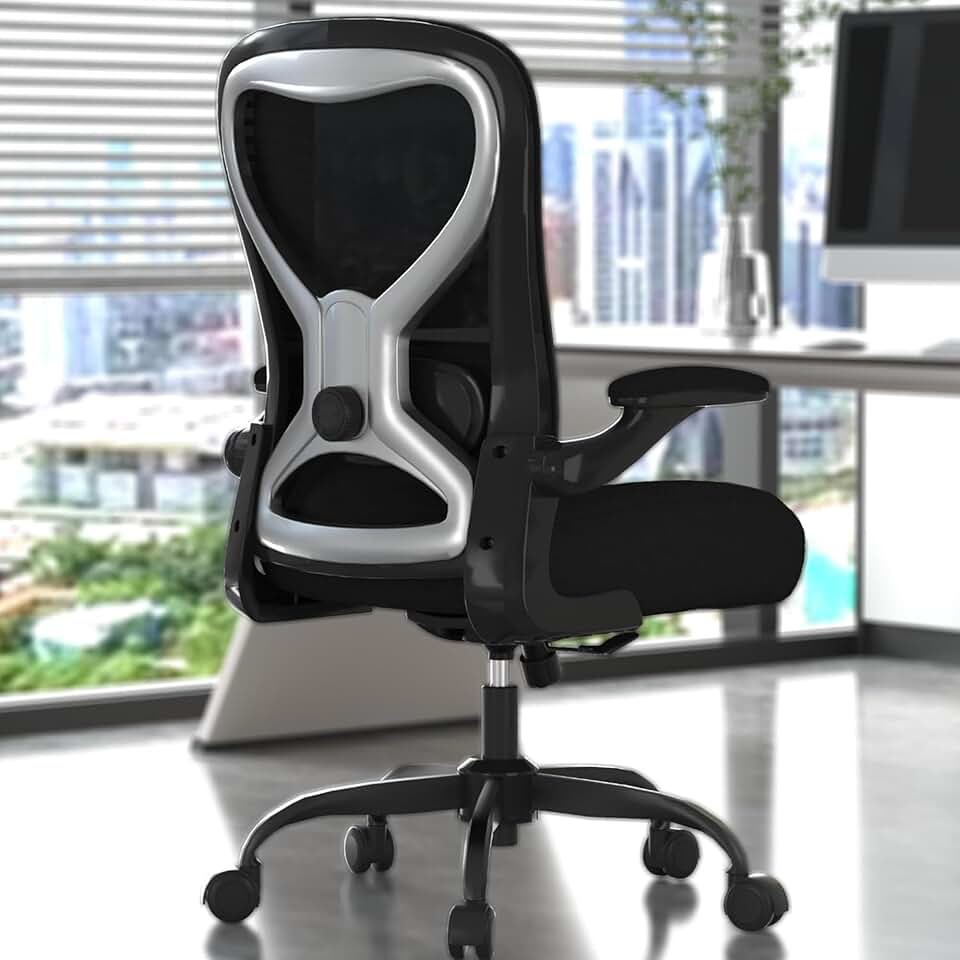
Our in-depth Haworth Fern review covers comfort, adjustability, and value vs Herman Miller Aeron and Steelcase Leap. See if it's right for you in 2026.
Office Desk Chair
Solid $90 ergonomics for 6-hour days - nothing more, nothing less
As an Amazon Associate, we earn from qualifying purchases.
Haworth Fern Review 2026 - The Underdog Premium Chair That Punches Above Its Weight
If you've been shopping for a serious ergonomic chair, you've probably spent hours comparing the Herman Miller Aeron and the Steelcase Leap. But there's a third contender that deserves a long, hard look before you hand over $2,800 - the Haworth Fern, priced at $1,500 to $2,000.
The Fern is one of those rare chairs that looks genuinely different from everything else on the market, backs it up with real engineering, and lands at a price point that makes the Aeron look like a tough sell. After sitting in this chair for extended sessions and digging deep into its design details, here's everything you need to know.
What Is the Haworth Fern - A Quick Overview
The Haworth Fern is a high-end ergonomic office chair designed and manufactured by Haworth, a company better known in the commercial office furniture world than in the consumer direct space. That's part of why this chair flies under the radar - Haworth doesn't market as aggressively as Herman Miller or Steelcase, which means their products often offer quietly superior value.
The Fern launched with a clear design philosophy - build a chair back that moves with the human body rather than constraining it. The result is one of the most visually striking and mechanically interesting backs in the premium chair market today.
Key specs at a glance:
Price - $1,500 to $2,000 depending on configuration
Warranty - 12 years
Weight capacity - 300 lbs
Seat height range - 16" to 20.5"
Back type - Wave Suspension System with flexible knit fronds
Armrests - 4D (height, width, depth, pivot)
Trial period - 30 days
Certifications - GREENGUARD Gold
Featured
Office Desk Chair
Solid $90 ergonomics for 6-hour days - nothing more, nothing less
The Wave Suspension Back - What Makes the Fern Truly Different
Let's start with the feature that sets the Fern apart from every other chair in this price range - its patented Wave Suspension System.
Most ergonomic chairs use a rigid frame with mesh stretched across it, or a solid foam-padded back. The Fern throws that playbook out entirely. Instead, the back consists of flexible fronds - individual elements that connect to a central spine structure and a cradle layer underneath. There is no hard outer frame visible anywhere on the back. The entire structure is edgeless.
What does this mean in practice? The back flexes and adapts in three dimensions as you move. When you shift laterally, lean into a turn, or settle deeper into a recline, the back adjusts around you rather than pushing back against you. It's been described by multiple reviewers as feeling more "human" than a standard mesh back, and after extended sitting sessions, that description holds up.
The surface material is a 3D-sculpted breathable knit that contours closely to the shape of the spine. Unlike flat mesh, this material has depth and texture that distributes contact pressure more evenly across the back. For users between 155 cm and 195 cm tall, the back positioning is nearly ideal without additional adjustment - it just works.
Expert Tip - If you're deciding between the standard Fern back and the version with an added lumbar insert, many experienced users actually prefer the model without it. The Wave Suspension's natural flex already handles lumbar support intuitively for most people, and adding a firm insert can occasionally work against the back's organic movement.
Is it gimmicky? Not at all. The Wave Suspension System earns top marks in independent comfort testing and represents genuine engineering innovation rather than a marketing novelty.
Adjustability - What You Get and Where It Falls Short
The Fern scores a strong 4.5 out of 5 for adjustability. That's excellent, but not perfect, so let's break down both sides honestly.
What the Fern Gets Right
4D Armrests are standard and genuinely functional. You can adjust:
Height (up and down)
Width (in and out)
Depth (forward and back)
Pivot (angle of the arm pad)
All adjustments happen smoothly and hold position well during normal use.
Synchro-tilt recline gives you a natural rocking and leaning motion with five lockable positions across the recline range. Tension control lets you dial in how much resistance the chair pushes back with. For long sessions where you naturally rock and shift, this is one of the better recline systems available at this price.
Seat height adjusts across a solid range, and forward tilt is available as an option - useful for users who prefer an active seated posture.
All of these adjustments are accessible without getting up from the chair, which sounds like a small thing but makes a genuine difference in how quickly you can fine-tune on the fly.
Where the Fern Falls Short
No chair at this price is without flaws, and the Fern has a few worth knowing about:
Arm caps can shift over time and may need occasional repositioning - a minor but real annoyance
No lumbar depth control - the back adapts naturally but you can't manually push a lumbar pad deeper or shallower
Forward tilt is seat-pan only - unlike the Herman Miller Aeron's full forward tilt system, the Fern's forward tilt applies only to the seat pan, which some users feel can encourage a slight slouch in the upper back over long periods
None of these are dealbreakers for the average user, but if precise lumbar depth customization is important to you, the Steelcase Leap edges ahead in that specific area.
Ergonomic Office Chair
Solid $189 starting point - not your forever chair
This is where the Fern genuinely shines. Multiple independent reviews have rated it 5 out of 5 for comfort, and the reasons are easy to understand once you've spent a full workday in it.
The firm foam seat with a waterfall edge design avoids the pressure buildup under the thighs that plagues many chairs during long sessions. The waterfall edge (where the front of the seat curves gently downward) prevents the front of the seat from cutting into circulation - something that becomes very important after hour three or four. In this respect, the Fern performs on par with the Steelcase Leap, which has long been considered the gold standard for seat comfort.
The back, as described above, provides adaptive support throughout the day. The key word is "adaptive" - unlike a rigid lumbar push that may feel supportive for the first hour and fatiguing by hour five, the Fern's back moves with you and stays comfortable because it doesn't fight your posture changes.
For full-day sitters - people spending eight or more hours at a desk - the Fern's combination of seat quality and back flexibility is genuinely competitive with anything else in the market, including chairs that cost significantly more.
Haworth Fern vs Herman Miller Aeron vs Steelcase Leap - Full Comparison
Let's put the three major contenders side by side so you can see exactly where your money goes.
Feature
Haworth Fern
Herman Miller Aeron
Steelcase Leap
Price
$1,500 to $2,000
$2,800+
$1,500 to $2,000
Back Design
Wave Suspension, flexible knit fronds
Full mesh, PostureFit SL
Contoured fabric or mesh, LiveBack
Comfort Rating
5/5, firm seat, waterfall edge
Highly breathable, excellent mesh
Firm seat, 5/5 comparable to Fern
Armrests
4D (height, width, depth, pivot)
4D available
4D available
Lumbar Support
Adaptive via back flex, no depth control
PostureFit SL, adjustable
Highly adjustable, best-in-class
Recline System
Synchro-tilt, 5 lockable positions
Multi-position tilt, full forward tilt
Strong recline, similar to Fern
Forward Tilt
Seat pan only
Full forward tilt system
Full forward tilt
Aesthetics
Modern, clean, 7+ color options
Iconic but can feel dated
Functional, less distinctive
Warranty
12 years
12 years
12 years
Trial Period
30 days
Varies by retailer
Varies by retailer
Certifications
GREENGUARD Gold
GREENGUARD Gold
GREENGUARD Gold
Haworth Fern vs Herman Miller Aeron
The Herman Miller Aeron (starting at $2,800+) is the most famous ergonomic chair in the world for a reason - it's excellent. But paying 30 to 40 percent more than the Fern is a hard proposition to justify when you compare them directly.
The Aeron wins on forward tilt - its full forward tilt system is more functional for users who lean forward frequently at their desk. The PostureFit SL lumbar support is also highly configurable in ways the Fern can't match if you need precise lumbar control.
But the Fern wins on aesthetics by a significant margin for many buyers - the Wave Suspension back simply looks more contemporary and interesting than the Aeron's now-familiar grid mesh. The Fern also wins on recline feel, with a smoother, more organic rocking experience. And it wins on price, often by $800 to $1,000.
For most buyers, the Fern delivers comparable all-day comfort at a meaningfully lower price. If you specifically need the Aeron's forward tilt system or PostureFit SL adjustability, the premium may be worth it. Otherwise, the Fern is the smarter buy.
Expert Tip - Before committing to the Aeron, ask yourself honestly how often you use forward tilt in your current chair. Most users enable it once, forget about it, and never touch it again. Don't pay $800 extra for a feature you won't use.
Haworth Fern vs Steelcase Leap
This is the tighter matchup. The Steelcase Leap (also $1,500 to $2,000) and the Fern are genuinely neck and neck on comfort and price. Here's how to decide:
Choose the Steelcase Leap if precise lumbar depth adjustment matters to you - the Leap's lumbar support is independently considered best-in-class and lets you dial in the exact curve and depth you want.
Choose the Haworth Fern if you want a more distinctive, modern aesthetic, a more adaptive back that moves with you naturally, and a slightly better recline experience. The Fern also offers a 30-day trial, which is a real advantage when spending this kind of money.
Both chairs are legitimate choices at this price point. The Fern edges ahead in aesthetics and back adaptability; the Leap edges ahead in specific lumbar customization.
ELABEST X100 Mesh Chair with Footrest
17-point adjustability and a footrest at $320 - finally a tall-person chair that delivers
Haworth has built the Fern to last. The 12-year warranty isn't just a marketing number - the chair's construction quality supports it. The base, mechanism, and overall assembly feel dense and high-grade, consistent with commercial furniture built for demanding office environments.
On the sustainability side, the GREENGUARD Gold certification means the Fern has been tested and verified for low chemical emissions - important for home offices where you're spending long hours in an enclosed space. Haworth also emphasizes responsible material sourcing in the Fern's production, which matters increasingly to buyers in 2026.
Assembly is straightforward. Most users complete it in 15 to 20 minutes without needing extra help, and the instructions are clear. This sounds minor but is genuinely appreciated when you've just paid $1,500 or more and don't want a frustrating first experience.
The Fern comes in seven or more color and material configurations, giving it a significant aesthetic edge over more utilitarian competitors. You can mix and match back colors, seat upholstery, and base finishes to suit a home office or professional workspace.
This level of customization is unusual at this price point and contributes to why many design-conscious buyers prefer the Fern. It doesn't look like office furniture - it looks like a considered piece of workspace design.
Office Desk Chair
Sub-$100 seating for shorter frames - honest about its limits
In the interest of fairness - there is at least one vocal outlier review that calls the Fern overpriced, suggesting the value doesn't match a $1,500 price tag. This perspective exists and deserves acknowledgment.
However, it stands in sharp contrast to the consistent pattern of positive reviews from users, independent ergonomic testers, and design publications. A single negative data point doesn't invalidate an otherwise strong track record, but it is a reminder that ergonomic chairs are deeply personal - what works brilliantly for one person's body and work style may not suit another's.
This is precisely why the 30-day trial matters so much. Take advantage of it.
Final Verdict - Is the Haworth Fern Worth It in 2026
Yes - for the right buyer, the Haworth Fern is absolutely worth $1,500 to $2,000 in 2026.
It offers a genuinely innovative back design that outperforms standard mesh in adaptive comfort, a firm and well-engineered seat, solid 4D adjustability, modern aesthetics that beat the competition, and a 12-year warranty that backs it all up. Against the Herman Miller Aeron, it's meaningfully cheaper for comparable or better comfort. Against the Steelcase Leap, it's a toss-up that often comes down to personal preference on back feel versus lumbar adjustability.
For buyers who haven't considered the Fern simply because they haven't heard of it - that's the entire reason this review exists. It's one of the best ergonomic chairs in its price range, and it deserves to be on your shortlist.
Rating - 4.7 out of 5
Category
Score
Comfort
5/5
Adjustability
4.5/5
Build Quality
4.5/5
Aesthetics
5/5
Value for Money
4.5/5
Overall
4.7/5
If you're ready to compare more options at this price level, check out our full best ergonomic chairs under $2,000 roundup for the complete picture.
Ready to buy? Here are the products from this guide
The Haworth Fern is priced between $1,500 and $2,000 depending on configuration, color choice, and retailer. This makes it roughly 30 to 40 percent less expensive than the Herman Miller Aeron, which starts at $2,800, while sitting in the same range as the Steelcase Leap.
The Haworth Fern offers comparable all-day comfort to the Herman Miller Aeron at a significantly lower price - often $800 to $1,000 less. The Aeron edges ahead with its full forward tilt system and PostureFit SL lumbar adjustability. The Fern wins on aesthetics, recline quality, and value. For most buyers who don't specifically need the Aeron's forward tilt, the Fern is the smarter purchase.
Many users with back pain find the Haworth Fern's Wave Suspension System beneficial because it adapts to natural spinal movement rather than forcing a fixed posture. The 3D-sculpted knit back provides intuitive lumbar contouring. However, users who need manually adjustable lumbar depth support may prefer the Steelcase Leap. If you have specific back conditions, take advantage of the Fern's 30-day trial before committing.
The Haworth Fern's back design is optimized for users between 155 cm and 195 cm tall (roughly 5'1" to 6'5"). Within this range, the Wave Suspension back aligns naturally with the spine without requiring significant adjustment. Taller users above 195 cm should check sizing carefully before purchasing, as the back positioning may not align ideally.
Yes. The Haworth Fern comes with a 12-year warranty, which matches the Herman Miller Aeron and Steelcase Leap. This is one of the strongest warranties in the premium ergonomic chair market and reflects the chair's build quality. Haworth also offers a 30-day trial period, giving buyers time to test the chair before fully committing.
If you sit for six or more hours daily, the Haworth Fern's premium price - $1,500 to $2,000 - is generally justified by its Wave Suspension back, high-quality foam seat, 4D armrests, GREENGUARD Gold certification, and 12-year warranty. Budget chairs under $500 typically lack the adjustability and durability required for full workday support. The Fern is an investment that pays back over years of comfortable, productive sitting.
The Haworth Fern uses a patented Wave Suspension System - a stem-based, edgeless back made of flexible fronds connected to a central spine and a cradle layer. Unlike traditional mesh backs stretched over a rigid frame, the Fern's back has no hard outer frame and flexes in three dimensions as you move. The 3D-sculpted breathable knit surface contours to the spine's natural shape, providing adaptive support that responds to posture changes throughout the day.
Yes. Haworth offers a 30-day trial period on the Fern, which is a significant advantage when spending $1,500 to $2,000 on a chair. This is particularly valuable because ergonomic comfort is highly personal - what works for one person may not suit another. If possible, also try to sit in a showroom demo unit before ordering, especially if you're on the taller or shorter end of the recommended height range.