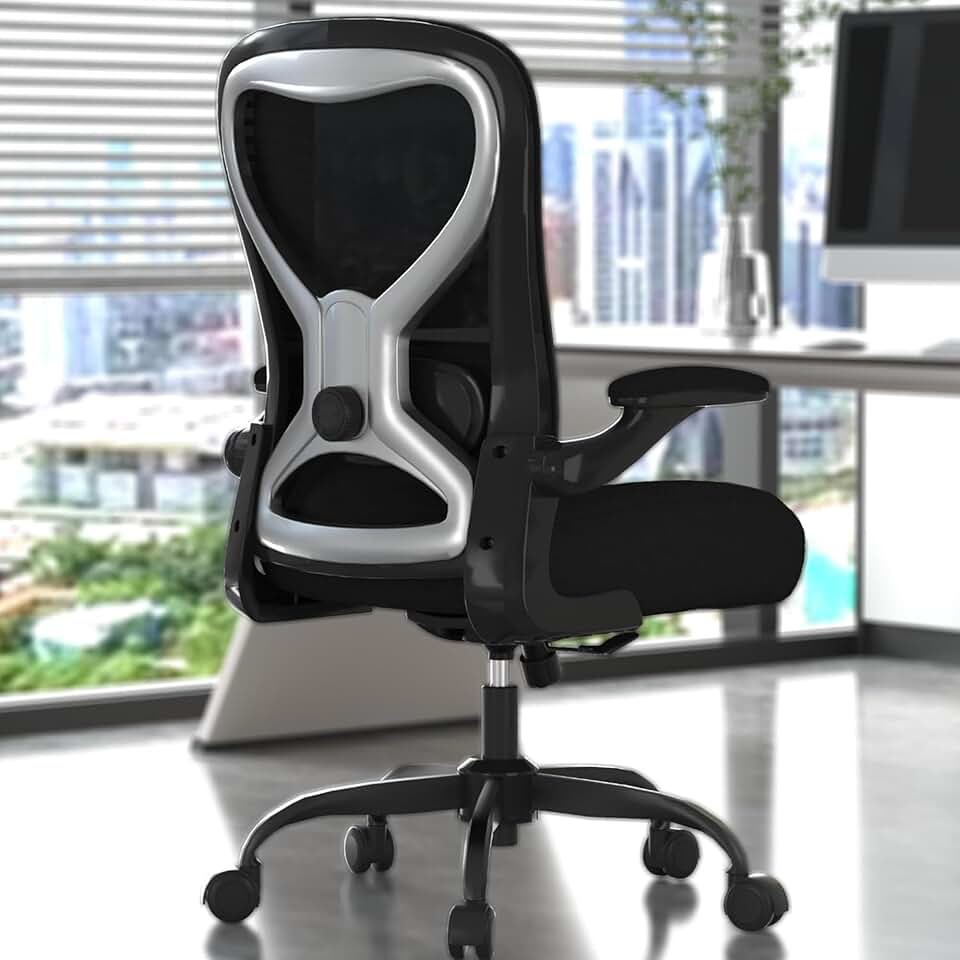
Our 2026 Herman Miller Aeron review covers real specs, honest pros/cons, size guide, and whether it's worth the price vs. cheaper alternatives.
Editor's Verdict
Office Desk Chair
9.2/10
The Aeron has been the default answer to "what's the best [office chair](/chairs/office-chair-k4lbx9)" for over three decades. At this point, recommending it almost feels lazy - except that every time someone sits in one for a full workday, the chair earns the recommendation again.
Best for: A remote worker weighing 150-220 lbs who sits 4-6 hours daily, already owns a desk at standard 29-30 inch height, and needs functional ergonomics without crossing $100.
Skip if: You sit more than 8 hours daily, weigh over 250 lbs, or have a diagnosed lumbar condition - the fixed lumbar pad and 300 lb weight ceiling will fail you within a year.
As an Amazon Associate, we earn from qualifying purchases.
Herman Miller Aeron Review - Still Worth $1,800 in 2026?
The Aeron has been the default answer to "what's the best office chair" for over three decades. At this point, recommending it almost feels lazy - except that every time someone sits in one for a full workday, the chair earns the recommendation again.
But $1,800 for a loaded configuration is real money. This review tells you exactly what you get, what you don't, who should buy it, and who should spend their budget elsewhere.
Quick Verdict
Buy it if: You sit 6 - 10 hours a day, have the budget, and want a chair that will outlast two or three cheap replacements. The Aeron's recline mechanism, lumbar support, and mesh comfort are genuinely best-in-class.
Skip it if: You're primarily a casual user, you share a desk setup where sizing becomes complicated, or $1,000+ feels disproportionate to your actual daily use hours.
Best configuration for most people: Size B, Graphite, with PostureFit SL and fully adjustable arms - roughly $1,325 - $1,500 depending on retailer. Don't buy the base model with fixed arms. That's the one thing that makes the chair genuinely frustrating to use.
Featured
Office Desk Chair
Solid $90 ergonomics for 6-hour days - nothing more, nothing less
Herman Miller launched the original Aeron in 1994. The Remastered version - the one currently sold - arrived in 2016 with updated lumbar support (PostureFit SL, which supports both the sacrum and lumbar vertebrae), refined 8Z Pellicle mesh zones, and improved arm pad materials.
In 2026, no major redesign has shipped. What you're buying is that 2016 Remastered chassis with incremental refinements. That's not a knock - the fundamentals are still ahead of most of what's come out since.
The Three Sizes
This is the most important decision you'll make before buying:
Size
Best For
Dimensions (H x W x D)
Weight Capacity
A (Small)
Users under 5'4", lighter frames
38.5" x 25.75" x 16"
300 lbs
B (Medium)
Most adults, 5'4" - 6'0"
41" x 27" x 16.75"
350 lbs
C (Large)
Users over 6'0", broader frames
44" x 29" x 18.5"
350 lbs
Size B fits the widest range of people. If you're between sizes, err toward the smaller - the Aeron's fit is more like clothing than furniture, and a seat pan that's too wide will undermine the lumbar support positioning.
Key Features - What Actually Matters
8Z Pellicle Mesh
The seat and back are made from a single-piece suspension mesh divided into eight tension zones - firmer in areas that need support, softer where pressure relief matters most (inner thighs, behind the knees). This is what eliminates the "hot seat" problem you get with foam: air circulates constantly, and there's no foam compressing under prolonged load.
After 20+ years of use, owners report the mesh retains its tension. This is not a chair where the seat bottoms out after two years.
PostureFit SL Lumbar Support
The standard lumbar support on most chairs pushes your lower back forward at a single point. PostureFit SL uses two independent pads - one for the sacrum (lower), one for the lumbar (upper) - that you adjust separately. The result is a support profile that mirrors natural spinal curvature rather than forcing a generic S-curve.
This matters most when you recline. Most chairs lose lumbar contact the moment you lean back. The Aeron maintains it, which is why long-session users report less lower back fatigue compared to chairs that cost similar amounts.
Harmonic Tilt (Recline Mechanism)
This is the Aeron's single most underrated feature, and the reason it outperforms the Embody and Mirra 2 in real-world use. The tilt is a synchro-tilt/knee-tilt hybrid: as you recline, the seat tilts slightly forward at the front edge, keeping your thighs roughly parallel to the floor rather than cutting off circulation. You can set tilt tension (resistance), lock it at multiple recline angles, or let it float freely.
T3's testing found it to be the smoothest recline mechanism in its class - "epitome of smooth" with no comparable equal at the same price. After using it, the recline on most competitors feels notchy or abrupt by comparison.
Arms
Here's the honest warning: the standard fixed arms are bad. Upgrade to fully adjustable.
Fully adjustable arms on the Aeron move in four directions: height, depth, pivot (angle), and width. This matters because arm position directly affects shoulder tension - arms too high or too far forward will create exactly the tension you're paying $1,800 to avoid.
Adding fully adjustable arms adds roughly $100 - $150 to the base price. It's not optional if you care about the ergonomics that justify the price.
Ergonomic Office Chair
Solid $189 starting point - not your forever chair
6 options (Graphite, Carbon, Mineral, Onyx, Studio White, Satin Aluminum)
Weight (chair)
~41 lbs (Size A)
Weight Capacity
300 lbs (A), 350 lbs (B/C)
Warranty
12 years
Ships
Fully assembled
2026 Pricing Breakdown
Prices vary significantly based on configuration. Here's what you'll actually pay:
Configuration
Approximate Price
Size A, basic, fixed arms
$615
Size B, standard config
~$900 - $1,100
Size B, PostureFit SL + fully adjustable arms
~$1,325 - $1,500
Size C, fully loaded (Graphite)
~$1,600 - $1,800
Fully loaded with premium finish/arms
$1,800 - $2,000+
The $615 base price is real, but it's for a small chair with fixed arms and basic lumbar. Most people looking at a full-spec purchase land between $1,300 - $1,800.
Herman Miller's 12-year warranty covers everything - mechanism, frame, mesh, foam. Amortized over even 15 years of daily use, a $1,500 chair costs roughly $100/year. Most $400 - $600 chairs don't last five years under heavy daily use.
ELABEST X100 Mesh Chair with Footrest
17-point adjustability and a footrest at $320 - finally a tall-person chair that delivers
Recline less smooth; less comfortable overall per user reports
Herman Miller Mirra 2
~$900 - $1,300
Budget HM entry point
Similar tilt mechanism, lower cost
Noticeable step down in build quality and comfort
Herman Miller Cosm
~$1,300 - $1,800
Zero-adjustment simplicity
Self-adjusting, no setup required
Less customization; may not suit all body types
Steelcase Leap V2
~$1,200 - $1,600
Active sitters, posture changers
Excellent seat edge flex, natural movement
Mesh option inferior; heavier feel
The Embody - Don't Believe the Hype
The Embody gets recommended as the "thinking person's" alternative to the Aeron - the idea being that its pixelated back moves with your spine dynamically. In practice, users who've lived with both consistently rate the Aeron more comfortable for extended sessions. The Embody's recline is less fluid, and the support in recline positions doesn't hold as well. At similar or higher price points, the Aeron wins on comfort for most bodies.
The Mirra 2 - A Reasonable Compromise
If $1,500 isn't in the budget but you want a genuine Herman Miller with a real tilt mechanism, the Mirra 2 at ~$900 - $1,100 is the honest recommendation. It shares DNA with the Aeron's tilt system and ships with adjustable arms in most configurations. You'll notice the quality difference - the mesh feels different, the mechanism has less refinement - but it's a legitimate ergonomic chair, not a cheap imitation.
The Chair to Avoid - Any Secretlab or Mid-Range Gaming Chair in This Price Range
If you're considering using $600 - $1,000 on a Secretlab Titan or similar gaming-oriented chair as an alternative to the Aeron entry-level, don't. Gaming chairs are built around aesthetics and padding foam that compresses within 18 months. The bucket-seat design pushes your shoulders forward and provides no meaningful lumbar support in recline. The ergonomic gap between a $800 gaming chair and a $900 Mirra 2 is enormous. Spend the money on an actual ergonomic chair.
No forward tilt. Several Steelcase chairs and even some mid-range options include forward seat tilt, which benefits users who lean toward their screen or work at drafting height. The Aeron doesn't offer it. For most office workers this isn't critical, but it's a real absence for certain workflows.
Fixed arms on base models. Already mentioned, but worth repeating: the base arm configuration actively works against the chair's ergonomic promise. Herman Miller should include 4D arms at every price point. They don't, which means you need to budget for the upgrade.
Sizing complexity. Ordering online without sitting in the chair first is a genuine risk. Size A vs. B is not obvious from specs alone - seat pan width and depth interact with your specific body dimensions in ways that require physical testing to confirm. Herman Miller has showrooms in major cities; use them before buying if at all possible.
The price is a real barrier. A $1,500 chair is not accessible to most people. There is no version of this review where that's not true. The value calculation only works if you use it heavily for years. Casual users or people who work from home two days a week don't get their money's worth.
Office Desk Chair
Sub-$100 seating for shorter frames - honest about its limits
Work at a desk 7 - 10 hours daily, five days a week
Have existing lower back or sacral pain that cheaper chairs haven't addressed
Are buying for a home office and want a 15 - 20 year solution
Work in an office environment where durability and adjustability matter across multiple users
Don't buy it if you:
Work from a desk fewer than 4 hours a day
Share a chair with someone with significantly different body dimensions
Need forward tilt for your workflow
Are comparing it to a standing desk purchase - the standing desk will do more for long-term spinal health per dollar at the $1,500 price point
How to Choose the Right Aeron Configuration
Step 1 - Get the Size Right
Sit in one before you buy. If that's not possible: measure your seated hip width and compare to the seat pan width of each size. The seat pan should fit your hips with roughly 1 inch of clearance on each side. Too wide, and the armrests can't reach the position needed to support your shoulders properly.
Step 2 - Decide on PostureFit SL vs. Lumbar Pad
PostureFit SL is the right call for anyone with lower back history or anyone who reclines while working. The sacral pad in PostureFit SL is the feature that keeps lumbar support active in recline - without it, you get support only when sitting upright.
Step 3 - Upgrade the Arms
Don't buy fixed arms. Period. The 4D fully adjustable arms add roughly $100 - $150 and they affect whether the chair works for you ergonomically from day one.
Step 4 - Pick Your Color Last
All six color options (Graphite, Carbon, Mineral, Onyx, Studio White, Satin Aluminum) are available across most configurations. Graphite is the default for most offices. Studio White looks clean in bright home offices but shows wear on the arm pads faster. Pick this last - it has zero functional impact.
Step 5 - Buy from an Authorized Dealer
Herman Miller's 12-year warranty only applies through authorized channels - Herman Miller directly, their certified dealers, or retailers like BTOD. Third-party sellers on marketplaces like eBay or Amazon (third-party listings, not Herman Miller's own store) carry risk of warranty invalidation and refurbished stock sold as new. The price premium on authorized purchase protects your warranty.
The Herman Miller Aeron Remastered in 2026 is exactly what it's been for years: the best mass-market ergonomic chair available, with a price that makes it inaccessible to most and worth every dollar for those who use it heavily.
The recline mechanism has no peer at this price. The 8Z Pellicle mesh has proven its 20+ year durability claim. PostureFit SL is the most thoughtfully designed lumbar system in a production chair. If you buy the right size, upgrade the arms, and add PostureFit SL, this chair will still be in active daily use in 2040.
Recommended configuration for most buyers: Size B, Graphite, PostureFit SL, fully adjustable 4D arms - approximately $1,325 - $1,500 from an authorized dealer.
If that number makes you wince, buy a Mirra 2 instead. It's the honest second choice.
Ready to buy? Here are the products from this guide
For users sitting 7–10 hours daily, yes — the value case is straightforward when you amortize a $1,500 chair over 15–20 years of proven lifespan. If you work fewer hours or change workstations frequently, cheaper alternatives like the Mirra 2 (~$900–$1,100) offer 80% of the benefit at 60% of the cost.
Size B fits most adults between 5'4" and 6'0". Size A is for users under 5'4" or with a narrower frame, while Size C suits those over 6'0" or with a broader build. When in doubt, visit a Herman Miller showroom — getting the size wrong undermines the chair's entire ergonomic premise.
The Remastered (released 2016) is the current production model. It updated the original 1994 Aeron with PostureFit SL dual-pad lumbar support, refined 8Z Pellicle mesh with better zone distribution, and improved arm pad materials. What Herman Miller sells today as the 'Aeron Chair' is the Remastered version — there is no separate product called 'Remastered' anymore.
Herman Miller covers the Aeron with a 12-year warranty, but real-world durability routinely exceeds that. Multiple long-term users report 20–25 years of daily use without meaningful degradation to the mesh tension or mechanism. The 8Z Pellicle mesh has shown no significant sag or deformation over extended ownership periods in published reviews and user reports.
For most users, yes — particularly lower back and sacral pain caused by prolonged sitting. The PostureFit SL system provides independent sacral and lumbar support that maintains contact even in recline, which is where most chairs lose support entirely. However, back pain causes vary widely; the Aeron addresses posture and pressure distribution, not structural or disc issues.
The Embody uses a dynamic 'pixelated' back that moves with your spine as you shift positions, while the Aeron uses a static but highly adjustable mesh and lumbar system. In practice, users who own both consistently rate the Aeron more comfortable for long sessions, and its recline mechanism is smoother. The Embody costs similarly or more, making the Aeron the better value for most buyers.
Yes, and you should. Herman Miller operates showrooms in most major cities where you can sit in all three sizes with various configurations. Many authorized dealers also maintain floor models. Given that size selection is the most critical purchase decision and can't be reliably determined from specs alone, testing in person before a $1,300–$1,800 purchase is strongly advisable.
For anyone sitting 6+ hours a day, the Aeron is worth it - the PostureFit SL lumbar support, 8Z Pellicle mesh, and fully adjustable arm system put it ahead of most chairs under $1,000. The 12-year warranty and typical 15-20 year lifespan mean the per-year cost works out to under $120, which is reasonable for a tool you use daily. If you sit fewer than 4 hours a day or have a tight budget, there are better value options.
Joe Rogan has used the Herman Miller Embody on his podcast set, not the Aeron. The Embody is Herman Miller's other flagship chair, designed with a pixelated seat and flexible back that moves with your spine - it retails around $2,095. Both chairs are top-tier, but they suit different sitting styles and body types.
The Aeron's standout feature is its 8Z Pellicle suspension mesh, which eliminates seat foam entirely and distributes weight evenly to reduce pressure points and heat buildup. Its PostureFit SL system supports both the sacrum and lumbar simultaneously, which most competing chairs don't do. It also comes in three size-specific frames - A, B, and C - so the ergonomics are actually fitted to your body rather than adjusted to compensate for a one-size design.
Chiropractors most commonly recommend chairs with adjustable lumbar support, seat depth adjustment, and armrests that allow a neutral shoulder position - the Herman Miller Aeron and Steelcase Leap V2 are the two names that come up most in clinical settings. The Aeron's PostureFit SL sacral-lumbar support gets specific praise because it encourages a natural pelvic tilt rather than just pushing against the mid-back. Whatever chair a chiropractor recommends, they'll also tell you that no chair replaces regular movement breaks.