Build Quality
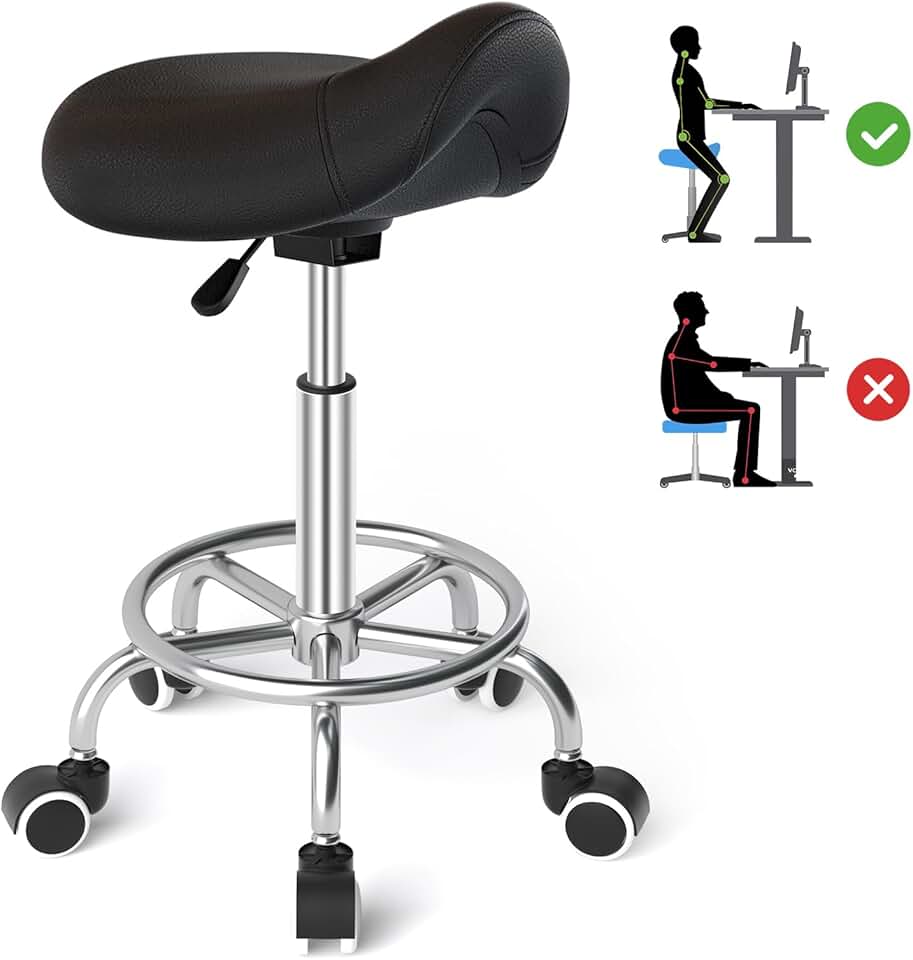
The chromed steel 5-star base is the first thing you notice when you pull this stool out of the box, and it is the right thing to notice. Chrome-plated steel does not flex under daily professional use the way plastic-base budget stools do, and the 5-point footprint distributes load evenly enough that the stool does not tip when you shift your weight to one side mid-treatment. The dual-wheel casters are rated for both carpet and hard floors, which matters in mixed-surface clinics where you roll from a tiled hallway into a carpeted treatment room. The upholstery material is PVC-free, which puts it ahead of the vinyl-covered stools that still dominate the sub-$100 category and which crack within 18 months of sanitizer exposure. No quality control issues have been publicly reported on this model as of 2026, and the manufacturing appears consistent across units based on available retailer data.
The one build caveat worth stating plainly - no weight capacity is listed anywhere in the product documentation. For a professional tool used in a client-facing business, that is not a minor omission. The Sithealthier Heavy-Duty Professional Saddle Stool publishes a 500-550 lb rating and TB117-2013 flammability compliance. If your workplace has safety documentation requirements, this stool may not clear that bar.
Comfort & Ergonomics
The 16" x 24" saddle shape is the functional core of this product. A saddle seat works by tilting your pelvis approximately 10-15 degrees forward, which positions your spine into a more neutral lumbar curve than a flat seat allows. For massage therapists and estheticians who spend 6-8 hours leaning over clients, that reduction in lumbar compression is measurable in how your lower back feels at 6pm. The seat dimensions - 16" wide by 24" front-to-back - accommodate most body types in the 5'4" to 5'11" range without creating pressure points on the inner thighs, which is the most common complaint about narrower saddle designs.
There is no backrest on this stool, which is by design - a backrest on a saddle stool defeats the ergonomic posture it creates. But that means if you sit on this stool during a 10-minute break between clients, there is nothing to lean against. That is a genuine usability gap for full-day users, and the Coopala Lotus C-103 at $198 addresses it with an optional backrest attachment.
Adjustability
Height adjustment runs through a standard pneumatic cylinder operated by a hand lever on the right side. The adjustment range covers approximately 20" to 28" in seat height, which suits users from 5'4" to 5'11" working at standard treatment table or desk heights. Users over 5'11" should look at the high-height variant, which extends the range to approximately 26"-33.5" based on comparable cylinder specs. There is no seat tilt adjustment, no armrest option, and no brake mechanism on the casters. The Sithealthier model covers all three of those gaps, but this stool is not positioning itself against that product at $109 - it is positioning itself against the $240 Oakworks and $198 Coopala, and on pure height-adjustment functionality it holds its own.
Assembly
Assembly requires attaching the base to the cylinder and snapping the casters into the 5-star base arms - a process that takes under 10 minutes with no tools required. No reports of misaligned parts or missing hardware have surfaced in 2026 retail listings. The pneumatic cylinder arrives pre-pressurized and does not require any setup beyond standard attachment.
Value for Money
At $109, this stool costs 55% less than the Oakworks Professional Saddle Stool at $239.99 and 45% less than the Coopala Lotus C-103 at $198. The core saddle geometry, chrome base, and PVC-free upholstery are competitive at those price points. Where you pay for the savings is in the absence of published weight ratings, tilt adjustment, and wheel brakes - three specs that matter in specific professional contexts. For a solo esthetician or massage therapist under 250 lbs setting up a first treatment room on a budget, this stool delivers 80% of the Oakworks experience at 45% of the price. For a multi-therapist clinic with liability documentation requirements or heavier staff, the math tilts toward spending more.