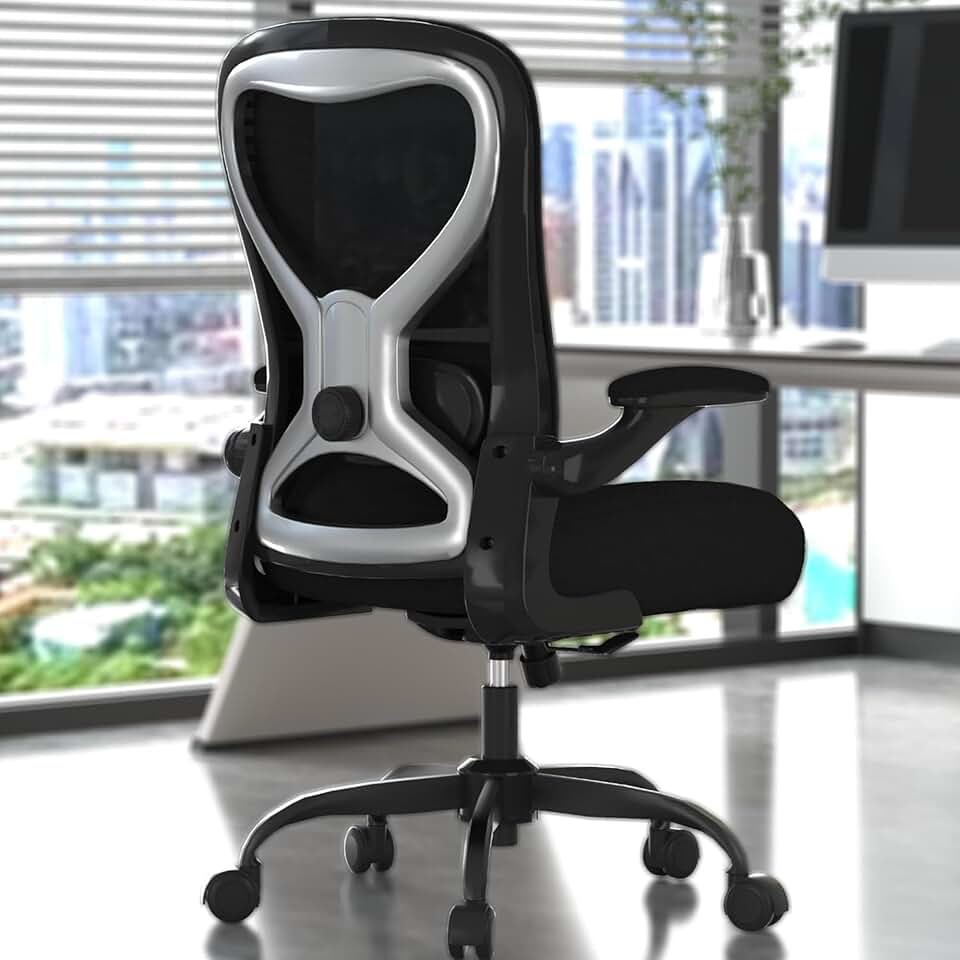
The Ergonomic Office Chair Buying Guide That Actually Saves Your Back (and Budget) in 2026
Most people spend more time researching a TV than the thing they sit in for 8+ hours a day. That's backwards. A bad chair costs you in chiropractor bills, lost focus, and chronic pain. A good one pays dividends for years.
This guide cuts through the noise. Six chairs, honest verdicts, real specs, and a clear framework for picking the right one - whether you're spending $300 or $1,500.
Quick Verdict - Best Ergonomic Office Chairs for 2026
| Chair |
Price |
Best For |
| Haworth Fern |
$1,200 - $1,500 |
Best overall comfort, serious long-hours users |
| Steelcase Gesture |
$1,200 - $1,500 |
Multitaskers, device-heavy workflows |
| Steelcase Leap |
$1,000 - $1,300 |
Back pain sufferers, premium lumbar support |
| Newtral NT002 |
$299 - $499 |
Best value under $500, wide body-type range |
| Libernovo Omni |
$400 - $600 |
Taller users, custom seat depth, long study/work sessions |
| Steelcase Amia |
$1,000 - $1,300 |
Premium buyers who want simplicity over feature overload |
Bottom line up front: If budget isn't the constraint, the Haworth Fern is the most comfortable chair you can buy right now. If you're spending your own money and need maximum value, the Newtral NT002 is the answer. Everything else lives between those two poles.
The Best Ergonomic Office Chairs for 2026, Reviewed
1. Haworth Fern - Best Overall
Price: ~$1,200 - $1,500
The Haworth Fern topped BTOD TV's 2026 comfort tier list - a ranking of 35 chairs tested purely on comfort - and it's not hard to understand why. The signature feature is the LiveBack™ spine system, a frond-like backrest that flexes in multiple directions simultaneously, mimicking actual spinal movement rather than just reclining in a single plane. You don't have to think about it. It follows you.
The seat runs warm compared to pure mesh alternatives, which is a genuine trade-off to flag for anyone in a hot home office. But for sheer all-day comfort, nothing tested in 2026 beats it.
Key specs:
- LiveBack™ flexible spine system
- 4D adjustable arms
- Weight capacity: 300 - 400 lb
- Multiple seat and back size options
- 12-year warranty (varies by dealer)
Pros:
- Top-ranked comfort in independent testing
- 4D arms with excellent range of motion
- Build quality that justifies the price over a 10+ year lifespan
- Adjustability covers most body types well
Cons:
- $1,200+ is a hard pill without trying it first - seek out a dealer showroom
- Warmer seat feel than mesh-heavy alternatives
- Dealer-only service model complicates repairs
- No significant 2026 model update; you're buying a refined existing design
Who it's for: Remote workers and office professionals who sit 8 - 10 hours daily and can justify the investment. If your back is your livelihood, this is the chair.
2. Steelcase Gesture - Best for Multitaskers
Price: ~$1,200 - $1,500
The Gesture was designed specifically around how people actually use modern workstations - moving between monitors, phones, tablets, and keyboards constantly. The arm system is the standout: it moves in a way that no other chair on this list matches, rotating and pivoting to support your arms whether you're typing, leaning back with a tablet, or on a video call.
Steelcase has kept the Gesture at the top of comfort rankings consistently through 2026, and it continues to earn its place. It doesn't have the organic flex of the Fern, but it wins on arm support versatility and its ability to accommodate reclined working positions that most chairs punish you for.
Key specs:
- 360° arm pivot system
- Continuous back support through full recline range
- Seat depth adjustment
- Multiple back options (standard or with upper back support)
- Weight capacity: 400 lb
- 12-year warranty
Pros:
- Arm system is genuinely best-in-class for varied device use
- Handles reclined working positions better than competitors
- Robust 12-year warranty with established service network
- Available refurbished at significant discount through authorized dealers
Cons:
- Same price ceiling as the Fern - you're choosing between two $1,300+ chairs
- Narrower seat can feel restrictive for broader users
- Complexity of adjustments has a learning curve
- Cooling is mediocre; the upholstered version especially retains heat
Who it's for: Power users who work across multiple screens and devices, or anyone who naturally shifts posture throughout the day rather than sitting in one position.
3. Steelcase Leap - Best for Back Pain
Price: ~$1,000 - $1,300
The Leap has been Steelcase's workhorse for over two decades, and the 2026 version remains one of the most sophisticated lumbar systems in any chair at any price. The LiveBack technology (Steelcase's term, distinct from Haworth's) changes the shape of the backrest to match your spine's movements, and the Lower Back Firmness Control lets you independently adjust upper and lower back support - a feature that sounds minor until you actually have lower back issues and realize nothing else works this specifically.
It's the least flashy chair on this list. There's no dramatic frond design or pivoting arm theater. What you get is a chair that has been refined over years to do one thing exceptionally well: support your spine during long seated sessions.
Key specs:
- LiveBack flexible backrest
- Independent upper/lower back firmness adjustment
- Natural Glide System (allows forward reclining)
- Seat edge adjustment
- 4D arms (on higher trim levels)
- Weight capacity: 400 lb
- 12-year warranty
Pros:
- Most targeted lumbar control of any chair in this guide
- Natural Glide System is unique - lets you lean forward without losing back support
- Excellent refurbished market availability ($400 - $700) if budget is stretched
- Proven long-term durability with parts availability
Cons:
- Older design aesthetic compared to newer entrants
- Upper back support is less impressive than its lumbar game
- Mesh version has limited color options
- Some users find the seat foam compression over years requires cushion replacement
Who it's for: Anyone with chronic lower back pain or a history of back problems. Also the best "safe bet" premium chair if you can find a quality refurbished unit.
4. Newtral NT002 - Best Under $500
Price: $299 - $499
The NT002 has no business being this good at this price. A Newtral-published 2026 guide positioned it against Herman Miller and Steelcase on adjustability features - and on paper, it wins several rounds. The 136° recline beats the Gesture (approximately 128°) and the Leap (approximately 120°). It ships with 4D arms, seat depth adjustment, and dynamic lumbar as standard, not as paid upgrades.
The hybrid mesh/foam seat is the engineering choice that makes the price viable: it's cooler than upholstered seats and more comfortable than pure mesh for longer sessions. The BIFMA certification is worth noting - it's an independent structural safety standard, not just manufacturer marketing.
Full transparency: the comparative data here comes partly from Newtral's own published guide, which obviously isn't neutral. Cross-referencing with independent user feedback, the NT002 holds up well, but you should expect build quality and longevity that reflects the price gap versus Steelcase.
Key specs:
- Hybrid mesh/foam seat
- Dynamic lumbar support (auto-adjusts)
- 4D adjustable arms
- 136° recline with tilt tension
- Seat depth adjustment: 2 - 3 inches
- Weight capacity: 300 lb
- Height range: fits 5'0" - 6'4"
- BIFMA certified
- Replaceable parts design
Pros:
- Best adjustability-per-dollar of any chair in this guide
- 136° recline is class-leading at this price
- Replaceable parts reduce long-term ownership cost
- Fits a genuinely wide height range without compromise
- 300 lb capacity at sub-$500 pricing is strong
Cons:
- Build materials don't match premium chairs - you'll feel the difference
- Dynamic lumbar system works well for most users but isn't manually tunable in the same way as the Leap
- Arm padding quality is acceptable, not impressive
- Long-term durability over 7 - 10 years is unproven versus Steelcase/Haworth's track record
Who it's for: Home office workers on a real budget who still need proper ergonomics for full work days. Also a strong choice for students logging long study sessions. If you're comparing this to a $150 Amazon chair, the NT002 is a fundamentally different product.
5. Libernovo Omni - Best for Taller Users and Custom Fit
Price: ~$400 - $600
The Libernovo Omni made its first appearance in BTOD TV's 2026 comfort tier list - a notable debut for a newer entrant. Its differentiator is specific and genuinely useful: two seat depth configurations (45cm for users under 170cm/5'7", and 48cm for users over 175cm/5'9"). That's a real solution to a real problem. Most chairs offer a single seat pan with a small adjustment range; the Omni acknowledges that body proportions vary enough to warrant distinct configurations at the point of purchase.
Detailed independent testing data on the Omni is still limited relative to established brands, so some caution is warranted. User feedback from late 2026 and early 2026 emphasizes comfort during extended sessions, and the 300 lb weight capacity is solid for the price tier. Available in Midnight Black and Space Gray.
Key specs:
- Dual seat depth options: 45cm (under 170cm users) / 48cm (over 175cm users)
- Weight capacity: 300 lb
- Adjustable armrests
- Color options: Midnight Black, Space Gray
- Long-session comfort focus
Pros:
- Seat depth sizing approach is smarter than most competitors
- Strong value proposition for taller users who feel cramped in standard chairs
- 300 lb capacity
- Positive first-ranking performance in independent comfort tiers
Cons:
- Newer brand with limited long-term reliability data
- Arm adjustment specs not fully detailed in available sources
- Recline range not specified in current testing data
- Service and warranty support less established than Steelcase/Haworth
Who it's for: Users 5'9" and above who consistently find office chairs too shallow, or anyone who's tried standard chairs and felt like the seat pan never quite fit.
6. Steelcase Amia - Best Premium Option for Minimalists
Price: ~$1,000 - $1,300
The Amia is the Steelcase chair for people who find the Gesture and Leap overwhelming in their adjustment complexity. The adaptive backrest automatically changes shape to support your lower and upper back without requiring manual configuration. You sit down, it works. That's the pitch.
In BTOD TV's 2026 testing, it ranks solidly in the mid-comfort tier among premium chairs - below the Fern and Gesture, but above most sub-$1,000 options. If you want Steelcase build quality and warranty support but don't need the full adjustment suite of the Leap, the Amia is the sensible choice.
Key specs:
- Adaptive backrest (auto-adjusting)
- Seat depth adjustment
- 4D arms (higher trim)
- Weight capacity: 400 lb
- 12-year warranty
Pros:
- Simplified adjustment experience without sacrificing core support
- Full Steelcase 12-year warranty and service network
- 400 lb weight capacity
- Slightly lower entry price than Gesture/Fern
Cons:
- Less adjustability than Leap for users with specific back issues
- Still $1,000+ - hard to justify over the NT002 on pure value grounds
- The auto-adjust backrest works for most, but isn't right for everyone
Who it's for: Buyers who want a set-and-forget premium chair without spending time calibrating 12 different adjustments.
One Chair to Avoid
Budget "Ergonomic" Chairs Under $150 (SIHOO, Ticova Generic Models)
The research is consistent here: chairs in the sub-$150 "ergonomic" category - from brands like SIHOO's entry-level line and Ticova's cheaper models - fail at the things that matter most for all-day use. Lumbar support is typically a fixed foam bump that may or may not align with your spine. Seat depth is fixed. Arms are 2D at best. The mesh degrades noticeably within 18 months of daily use.
The real cost: If you sit 8+ hours a day, a $120 chair that causes back strain costs you far more than the $180 upgrade to a Newtral NT002. These chairs are fine for occasional use - a guest desk, a few hours a week. They are not fine as a primary work chair for anyone taking their back health seriously.
How to Choose the Right Ergonomic Chair
1. Start with Your Height and Weight
This sounds obvious but it's where most buyers go wrong. A chair sized for a 5'8" 160 lb person will not work properly for a 6'3" 220 lb person regardless of how many adjustment knobs it has. Check weight capacity (aim for at least 10 - 15% above your actual weight) and verify the seat height range covers your leg length.
- Under 5'6": Prioritize chairs with shorter seat depths. The standard 17 - 19" seat pan will leave you either perching on the edge or cutting off circulation behind your knees. The Libernovo Omni's 45cm option is worth considering.
- Over 6'0": You need the 48cm+ seat depth. Most budget chairs will feel cramped. The Newtral NT002's 2 - 3" seat depth adjustment range is critical here.
2. Identify Your Actual Pain Points
Different ergonomic problems need different solutions:
- Lower back pain: Leap's independent lower back firmness control is purpose-built for this
- Neck/shoulder issues: Look for chairs with headrests and that support reclined working (Gesture)
- Hip discomfort: Seat cushion quality and seat edge angle matter more than lumbar
- General fatigue from sitting: Backrest flex (Fern's LiveBack™) and tilt mechanisms that encourage movement
3. Understand What "4D Arms" Actually Means
4D armrests adjust in four ways: height, width, depth (forward/back), and pivot angle. 2D arms only adjust height and width. For anyone who types extensively, the inability to position armrests directly under your elbows at keyboard height causes shoulder elevation and long-term strain. 4D arms are not a luxury at this point; they're a baseline requirement for all-day use.
4. Recline Range Matters More Than You Think
Static upright sitting for 8 hours is actually worse than alternating between upright and reclined positions. A 135°+ recline with proper lumbar support throughout that range allows your intervertebral discs to decompress. The Newtral NT002's 136° recline is a genuine advantage here, especially at its price point.
5. The Warranty Question
Steelcase and Haworth's 12-year warranties are not marketing fluff - they come with actual service networks and parts availability. A $1,300 chair with a 12-year warranty costs roughly $108/year. A $400 chair with a 2-year warranty that you replace every 4 years costs $100/year and gives you back pain in years three and four. Do the math before assuming budget options are always cheaper.
6. Try Before You Buy - Seriously
No amount of spec comparison replaces 20 minutes in a chair. For any purchase over $600, find a dealer showroom or office supply store that stocks the model. Herman Miller and Steelcase both have extensive dealer networks. Haworth is dealer-only, which is actually useful here. For budget options like the NT002, look for return policies of at least 30 days.
7. New for 2026 - Consider Replaceable Parts
The Newtral NT002's replaceable parts design is a quietly important feature. Armrest pads, seat cushions, and casters wear out. On a $1,300 Steelcase you expect service support; on a $400 chair the ability to replace worn components rather than buy a new chair is a meaningful long-term value differentiator.
The Bottom Line
Spend $1,200+? The Haworth Fern is the most comfortable chair you can buy in 2026 based on current independent testing. The Steelcase Gesture wins if your work involves constant device-switching. The Leap is the right call if lower back pain is your primary concern.
Spending $300 - $600? The Newtral NT002 is the answer for most people. The Libernovo Omni earns consideration if you're taller than 5'9" and have consistently struggled with seat depth fit.
Don't spend under $150 on a primary work chair. The math doesn't work in your favor.