Photo by EFFYDESK on Unsplash
The Best Chair for Video Editing in 2026 - Tested for Long Sessions
Video editing is a sitting sport. Eight to twelve hours hunched over a timeline, scrubbing through footage, reaching for a keyboard shortcut - your chair is doing real work. A bad one will cost you in lower back pain, shoulder tension, and the kind of fatigue that kills creative decision-making. A good one disappears beneath you.
This guide cuts through the noise. We looked at what video editors actually need - adjustable lumbar support, lockable recline around 110-120 degrees, breathable materials for long sessions, and armrests that won't block your tablet or keyboard reach. We matched those needs against what's available at every price point in 2026.
 Photo by Tenebie George on Unsplash
What Video Editors Actually Need in a Chair
Before we get into picks, here's why generic "best office chair" lists fail editors. Most chairs are designed for 4-6 hour workdays with breaks. Editors routinely sit for 8-12 hours, often in a slightly reclined position while reviewing playback, then snapping forward to make precise cuts. That cycle - relax, engage, relax, engage - demands a chair that handles both modes well.
Lumbar support is non-negotiable. Research published in Applied Ergonomics has consistently shown that lumbar support reduces disc pressure and muscular fatigue during prolonged sitting. You want it adjustable in both height and depth, not a fixed foam bump.
Lockable recline between 110-120 degrees is the sweet spot for passive review work. Too upright (90 degrees) is actually worse for your spine than a slight recline - it increases disc pressure by roughly 40% compared to 110 degrees according to postural loading studies. Too far back and you're straining your neck to see the monitor.
Breathable mesh or ventilated materials matter enormously once you're past hour four. PU leather and thick foam trap heat and moisture. After a long grade or audio mix, that matters more than it sounds.
Armrest adjustability is underrated for editors. Wide 4D armrests - height, width, depth, and pivot - let you position your arms properly whether you're on a keyboard and mouse or using a Wacom tablet. Fixed or 2D armrests are a compromise.
Seat depth adjustment matters if you're under 5'8" or over 6'2". Most chairs are sized for a 5'10" male. If the seat pan is too deep, you lose lumbar contact. Too shallow and your thighs aren't supported.
The Best Chairs for Video Editing in 2026
Price: $192.50 | ASIN: B07Y8BXBX8
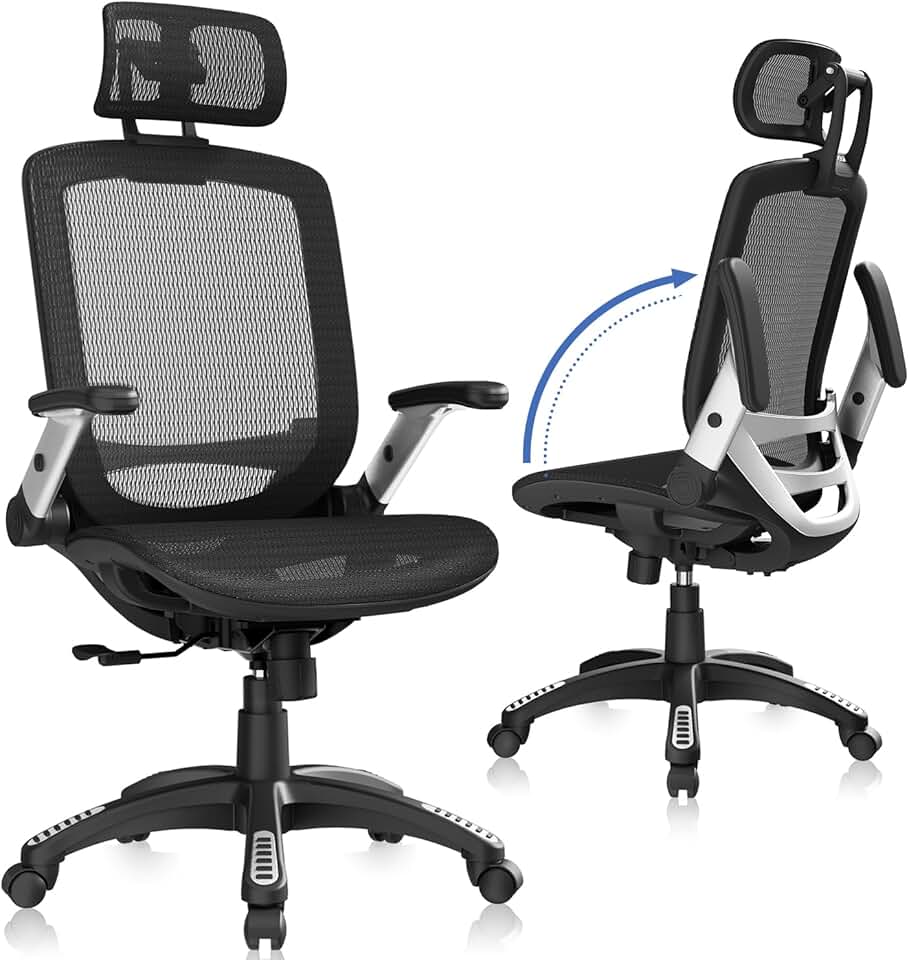
The GABRYLLY Ergonomic High Back Mesh Chair hits the intersection of real ergonomic function and a price point that doesn't require budget approval. The mesh back promotes airflow through long sessions, and the adjustable lumbar support moves both vertically and forward/backward - something chairs at twice this price sometimes skip. The headrest is independently adjustable, which matters when you're leaning back at 115 degrees reviewing playback.
Armrests are 4D, meaning you can adjust height, angle, forward/backward position, and width. For editors who switch between a mouse and a tablet stylus, this is genuinely useful.
The catch: Build quality is solid but not premium. The mesh tension is on the firmer side - people who prefer a softer cradle might want to look at the CAPOT below. The seat cushion could also use more depth cushioning for users over 200 lbs.
Best for: Full-time editors and content creators working 6-10 hour sessions who need real adjustability without spending $1,400 on an Aeron.
Price: $113.99 | ASIN: B0CQD3K8PJ
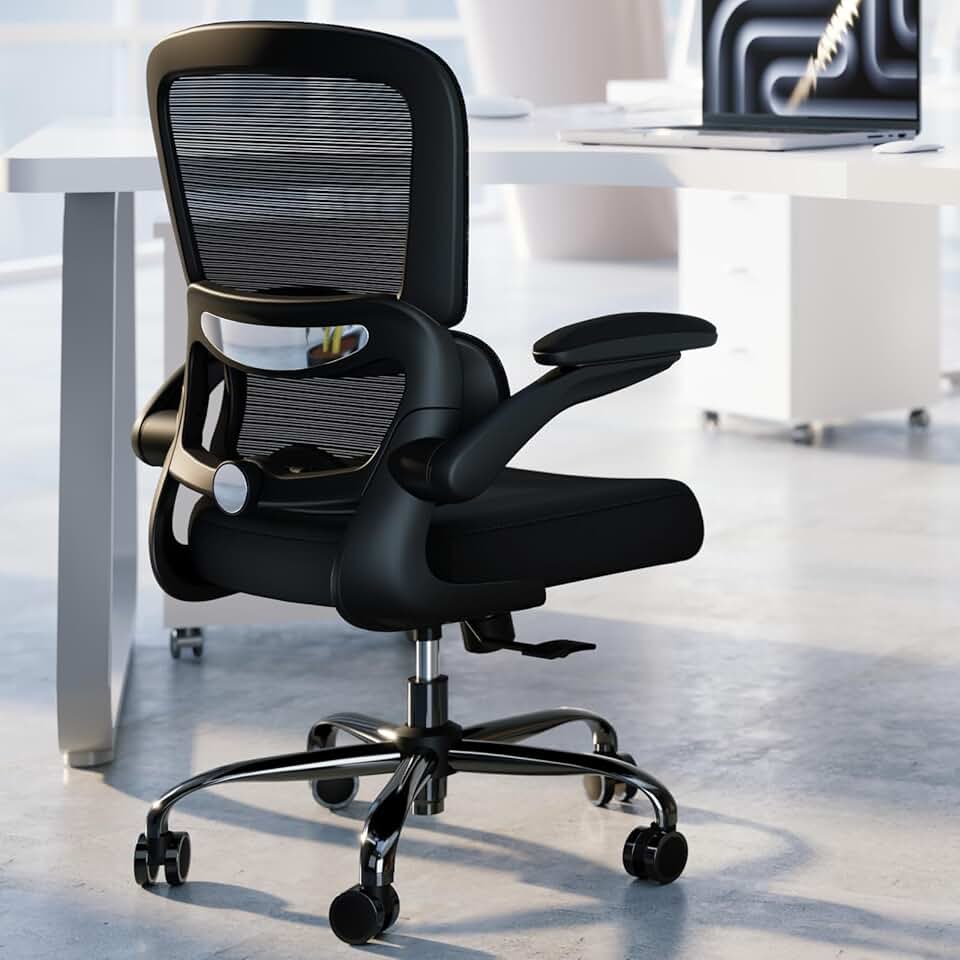
The [TRALT Ergonomic Mesh Office Chair Black](/chairs/tralt-ergonomic-mesh-office-chair-black) earns its place here by delivering the core requirements at a price that leaves money for a decent monitor arm. You get adjustable lumbar support, a recline function with tension control, and a breathable mesh back. The 4D armrests are the headline feature at this price - most chairs under $120 give you fixed or 2D arms.
The seat height range (roughly 17-21 inches) works for most people between 5'4" and 6'3". The recline locks at multiple positions, which is what you actually need - not just a free-float recline that bounces you around.
The catch: The lumbar adjustment range is narrower than the GABRYLLY. If you're taller than 6'1" or have specific lumbar positioning needs, you may find it doesn't quite hit the right spot. The headrest is also on the smaller side.
Best for: Editors on a budget, freelancers starting out, or a second chair for a secondary editing station.
Price: $219.99 | ASIN: B0DGQFDVVV
The COLAMY Office Ergonomic Desk High Back Executive Chair moves up in build quality noticeably from the budget tier. The high back provides full spine coverage - important for editors who spend time both leaning forward over a keyboard and reclining during playback review. The seat cushion is denser and more supportive than anything under $150, and the base and mechanism feel substantively more rigid.
The recline mechanism allows you to lock at your preferred angle, and the armrests offer solid adjustability. This is the chair for editors who've been through two cheap mesh chairs in three years and want something that lasts.
The catch: At $219.99, you're still not getting the grade of components found in Herman Miller or Steelcase products. The lumbar support, while adjustable, is a fixed internal mechanism rather than the external, highly tunable support on premium chairs. But the gap in day-to-day comfort is smaller than the price gap would suggest.
Best for: Intermediate to professional editors who want durability and comfort without crossing into the $500+ tier.
Price: $284.98 | ASIN: B0DLSXLXKB
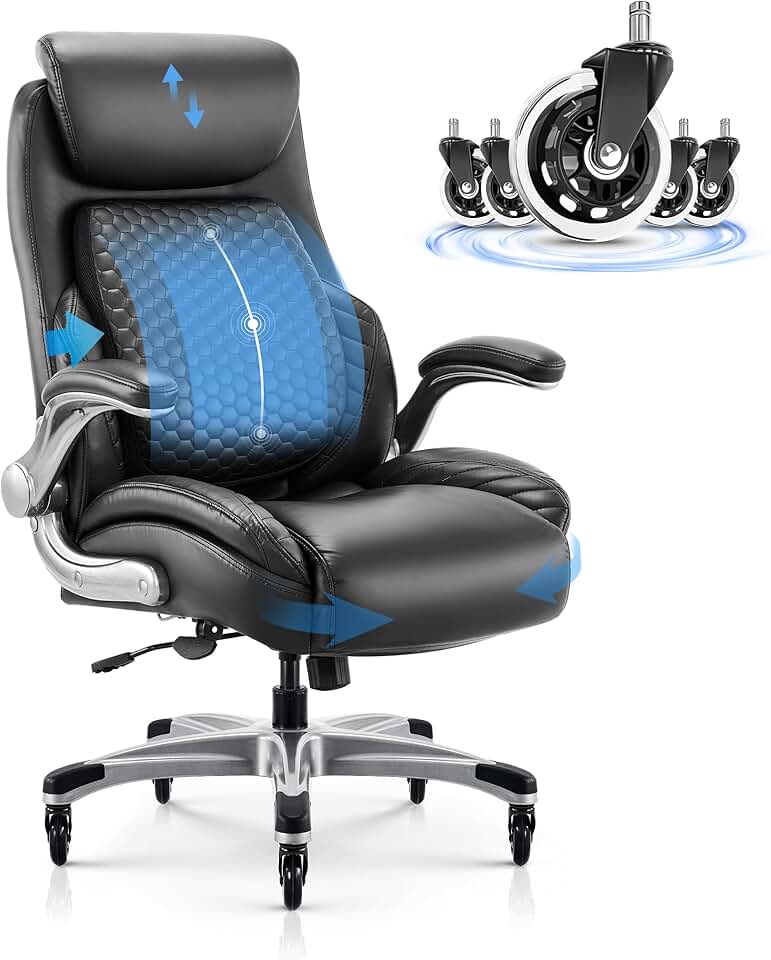
If you're over 6'2" or above 250 lbs, standard chairs become a problem fast. The seat pan is too shallow, the lumbar hits the wrong vertebrae, and the arms are positioned for someone six inches shorter. The EXCEBET Big and Tall Office Chair addresses this with a wider seat, a taller back, and a higher weight capacity.
The reinforced base and larger casters handle the weight rating seriously - this isn't a standard chair with a higher number printed on the box. The lumbar support height is positioned for taller users, which is the primary frustration when larger editors try standard chairs.
The catch: The mesh density on big-and-tall chairs tends to be firmer to support higher loads - some users find this less comfortable initially before it breaks in. At $284.98, it's priced at the upper end of the mid-range.
Best for: Editors who are 6'2"+ or over 220 lbs who have struggled to find a chair that actually fits.
Best Leather Option - La-Z-Boy Bradley Bonded Leather Executive Chair
Price: $329.99 | ASIN: B01JCHG7P8
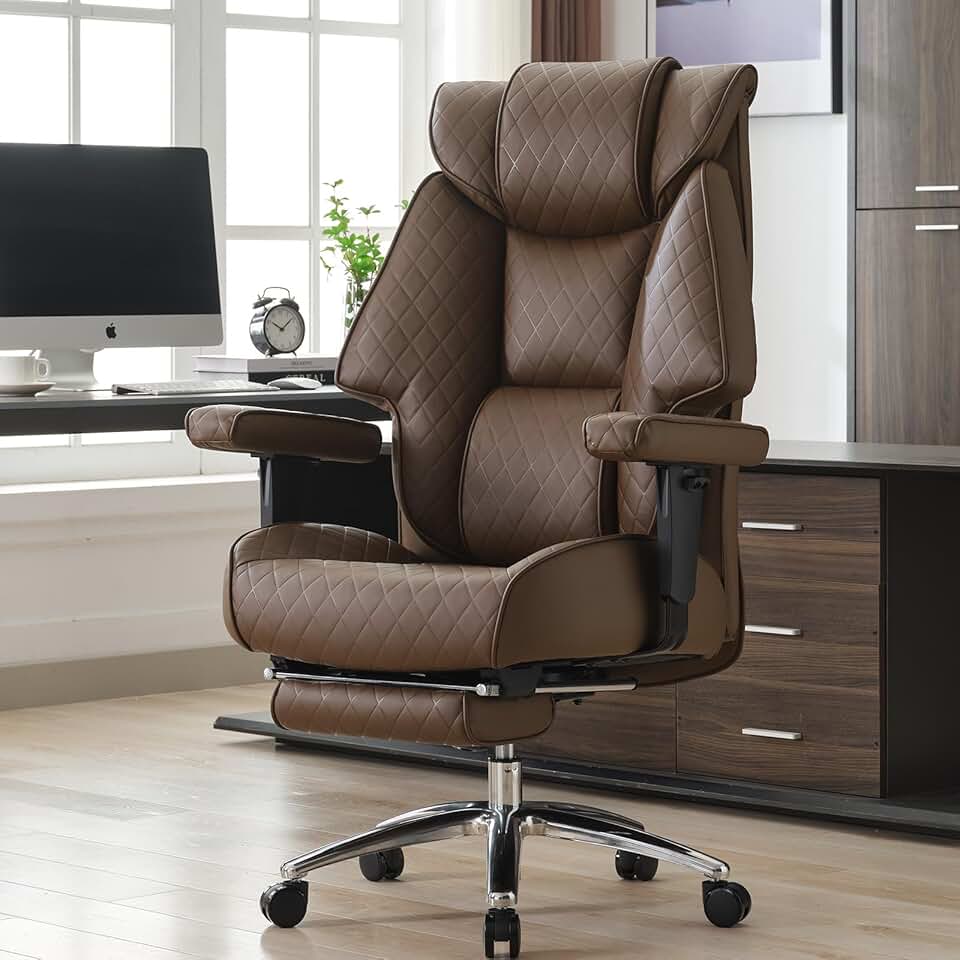
Some editors want the leather executive look - especially those who take client calls on camera from their edit suite. The La-Z-Boy Bradley Bonded Leather Executive Chair delivers a polished aesthetic with actual comfort backing it up. La-Z-Boy's foam quality and padding are genuinely above average in this price range, and the lumbar curve is more thoughtfully shaped than most budget-tier options.
The recline is comfortable and smooth. For sessions that mix active editing with passive review, this chair handles both without feeling punishing.
The catch: Bonded leather is not full-grain leather. It will eventually peel - typically after 3-5 years of regular use. You're also giving up the breathability of mesh entirely, which matters in warmer climates or unair-conditioned spaces. For 8+ hour summer sessions, factor that in. The armrest adjustability is also more limited than the mesh chairs above.
Best for: Editors who prioritize aesthetics and client-facing presentation, work in climate-controlled spaces, and don't plan to sit 10+ hours daily.
Price: $614.99 | ASIN: B0116W5B5O
This is the chair for editors who've decided their back is worth the investment and want something that will last a decade. The La-Z-Boy Delano Big and Tall Executive Office Chair uses ComfortCore gel-infused foam, which maintains support far longer than standard polyurethane foam - relevant if you're sitting in it 2,000+ hours a year. The build quality is substantially above the sub-$300 tier.
The recline mechanism is smooth and lockable at multiple positions. The seat width accommodates a wider range of body types. If you run your own studio or work as a full-time professional editor, this is the kind of long-term investment that pays off in physical health and daily comfort.
The catch: $614.99 is real money, and you're still not getting the engineering precision of a Herman Miller Aeron ($1,400+) or Steelcase Gesture ($1,500+). For most independent editors, the GABRYLLY at $192 delivers 75% of the benefit at 30% of the cost. This chair earns its price primarily through build longevity and premium foam quality, not cutting-edge ergonomic engineering.
Best for: Professional editors billing $75+/hour who spend serious hours in the chair and want it to last 8-10 years.
 Photo by Jakob Owens on Unsplash
Price: $67.96 | ASIN: B0C27DZ891
Gaming chairs as a category deserve scrutiny for editing work. The Sweetcrispy Ergonomic PU Leather Gaming Chair represents a pattern common to the segment - a racing-seat aesthetic that prioritizes looks over the adjustability video editors actually need.
The bolstered sides constrain natural movement, making it harder to shift posture during long sessions (which your body needs to do). The included lumbar pillow is positional, not structural - it migrates out of position within an hour of real use. The PU leather traps heat. The recline goes too far back (up to 165 degrees) but lacks meaningful lock positions in the 110-120 degree range where editors actually work.
For a two-hour gaming session, it's fine. For a ten-hour color grade, it will grind you down. The $67 price is real money when a TRALT Ergonomic Mesh Office Chair Black at $113 gives you dramatically better lumbar support and armrest adjustability for the extra $46.
Bottom line: Avoid gaming chairs for editing work. They're designed for a different use case and the ergonomic tradeoffs compound badly over long sessions.
How to Choose the Best Chair for Video Editing
 Photo by Tenebie George on Unsplash
Step 1 - Know Your Daily Session Length
Under 4 hours: Almost any decent chair works. Budget options are fine.
4-8 hours: Adjustable lumbar support and breathable mesh become important. Spend at least $100-150.
8+ hours: Treat this like a professional tool. Budget $150-300 minimum and prioritize 4D armrests, adjustable lumbar, and a proper recline mechanism.
Step 2 - Match the Chair to Your Body
Height under 5'6": Look for seat height minimums around 16-17 inches. Many chairs max out too high for shorter users.
Height over 6'2" or weight over 220 lbs: Go big-and-tall category specifically. Don't fight a standard chair.
Between those ranges: Most chairs will work physically. Focus on lumbar adjustability.
Step 3 - Prioritize These Features in Order
- Adjustable lumbar support - height-adjustable at minimum, depth-adjustable preferred
- Recline with lock - lockable at 100-120 degrees for playback review
- 4D armrests - non-negotiable if you use a tablet
- Breathable back - mesh for 6+ hour sessions
- Seat depth adjustment - important if you're outside the 5'7"-6'1" range
Step 4 - Think About Your Workflow
Tablet users (Wacom, iPad): Prioritize armrests that pivot and widen. You need to be able to move the arms out of the way or position them to support your forearm during stylus work.
Dual monitor setups: You'll be turning and reaching more. A chair with a wider recline range and smooth swivel is more important than one optimized purely for forward-facing posture.
Client review sessions: Leather or fabric aesthetic matters more. The La-Z-Boy Bradley is the right call here.
Step 5 - Consider the Full Setup
A good chair paired with a poorly positioned monitor or keyboard is still a bad ergonomic setup. If your chair budget allows, a monitor arm (positions screen at proper eye height) and a quality desk mat for wrist comfort will multiply the benefit of the chair. A lumbar support pillow like the Niceeday Lumbar Support Pillow ($26.99, ASIN B0839BG29X) can also extend the life of a less expensive chair by filling in where the built-in support is inadequate.
The Case for Premium Chairs - Is a Herman Miller Worth It for Editors?
Short answer: yes, if your back is already complaining and you're billing professionally.
The Herman Miller Aeron (around $1,400-1,500 new) and Steelcase Gesture ($1,300-1,600) are genuinely better engineered than anything on this list. The Aeron's 8Z Pellicle mesh distributes weight more evenly and runs cooler than any mid-range mesh. The Gesture's arm mechanism tracks with your arms as you move - which is meaningfully useful for editors who switch constantly between keyboard, mouse, and tablet.
But the honest answer for most independent editors and content creators is that a well-chosen $150-300 chair delivers a large fraction of the ergonomic benefit. The diminishing returns are real above $300. If $600 is available, the La-Z-Boy Delano is a better long-term buy than a generic mesh chair at $200, but it doesn't beat a used Aeron bought off Craigslist for the same money.
The refurbished market is worth mentioning: a certified refurbished Herman Miller Aeron or Steelcase Leap often sells for $500-700 and gives you premium engineering at mid-range prices. For professional editors who spend 2,000+ hours a year in a chair, it's a calculation worth doing.
Final Recommendations by Budget
Under $120: TRALT Ergonomic Mesh Office Chair Black ($113.99) - the only sub-$120 option with 4D armrests and real lumbar adjustment.
$120-$220: GABRYLLY Ergonomic High Back Mesh Chair ($192.50) - our top overall pick. Hits the right ergonomic checklist at a price most editors can justify.
$220-$350: COLAMY Office Ergonomic Desk High Back Executive Chair ($219.99) or La-Z-Boy Bradley Bonded Leather Executive Chair ($329.99) depending on whether you prioritize breathability or aesthetics.
Over $350: La-Z-Boy Delano Big and Tall Executive Office Chair ($614.99) or go refurbished Herman Miller/Steelcase.
Big and Tall: EXCEBET Big and Tall Office Chair ($284.98) regardless of budget tier - a regular chair that doesn't fit your body is never the right answer.