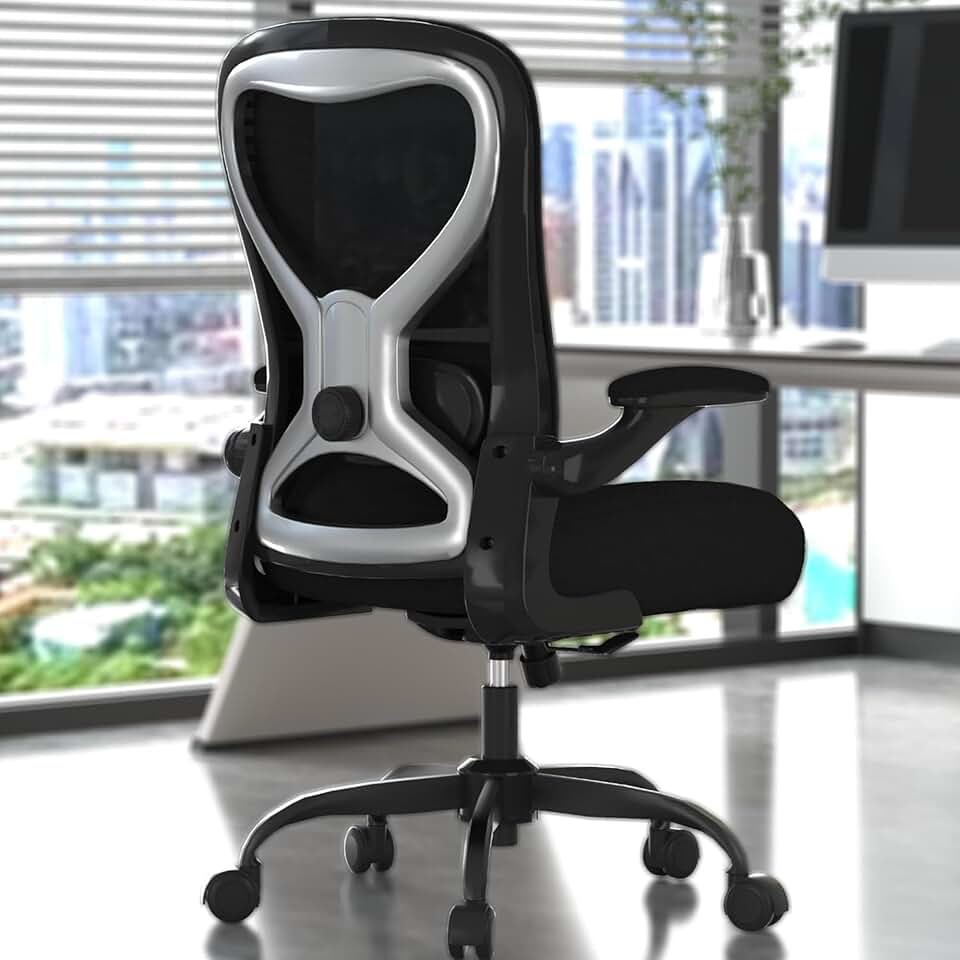
Office Chairs Built for Long Hours - The 2026 Guide for People Who Actually Sit All Day
Here's something most chair manufacturers don't advertise: the majority of office chairs are engineered and tested for 6 hours of daily use. If you're a developer, designer, or trader clocking 8 - 12 hours in a seat, you're using gear outside its intended operating range.
The physical consequence is well-documented. Research on prolonged sitting shows lumbar disc pressure increases significantly after 3 - 4 hours in a poorly supported position, and fatigue-induced slouching typically begins within 90 minutes in chairs with static back support. The chairs below are specifically selected because they address the mechanics of extended sitting - sustained lumbar consistency, breathability over hours, and enough adjustability to let you shift posture without leaving the chair.
This guide covers five thoroughly researched picks across every price tier, a comparison table, clear verdicts, and one chair we'd actively steer you away from.
The Best Office Chairs for Long Hours in 2026
1. Haworth Fern - Best Overall
Price: ~$1,000 - $1,500
The Fern took the top spot in BTODtv's 2026 comfort tier list, which evaluated 35 chairs specifically on how they perform over extended sessions. That ranking isn't based on aesthetics or brand reputation - it's about what the chair actually does to your body over hours.
The backrest is the key differentiator. Its curved, flexible design moves with your spine rather than holding it in one fixed position, which matters enormously after hour four. Static lumbar support that felt fine at 9am becomes a pressure point by 2pm. The Fern's frond-like back segments distribute pressure across the entire posterior instead of concentrating it at one lumbar zone.
Seat depth adjustment, 4D armrests, and a 12-year warranty round out a package that's genuinely built for daily abuse. It fits users up to 350 lbs and accommodates medium to large frames well.
The catch: The price is real. Budget $1,000 minimum, and configurations with headrests or premium upholstery push toward $1,500. Smaller users (under 5'4") may find the seat pan dimensions less ideal. You're also paying for industrial design - this is a visually striking chair that divides opinion.
Who it's for: Anyone sitting 10+ hours daily who wants to buy once and stop thinking about their chair. Remote workers, serious programmers, traders.
2. Steelcase Gesture - Best for Multitaskers
Price: ~$1,300+
The Gesture was built around a specific insight from Steelcase's own research: modern knowledge workers shift between devices - monitors, laptops, tablets, phones - constantly, and existing chair armrests couldn't follow those movements. The 360° arm movement on the Gesture is the direct solution. The arms move in, out, up, down, and rotate forward to support your forearms whether you're typing at a keyboard, working on a tablet flat on your desk, or reclined reading on a phone.
The LiveBack system mimics the natural movement of your thoracic and lumbar spine simultaneously, which means the backrest is always in the right position regardless of how you shift. At 400 lbs capacity, it's also one of the more accommodating chairs for larger users at this tier.
The warm foam seat cushion is noticeably different from the firm mesh seats common at this price - it's softer on contact and holds up better across a long day than the Aeron's hard mesh bottom.
The catch: $1,300+ is a lot to spend on any single piece of furniture. The Gesture doesn't offer as much in the way of seat depth customization as the Fern. For users who sit in a single position all day and don't switch between devices, you'd be paying for features you won't use.
Who it's for: Developers who work across a laptop and external monitors, designers switching between tablets and desktops, anyone whose work involves constant device-switching throughout the day.
3. Newtral NT002 - Best Under $500
Price: $299 - $499
The NT002 is the most credible budget-tier recommendation on this list because the comparison data backs it up rather than just the price tag. Measured spec-for-spec against the Herman Miller Aeron at $1,395+:
- Seat depth: NT002 adjusts 2 - 3 inches. Aeron: fixed.
- Armrests: NT002 has 4D. Aeron has 3D.
- Recline: NT002 goes to 136°. Aeron stops at 120°.
- Lumbar: NT002 has dynamic adjustable lumbar. Aeron has PostureFit SL (good, but fixed in position).
That's not a knock on the Aeron's overall quality - it's a genuinely well-made chair - but those specific adjustability gaps matter a lot for all-day sitting, and the NT002 addresses all of them at roughly one-third the cost.
The hybrid mesh/foam seat provides cooling airflow while avoiding the harsh contact feel of pure mesh. The chair fits users from 5'0" to 6'4", making it unusually versatile. DIY-replaceable parts mean the chair can be serviced without shipping it anywhere.
The catch: Build quality, while solid, doesn't match the premium feel of Steelcase or Haworth. The 300 lbs weight capacity is more limited than the Gesture. Brand recognition is low, which means resale value is minimal if you decide to upgrade.
Who it's for: Anyone who wants proper ergonomic specs for 8 - 10 hour workdays without dropping $1,000+. An excellent first serious chair for remote workers setting up a home office.
4. Branch Task Chair - Best True Budget Pick
Price: $279
At $279, the Branch Task does things most chairs at this price simply don't. The tall backrest provides genuine upper back support - not just a short lumbar pad stuck on a basic frame. The adjustable lumbar pad has real range of motion. The 4-position tilt-lock lets you find a comfortable recline angle and stay there, which matters more than most people realize for afternoon fatigue.
BTOD's 2026 review specifically called out the seat cushion softness as a standout at this price tier. Soft seat contact means less pressure buildup on your sit bones during long sessions - a detail that sub-$300 chairs typically get completely wrong by using firm foam that compresses and bottoms out within an hour.
The arm pads are notably comfortable - soft, not the hard plastic found on most budget options.
The catch: 275 lbs weight capacity is the lowest on this list. The chair suits taller and average-height users best; shorter users may struggle to get the seat height low enough for ideal hip positioning. It's not a chair you'll still be happy with at year five of 10-hour days, but it's a strong choice if you're not ready to commit to a four-figure ergonomic investment.
Who it's for: Someone setting up their first real home office on a limited budget, or a secondary chair for a guest workspace. Taller users (5'9"+) will get the most out of the fit.
5. Eurotech Vera - Best Warranty Value Under $500
Price: $469
The Vera's headline feature is a lifetime warranty at under $500, which is essentially unmatched in this price tier. Paired with a 30-day return window, the purchase risk is genuinely low.
The natural curve backrest is designed to follow the S-curve of the lumbar spine without requiring active adjustment - it's a passive lumbar solution rather than an adjustable one. For users who don't want to fuss with lumbar knobs and settings, this is actually an advantage. The full mesh construction keeps airflow high throughout the day.
The catch: BTOD's 2026 review flagged mesh abrasiveness on clothing - specifically that the mesh texture can be rough on lighter fabrics over time. The seat height range sits on the higher end, making the Vera a poor fit for users under 5'4". The lumbar support is not adjustable, so if the fixed curve doesn't align with your spine's geometry, there's no workaround.
Who it's for: Users 5'6"+ who run warm, want a low-maintenance chair, and value long-term purchase security over feature density.
One Chair to Skip - Herman Miller Aeron
Price: ~$1,395+
The Aeron is not a bad chair. It's an iconic chair with 30 years of brand equity and legitimate build quality. But recommending it as the best chair for long hours in 2026 at its current price requires ignoring some inconvenient facts.
The Aeron has no seat depth adjustment - a meaningful omission for anyone not perfectly sized for the A, B, or C sizing. Proper seat depth (leaving 2 - 3 finger widths between the front edge of the seat and the back of your knees) is fundamental to preventing leg fatigue and circulation issues during extended sitting. A chair at $1,395 that doesn't let you adjust this is a design compromise you're paying premium prices to accept.
The PostureFit SL lumbar is good, but it's a fixed mechanism. The Newtral NT002 at $299 - $499 offers dynamic lumbar adjustment, deeper recline (136° vs. 120°), and 4D armrests vs. the Aeron's 3D. The Steelcase Gesture at similar pricing offers LiveBack spine tracking and 360° arm movement.
If you're drawn to the Aeron, spend the same money on a Haworth Fern or Steelcase Gesture. You'll get more adjustability, better long-hour support, and equivalent build quality.
2026 Ones to Watch
Libernovo Omni debuted in the 2026 BTODtv tier list with a strong comfort ranking. It's new enough that long-term durability data isn't available yet, but it's worth monitoring for a mid-cycle review update.
BTOD Lamia (~$819) is a custom 2026 configuration combining a flatter seat with the Steelcase LiveBack system. Interesting for users who want Steelcase engineering without the Gesture's full price tag.
Haworth Soji (~$540 - $650) brings a 12-year warranty to the mid-range tier and may be the best warranty-per-dollar option if you don't need the Fern's full feature set.
How to Choose the Right Chair for Long Hours
Lumbar Support - Adjustable Beats Static
A lumbar support that can't move to meet your spine's specific position is only helpful if you happen to fit its fixed geometry. Look for chairs with height-adjustable lumbar at minimum; dynamic lumbar (which moves with you) is better for 8+ hour sessions. The Gesture's LiveBack and the Fern's flexible backrest represent the best implementations of this principle.
Seat Depth Adjustment - Non-Negotiable
If a chair doesn't offer seat depth adjustment, you're accepting a fixed fit. This is fine if you try the chair and it happens to fit - it's a problem if it doesn't. The 2-3 finger rule (gap between seat front and back of knee) is the standard measure. The Aeron's lack of seat depth adjustment is the single biggest reason to choose the NT002 or Fern instead at equivalent price points.
Breathability vs. Cushioning
Mesh backs keep you cooler during long sessions but can feel firmer. Foam or padded seats provide more initial comfort but trap heat. For 8-12 hour sessions, a mesh back with a cushioned seat (like the NT002's hybrid design, or the Gesture's warm foam seat) tends to be the most sustainable combination.
Armrest Quality
4D armrests (height, width, depth, pivot) are worth prioritizing for long sessions. Fixed or 1D arms force your shoulders into a static position, which contributes to neck and upper back tension over hours. Both the Fern and Gesture include 4D arms. The Branch Task has basic 4-position arms - functional but limited.
Weight Capacity and Fit Range
Most chairs publish weight limits but fewer are transparent about the height range they're optimized for. The NT002 explicitly states 5'0" - 6'4" fit range, which is unusually helpful. If a chair doesn't publish its fit range, assume it's optimized for a roughly 5'7" - 6'1" user.
Warranty as a Quality Signal
A manufacturer willing to offer a 12-year warranty (Haworth Fern, Haworth Soji) or a lifetime warranty (Eurotech Vera) is making a statement about component durability. Budget chairs typically offer 1-2 year warranties because the foam and mechanisms start degrading around year two under daily use. For a chair you'll sit in for 8+ hours daily, a 12-year warranty translates to roughly $83 - $125/year on the Fern - a different calculation than the sticker price suggests.
Recline Range
You want to be able to recline, especially during reading or thinking tasks. Anything below 120° is restrictive. The NT002 at 136° is the most generous on this list. Prolonged upright 90° sitting actually increases lumbar disc pressure compared to a mild recline - building in some ability to lean back during your day is genuinely beneficial, not lazy.
Price Tier Summary
Under $500: Branch Task ($279) or Newtral NT002 ($299 - $499). The NT002 wins on adjustability specs; the Branch wins if you prefer a simpler setup and softer cushioning.
$500 - $1,000: Haworth Soji ($540 - $650) for warranty confidence, or a refurbished Steelcase Amia ($519) if you can find one in good condition.
Over $1,000: Haworth Fern for pure comfort over 10+ hours. Steelcase Gesture if device-switching is a core part of your workflow. Don't buy the Herman Miller Aeron at this tier without trying it first and confirming the fixed seat depth works for your body.