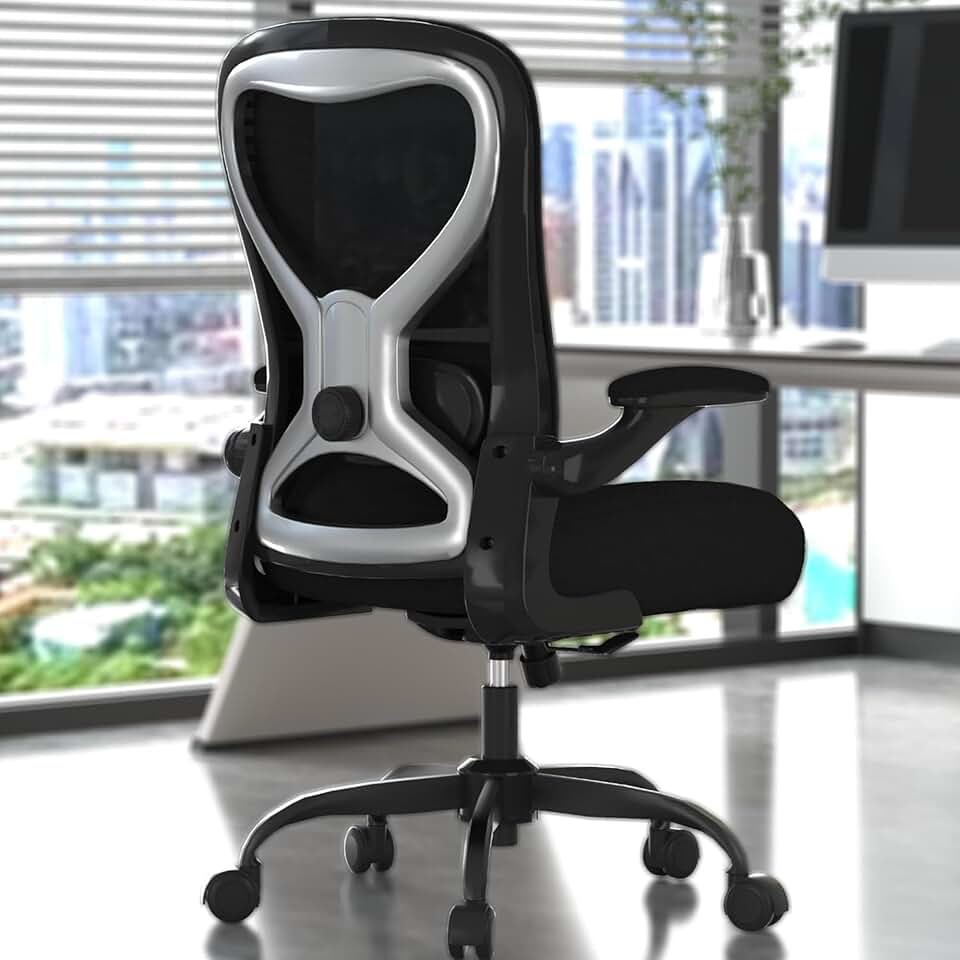
Best Office Chair for Heavy Person in 2026
Finding a genuinely supportive office chair when you're a bigger or heavier person is harder than it should be. Most mainstream chairs quietly cap out at 250–275 lbs, use flimsy cylinders that sink over time, and have seats so narrow your hips are practically folded in half by lunch. Not a great setup for a full workday.
The good news is that the big-and-tall chair market has matured significantly by 2026. There are real options now, from budget-friendly 500 lb rated mesh chairs under $200 to genuinely overbuilt workhorses that can hold over 1,000 lbs and last a decade of daily use. This guide cuts through the noise and gives you the honest breakdown of what actually matters and which chairs are worth your money.
What to Look for in an Office Chair for a Heavy Person
Before jumping to the picks, here is what separates a chair that will last from one that will fail you in six months.
Weight Capacity - Always Buy Above Your Weight
A chair rated exactly at your body weight is being pushed to its engineering limit every single day. Components wear out faster, the cylinder loses height retention sooner, and the frame can flex in ways that aren't immediately obvious. The general rule is to choose a chair rated at least 50–75 lbs above your actual weight. If you weigh 280 lbs, you want a 350 lb minimum capacity. If you're at 350 lbs, look for 425–500 lb rated chairs.
Cylinder Class - This Is What Most Buyers Miss
The pneumatic cylinder is the most failure-prone component in any office chair. Standard chairs use Class 3 cylinders. For heavier users, you want Class 4 or higher, which are stress-tested for greater load, more daily cycles, and a longer lifespan. Some heavy-duty commercial chairs use proprietary heavy-gauge cylinders rated for 24/7 multi-shift use. Always check this spec.
Seat Width and Depth
A seat needs to be wide enough that your hips aren't pressing against the armrests and deep enough that your thighs are supported without the edge cutting into the back of your knees. For most heavier users, look for at least 22 inches wide, with 24–27 inches being ideal. Waterfall seat edges (gently curved downward at the front) reduce pressure on the underside of your thighs during long sessions.
Base Construction
Standard office chairs use a 5-leg star base. For heavy-duty applications, a 7-leg base dramatically increases stability and reduces the tipping risk under high loads. Even among 5-leg bases, look for reinforced steel rather than standard aluminum or plastic composites. The leg spread matters too since a wider base footprint is more stable.
Armrest Spacing Matching Seat Width
This is often overlooked. Wide-seat chairs sometimes still ship with armrests spaced for a narrower user. Make sure the armrest inner width matches or slightly exceeds your hip width. Adjustable 4D armrests (up, down, in, out, pivot, and forward-back) are worth paying for if you spend more than six hours a day at your desk.
Lumbar Support - Adjustable Is Non-Negotiable
Fixed lumbar bumps are designed for an average spine at an average weight. For heavier users whose seated posture involves more lumbar loading, independently adjustable lumbar height and depth is essential. Some premium chairs even offer dual-axis lumbar that adjusts both vertically and horizontally.
The Best Office Chairs for Heavy People in 2026
Here is a comparison of the top picks across different budgets and use cases.
| Chair |
Capacity |
Seat Width |
Base |
Best For |
Price Range |
| Concept Seating 3156HR |
1,000 lbs |
26 in |
Reinforced heavy-duty |
Ultimate durability |
$3,275+ |
| Concept Seating 3152HR |
550 lbs |
Wide |
7-leg |
24/7 shift use |
$1,957+ |
| Neutral Posture Pillow Top |
500 lbs |
27 in |
Heavy-duty |
Deep cushion comfort |
$1,500+ |
| BTOD GO-99-3-GG |
500 lbs |
25.5 in |
Commercial-grade |
Best value mesh |
$400–600 |
| MAHOMICO Big & Tall |
600 lbs |
Extra-wide |
Standard steel |
Budget-friendly daily use |
$150–250 |
| Sweetcrispy Big & Tall |
500 lbs |
Extra-wide |
Steel-reinforced |
Budget ergonomics |
$149+ |
| GTRACING Big & Tall Gaming |
400 lbs |
Wide |
Standard |
Gaming-office hybrid |
$187–296 |
Concept Seating 3156HR - The Heavy-Duty Benchmark
Weight capacity: 1,000 lbs | Seat width: 26 inches | Price: $3,275+
This is the chair you buy when you are completely done compromising. The 3156HR is built in the USA to commercial 24/7 multi-shift standards, which means it is stress-tested far beyond what any home office user will ever throw at it. The 26-inch seat width handles nearly any body type comfortably, the fully articulating headrest adjusts to actually fit your head and neck, and every major adjustment point is independently customizable including lumbar depth, seat height, armrest width, and tilt tension.
The frame is legitimately overbuilt. This is not marketing language. The reinforced steel construction and heavy-gauge cylinder make it realistically a decade-plus chair for daily heavy use. If you have a chronic back problem on top of being a larger person, this investment pays off faster than you'd expect in reduced discomfort and medical costs.
Is it expensive? Yes. Is it the right choice for everyone? No. But if budget allows, nothing on this list competes with it for sheer long-term durability.
Concept Seating 3152HR - Best for 24-Hour or Multi-Shift Use
Weight capacity: 550 lbs | Base: 7-leg | Price: $1,957+
Designed explicitly for around-the-clock environments like dispatch centers and call centers, the 3152HR brings a 7-leg base to the table for dramatically increased stability under load. That 7-leg configuration is one of the clearest signs of a chair built with heavy-duty longevity in mind rather than just a marketing capacity number.
Also made in the USA, this chair hits the sweet spot for buyers who need serious durability and long daily use without jumping to the full 1,000 lb category. The adjustability package is comprehensive and the build quality holds up through thousands of daily sitting cycles. If you work from home for 8–10 hours a day and weigh between 300–500 lbs, this is probably the most practical premium buy on this list.
Neutral Posture Pillow Top - Best for Deep Comfort
Weight capacity: 500 lbs | Seat width: 27 inches | Price: $1,500+
The widest seat on this list at 27 inches, combined with a thick pillow-top cushion design, makes the Neutral Posture Pillow Top the top choice if your main complaint with office chairs has always been feeling compressed or perched. The full-body support design distributes weight more evenly than harder foam seats, and the USA-made construction shows in both the material quality and durability.
If you've struggled with pressure point pain during long work sessions, the combination of a wide waterfall seat and thick high-density foam here is genuinely different from what you'd find in most chairs. Pair it with a quality ergonomic desk setup to get the full benefit.
BTOD GO-99-3-GG - Best Value for Heavy Daily Use
Weight capacity: 500 lbs | Seat width: 25.5 inches | Price: $400–600
The BTOD GO-99-3-GG is the most practical pick for someone who needs serious specs without a four-figure price tag. The 25.5-inch seat width is genuinely roomy, the mesh back breathes well during long sessions, and the 5-inch thick seat pad provides real cushioning rather than the token foam found in budget chairs. It is rated for 24/7 commercial use, which tells you the cylinder and frame are built for real durability.
For buyers in the 300–450 lb range who work from home full-time, this chair hits a sweet spot of verified capacity, breathable materials, and reasonable price. This is our top pick for buyers who want commercial-grade specs without spending over $600.
MAHOMICO Big and Tall - Best Budget Chair at 600 lbs
Weight capacity: 600 lbs | Seat: Extra-wide 3D cushion | Price: $150–250
The MAHOMICO stands out in the budget category because its 600 lb weight rating is unusually high for the price point. The dual-adjust lumbar system (both vertical height and forward pressure depth) is a feature you rarely see under $300. The 90–120 degree recline range and 8-hour mesh back design make it a reasonable option for full workdays.
Be realistic about what you're getting at this price. The cylinder and base won't match commercial-grade builds, and you should expect to replace this chair sooner than a premium option. But for a secondary workspace, a budget-constrained home office, or someone just needing a reliable transition chair, the MAHOMICO delivers solid value. Check the current Amazon listing for up-to-date specs before buying.
Sweetcrispy Big and Tall - Best Entry-Level Ergonomic Pick
Weight capacity: 500 lbs | Seat: Extra-wide | Price: $149+
The Sweetcrispy has become a popular entry point in 2026 because it packs 4D armrests and real lumbar support into a sub-$200 package with a 500 lb capacity. The 4D armrests are a genuine differentiator at this price, letting you fine-tune arm positioning to reduce shoulder and neck tension.
The thick cushion works well for shorter sessions and lighter work-from-home schedules. For users sitting fewer than 6 hours daily and looking for an affordable starting point, this is a reasonable buy. Browse more ergonomic chair options if you want to compare it against other entry-level picks.
GTRACING Big and Tall Gaming Chair - Best for Gaming and Office Crossover
Weight capacity: 400 lbs | Seat: Wide ergonomic | Price: $187–296
If you use your workspace for both professional tasks and gaming, the GTRACING Big and Tall is a solid hybrid. The extendable footrest, pocket spring lumbar support, and high-back design address pain points common to longer gaming and desk sessions. At 400 lbs capacity it is on the lower end of this list, so it is best suited to users in the 275–350 lb range.
The pocket spring lumbar is more dynamic than a fixed foam bump, adapting slightly as you shift position. The high back provides solid head and neck support for leaning back during less intensive tasks or entertainment breaks.
How to Set Up Your Chair Correctly Once It Arrives
Even the best chair will underperform if it isn't set up right. Here is a quick checklist for heavy-duty chairs.
Seat height should position your feet flat on the floor with your knees at roughly 90 degrees. If your chair is too low even at max height, a thicker chair mat or platform can help.
Lumbar support position should sit right in the curve of your lower back, not at mid-back or hip level. Adjust the height first, then the depth until you feel gentle support without being pushed forward.
Armrest height should allow your shoulders to relax fully downward. If your shoulders are shrugging to reach the armrests, raise them. If the armrests are too high and your elbows can't rest naturally, lower them.
Seat depth should leave about two to three finger-widths of space between the back of your knees and the seat edge. Too deep and the edge digs into your legs, reducing circulation.
Pairing a well-adjusted chair with the right desk height and ergonomic accessories like a monitor arm or keyboard tray can make a dramatic difference in overall comfort.
Are Gaming Chairs Good for Heavy People
Honestly, most are not. Gaming chairs are typically designed around a slim, athletic physique. They often have bucket-style seats that compress wider hips uncomfortably, and many advertise high weight limits that aren't backed up by the actual cylinder or frame construction quality. The GTRACING pick above is one of the exceptions, but in general, purpose-built big-and-tall or commercial office chairs are a better investment for heavier users.
Final Thoughts
The most important shift in mindset when shopping for an office chair for a heavy person is to stop looking at it as a commodity purchase. A chair that fails in 18 months because it was cheaply built for your weight is not a bargain at $150. A well-built 500 lb rated chair at $500 that lasts five years of daily use costs you $100 per year. A commercial-grade chair at $2,000 that lasts a decade is $200 per year and provides substantially better ergonomic support the entire time.
Buy the most capacity and quality your budget allows. Verify seat width matches your body, check the cylinder class if the manufacturer publishes it, and prioritize chairs with real adjustability over ones with flashy aesthetics. Your back, hips, and productivity will thank you.