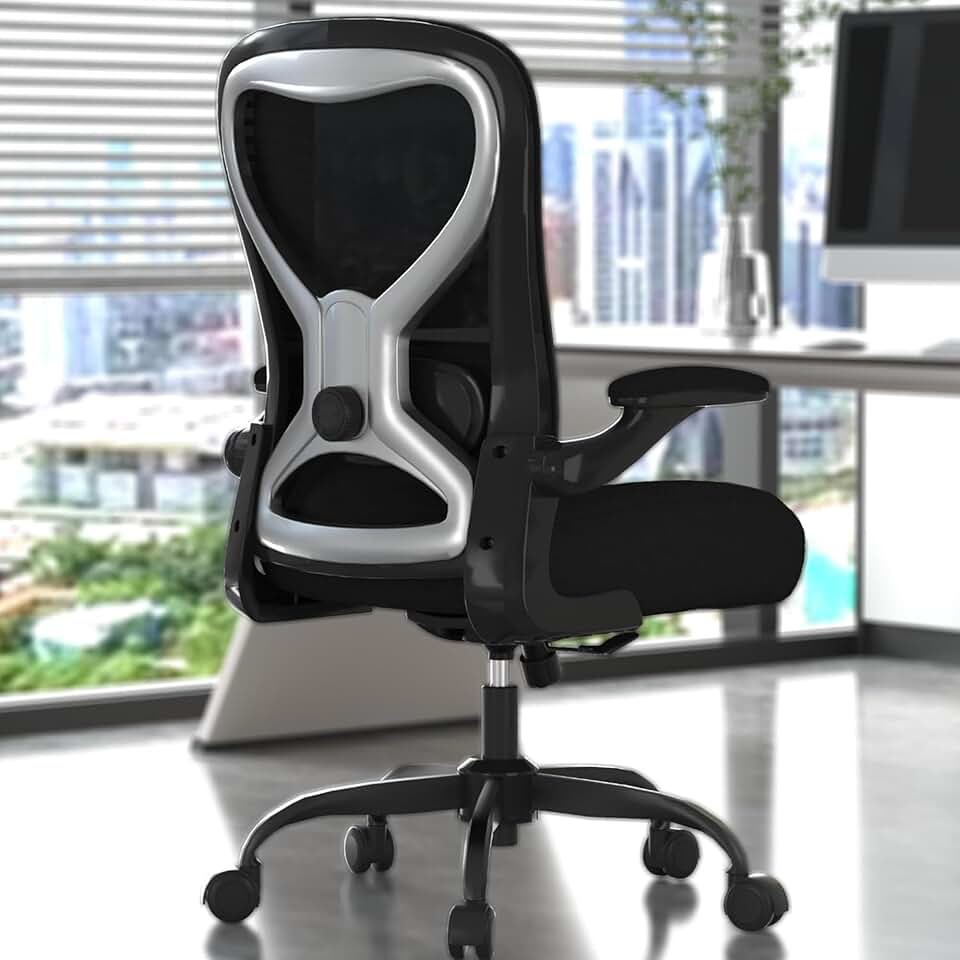
Best Office Chair for Short Person in 2026
If you're under 5'4" and you've spent any time shopping for an office chair, you already know the frustration. Most chairs are designed with a 5'9" average male frame in mind, which means petite users end up perching on the front edge of an oversized seat, feet dangling, shoulders creeping upward toward their ears. It's uncomfortable, it's bad for your circulation, and it can cause real long-term posture problems.
The good news is that the market for petite-friendly ergonomic chairs has grown significantly, and in 2026 there are genuinely excellent options across a wide range of budgets. This guide covers everything you need to know to find the right fit, plus our top picks for short users tested and ranked.
Why Standard Chairs Don't Work for Short People
Before jumping into recommendations, it helps to understand exactly what goes wrong when a petite person sits in a standard office chair.
Seat depth is the biggest culprit. Most standard chairs have a seat pan that runs 18 to 22 inches deep. For proper ergonomics, you need about 2 to 3 inches of clearance between the front edge of the seat and the back of your knees. If the seat is too deep, you either slide forward and lose lumbar support entirely, or you sit back properly but cut off circulation in your legs. Neither option is acceptable for an 8-hour workday.
Seat height is the second major issue. Many chairs bottom out at 17 to 18 inches, which is still too tall for someone under 5'2". Feet flat on the floor, knees at roughly 90 degrees, thighs parallel to the ground - that's the goal, and it simply isn't possible if the chair won't go low enough.
Lumbar position matters too. On a standard chair, the lumbar support often sits at mid-back height for a taller person, which lands in the wrong zone entirely for a shorter spine.
The chairs below solve all three of these problems, either by being purpose-built for petite frames or by offering enough adjustability to dial in a proper fit.
What to Look for When Buying an Office Chair for a Short Person
Use this checklist before you buy anything:
- Seat height minimum of 16 inches or lower - Ideally 15 to 16.5 inches at its lowest point
- Adjustable seat depth slider - Should go as shallow as 15 to 17 inches
- Low armrests - Minimum height of 5 to 7 inches from the seat pan
- Lumbar support that adjusts in height - Not fixed at a single position
- Compact backrest - A tall backrest built for a 6-foot frame won't hit your lumbar correctly
- Breathable mesh or cushioning - Important for long hours since petite users often end up with less thigh support, which increases pressure points
You can also pair any chair with a quality footrest from our accessories guide if you find yourself in a borderline situation, but most of the chairs below eliminate that need entirely.
Our Top Picks - Best Office Chairs for Short People in 2026
Quick Comparison Table
| Chair |
Seat Height Range |
Min Seat Depth |
Price Range |
Best For |
| Steelcase Leap V2 |
15.5" - 20.5" |
15.5" |
$1,000 - $1,300 |
All-day use, maximum adjustability |
| Autonomous ErgoChair Pro |
16" - 20" |
Compact adj. |
$400 - $600 |
Budget-conscious, shared spaces |
| Neutral Posture XSM |
15.75" min |
15.5" |
$1,100 - $1,200 |
Premium ergonomics, serious users |
| Sidiz T25 |
15" - 20" |
Compact |
$300 - $500 |
Tight home offices, under 5'2" |
| Boulies Nubi Lite |
16.5" - 20" |
Compact adj. |
$300 - $500 |
Home offices, modern look |
| BTOD Petite |
15.5" class |
16" min |
$450 - $500 |
Budget-friendly petite fit |
| OM Paramount Petite |
15.5" - 22" |
16" - 17" |
$500 - $800 |
Sciatica relief, under 5'3" |
Steelcase Leap V2 - Best Overall for Short Users
The Steelcase Leap V2 consistently earns its place at the top of lists like this one, and in 2026 it remains the gold standard for petite ergonomics - if you're willing to spend.
What makes it work for short people is the combination of a low seat height range (15.5 to 20.5 inches) and a seat depth that adjusts across the same 15.5 to 20.5 inch range. That sliding seat pan is genuinely one of the best implementations in the industry. You can bring the depth in shallow enough that the edge of the seat doesn't press into the backs of your knees even at your shortest sitting position.
The armrests drop to about 7 inches from the seat, which is low enough that most users under 5'4" won't need to hunch their shoulders. The lower back support also moves with your spine rather than being fixed in place, which means it actually stays in contact with your lumbar region regardless of how you shift around.
Best for someone who sits 6 to 10 hours per day and wants a chair that won't need to be replaced for a decade. The build quality is exceptional.
Price runs $1,000 to $1,300 new, though certified refurbished units are often available around $500 to $700 and carry the same lifetime frame warranty.
Autonomous ErgoChair Pro - Best Mid-Range Pick
For users who want serious ergonomic adjustability without the four-figure price tag, the Autonomous ErgoChair Pro is a strong contender. It seats users as low as 16 inches and features a compact seat pan with adjustable depth that suits frames under 5'3" well.
The dynamic lumbar support system is height-adjustable rather than fixed, which is essential for shorter spines. The mesh backrest is breathable and doesn't run as tall as some competing models, meaning the lumbar zone actually hits where it should for petite users.
It's not quite in Steelcase territory for build quality, but for home office use it's an excellent value. The styling is modern and clean, which works well in home office environments where aesthetics matter alongside function.
Best for remote workers under 5'3" who want a capable ergonomic chair under $600.
Neutral Posture XSM - Best Premium Purpose-Built Option
The Neutral Posture XSM is one of the few chairs on this list that was designed from scratch with petite users in mind rather than adapted from a standard model. The "XSM" literally stands for extra small.
Seat height starts at 15.75 inches and the adjustable seat depth can be dialed in as shallow as 15.5 inches, making this one of the most accommodating chairs for users under 5'2". The inflatable lumbar cushion is a standout feature - you can inflate or deflate it to precisely tune the amount of support without moving any hardware. There's also an optional petite headrest that's sized correctly for a shorter neck and head position.
It's a clinical-looking chair, which some people love and others don't. If you're building a home office with a specific aesthetic, that's worth considering. But if comfort and fit are the primary goals, few chairs compete with it at any price.
Best for users who want the most customizable petite-specific chair available and are comfortable spending $1,100 to $1,200.
Sidiz T25 - Best for Under 5'2" and Small Spaces
The Sidiz T25 is a Korean-designed chair that has quietly become a favorite among petite users for a specific reason - it has one of the lowest minimum seat heights available at 15 inches flat. For anyone under 5'2", that extra inch or inch and a half of downward range genuinely matters.
The profile is slim and compact, which makes it a great fit for smaller home offices or anyone working at a desk that doesn't leave a lot of clearance. It won't feel overwhelming in a small room the way some bulkier ergonomic chairs can.
The trade-off is that it's less adjustable overall than the Leap V2 or XSM. It's a more straightforward chair, but what it does, it does very well for its price range.
Best for users under 5'2" working in tight spaces who want a practical, no-fuss solution around $300 to $500.
Boulies Nubi Lite - Best for Home Office Style and Comfort
The Boulies Nubi Lite has become a popular choice among home office users in 2026, particularly those who want something that looks good on a video call while still delivering real ergonomic support. Seat height ranges from about 16.5 to 20 inches, and the seat depth is adjustable with a compact range that suits most users under 5'4" without needing a footrest.
The adjustable lumbar and breathable mesh keep it comfortable for long sessions, and the overall build feels more premium than the price suggests. It doesn't have the deep customization of the Leap V2, but for a home office user sitting 4 to 6 hours per day, it hits a sweet spot between comfort, looks, and value.
Best for home office users who want a modern-looking chair with solid petite-friendly dimensions under $500.
BTOD Petite - Best Budget-Friendly Dedicated Petite Chair
BTOD (Bizchair) has offered a petite-focused line for several years now, and the BTOD Petite remains one of the most practical budget options for short users. Seat height reaches down to the 15.5 inch class, minimum seat depth starts around 16 inches, and the cushioning is notably thick and dense compared to cheaper competitors in this range.
There's also a smaller "Bantam" variant for users who need an even more compact overall footprint. BTOD offers a lifetime warranty on the frame, which is a meaningful commitment at this price point and indicates confidence in the build quality.
Best for users who need a dedicated petite chair on a tighter budget, around $450 to $500.
OM Paramount Petite - Best for Sciatica and Lower Back Pain
The OM Paramount Petite is tailored specifically for users under 5'3" and earns particular praise from users dealing with sciatica or chronic lower back issues. The seat height range of 15.5 to 22 inches is among the widest available, and the seat depth adjusts between 16 and 17 inches - compact enough to keep your legs properly supported without cutting off circulation.
The armrests drop to just 5.25 inches from the seat, which is the lowest of any chair on this list. For petite users who've struggled with shoulder tension from armrests that are too high, this is genuinely noticeable within a few hours.
Best for petite users under 5'3" dealing with sciatica or lower back pain who need precise fit over everything else, in the $500 to $800 range.
Not necessarily, and this is a common misconception. With the right chair, most users between 5'0" and 5'4" can get their feet flat on the floor without any accessories. The chairs above are specifically chosen because their minimum seat heights are low enough to make that possible for most petite frames.
The exception is users under 5'0" or those with shorter legs relative to their torso. In those cases, a portable footrest is an easy and inexpensive fix. It's worth checking out our accessories guide for footrest recommendations that pair well with the chairs above.
One more thing worth noting - if your desk height isn't adjustable, you may be stuck raising your chair to reach a comfortable keyboard position, which then lifts your feet off the floor. A height-adjustable desk can solve this without requiring any compromise in chair height.
Seat Depth - The Detail That Changes Everything
We want to call this out one more time because it consistently gets overlooked in shopping guides. Seat depth is the most important dimension for a short person buying an office chair.
A seat that's 19 or 20 inches deep will cause problems regardless of how low the chair goes. Your options become either sitting on the edge and losing back support, or sitting back and having the front edge dig into the back of your knees. Both cause numbness, fatigue, and long-term circulation issues.
Every chair on this list either comes with a compact seat pan (under 17 inches) or has a depth slider that lets you bring it into that range. When you're shopping outside this list, always check the minimum seat depth spec before anything else.
Final Thoughts
Finding the best office chair for a short person comes down to three measurements above everything else - minimum seat height, minimum seat depth, and minimum armrest height. Get those right and the rest of the ergonomic features can do their job properly.
For most users, the Steelcase Leap V2 is the best long-term investment if budget allows. The Autonomous ErgoChair Pro is the smartest mid-range pick. And the Sidiz T25 offers the lowest seat height of the group for users who need that extra inch of clearance.
Browse our full office chair reviews for more detailed breakdowns, and don't overlook your desk setup as part of the overall ergonomic equation - the chair and the desk work together, not in isolation.