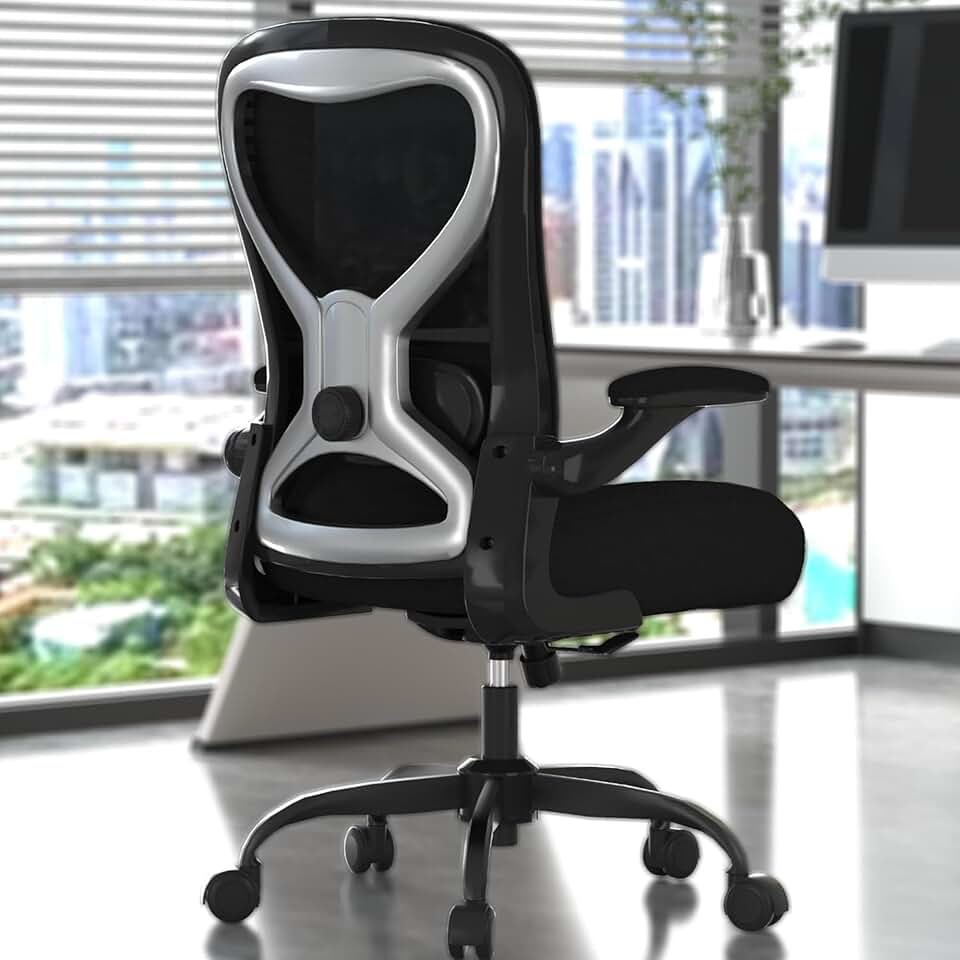
Find the best office chair without wheels in 2026. Compare sled base, four-leg, and glide designs for hardwood floors, carpet protection, and stability.
Our Top Pick
Office Desk Chair
Wheels are not always the answer. If you have beautiful hardwood floors you'd rather not scratch, a carpeted home office that snags casters constantly, or a reception area where chairs rolling around
As an Amazon Associate, we earn from qualifying purchases.
Best Office Chair Without Wheels for 2026 - Stable, Floor-Friendly Picks
Wheels are not always the answer. If you have beautiful hardwood floors you'd rather not scratch, a carpeted home office that snags casters constantly, or a reception area where chairs rolling around just looks unprofessional - an office chair without wheels is exactly what you need.
The good news is that stationary chair technology has come a long way. From sleek sled base designs to sturdy four-leg frames fitted with felt glide pads, there are genuinely great options in 2026 that give you proper ergonomic support without a single caster in sight.
This guide breaks down the best no-wheel office chair picks, explains the different base types, and helps you match the right chair to your space and budget.
Why Choose an Office Chair Without Wheels
Before jumping into recommendations, it's worth understanding why so many people actively search for wheelless options. The reasons are more practical than you might think.
Floor protection is the biggest driver. Standard polyurethane casters - even "soft" ones - can leave marks, scuffs, and worn grooves in hardwood, laminate, and luxury vinyl plank flooring over time. A stationary chair with felt glide pads or a smooth sled base distributes weight evenly and moves only when you deliberately shift position.
Carpet snagging is the frustrating flip side. On thicker carpet, wheels constantly catch and drag, making it exhausting to reposition. A four-leg base with glides slides cleanly without pulling fibers.
Stability for focused work matters too. When you're doing detailed work like drawing, writing by hand, or assembling small components, a chair that rolls even slightly can break your concentration. A stationary base keeps you locked in place.
Multi-user and shared spaces like reception areas, meeting rooms, and call centers benefit enormously from no-wheel chairs. Visitors and clients don't roll unexpectedly into each other, and the overall look is tidier and more professional.
**Expert Tip - ** If you're converting a home office with hardwood floors, pair any stationary chair with an office chair mat made from felt or bamboo for the ultimate floor protection combo.
Featured
Office Desk Chair
Solid $90 ergonomics for 6-hour days - nothing more, nothing less
Understanding Base Types - Sled, Four-Leg, and Glide Options
Not all wheelless office chairs are built the same. The base design dramatically affects how the chair feels, how it moves (or doesn't), and which floors it suits best.
Sled Base Chairs
A sled base is that distinctive curved metal runner design you'll recognize from modern conference rooms and waiting areas. The two parallel runners contact the floor at two long points rather than four small ones, which does two things really well.
First, weight distribution across a sled base is excellent - no single pressure point digs into hardwood or carpet. Second, with felt or Teflon glide pads applied to the runner undersides, a sled base chair slides smoothly and quietly when you lean or shift, then settles back without rolling away.
Sled bases are also inherently stylish. They photograph beautifully in home office setups and fit clean, modern aesthetics without looking utilitarian.
**Best for - ** Hardwood floors, polished concrete, home offices, reception desks, and conference rooms.
Four-Leg Base Chairs
A four-leg base is exactly what it sounds like - four individual legs, each tipped with a glide pad. This is the most traditional stationary chair construction and the one most people picture when they think of a dining chair adapted for desk use.
Four-leg bases offer the highest overall stability, especially on uneven surfaces. They don't rock, flex, or slide unless you deliberately shift your weight. The downside is that repositioning requires you to actually stand up and move the chair rather than just scooting.
**Best for - ** Deep pile carpet, uneven floors, high-focus work environments, and any situation where you truly do not want the chair to move at all.
Glide Pads and Felt Tips
Some chairs are sold with replaceable glide hardware - small plastic or metal feet that can be swapped for felt-tipped, Teflon, or rubber versions depending on your floor type. This is worth checking before you buy because the right glide material makes a big difference.
Felt glides - ideal for hardwood, laminate, and tile; nearly silent movement
Hard plastic glides - better grip on carpet; won't slide on thick pile
Rubber glides - maximum non-slip grip; good for polished concrete or tile where you want zero movement
Teflon (PTFE) glides - ultra-smooth for hardwood; good if you need to reposition frequently
**Expert Tip - ** Always check whether replacement glides are available for any chair you're considering. Being able to swap felt tips for rubber ones (or vice versa) as your flooring changes is genuinely useful.
Best Office Chairs Without Wheels in 2026 - Our Top Picks
1. BY 100 and BY G Series - Best for Meeting Rooms and Reception Areas
The BY 100 and stackable BY G series represent the gold standard for professional environments that need reliable, floor-friendly seating at scale. These chairs feature either a four-leg or sled base (depending on the variant you select) and are engineered from the ground up for high-rotation shared spaces.
What makes them stand out is the modular approach. You can spec them with felt or hard glide pads at the point of order, making floor protection a non-negotiation rather than an afterthought. The lightweight frame means staff can restack and reposition them without strain, which matters enormously in busy meeting rooms.
The stackable design also means storage is genuinely practical - you can clear a room in minutes by stacking BY G units six to eight high on a trolley.
Key specs -
**Base type - ** Four-leg or sled (variant dependent)
**Glide options - ** Felt and hard plastic available
**Weight capacity - ** Suitable for standard commercial use
**Stacking - ** Yes (BY G variant)
**Best for - ** Meeting rooms, reception areas, open plan offices, hospitality
**Expert Tip - ** For large offices ordering 20 or more chairs, always ask for felt glide pads to be factory-fitted on hardwood floors. Retrofitting 30 chairs yourself is nobody's idea of a good Friday afternoon.
2. Caddy Chair - Best for Transitional Workspaces
The Caddy chair earns its name by being genuinely versatile across different settings within the same building. Designed for transitional spaces - think secondary workstations, breakout areas, hot desks, and reception counters - it combines a clean silhouette with sled or glide-compatible base options.
What separates Caddy from purely decorative sled chairs is that it's built for actual extended sitting, not just occasional perching. The seat depth and back angle are dialed in for realistic work posture, and the construction quality holds up under daily use by multiple users.
The aesthetic is intentionally neutral, meaning it doesn't clash with existing furniture whether your office leans contemporary or traditional. It's the kind of chair you can move from a reception desk to a training room to a breakout pod without it looking out of place.
Key specs -
**Base type - ** Sled or glide-compatible (variant dependent)
**Upholstery - ** Fabric options for commercial durability
**Best for - ** Reception, hot desks, secondary workstations, breakout areas
**Stability - ** High; designed for multi-user environments
**Price - ** Mid-range commercial pricing; contact supplier for current quote
3. Gamma Series - Best Ergonomic Stationary Chair for Open Plan Offices
If your priority is genuine ergonomic support without wheels in a high-density office environment, the Gamma series is worth serious attention. This is the chair you reach for when you want a proper synchro-tilt mechanism, mesh back ventilation, and real lumbar support - all on a stationary base designed for open plan and call center deployment.
The Gamma is typically available in sled and four-leg configurations, with glide options specified at the order stage. The mesh back keeps users cool during long shifts, which is a genuine comfort factor in call centers and busy open plan floors where HVAC is always fighting a losing battle.
The synchro-tilt means the chair responds naturally to movement even though it doesn't roll, giving you that dynamic seated experience that makes long sessions comfortable.
Key specs -
**Base type - ** Sled or four-leg (configurable)
**Back - ** Breathable mesh
**Mechanism - ** Synchro-tilt
**Lumbar - ** Adjustable lumbar support
**Best for - ** Call centers, open plan offices, high-rotation workstations
**Price - ** Value-focused fleet pricing
4. Challenger Series - Best Heavy-Duty Stationary Option
The Challenger series targets environments where chairs take serious punishment - think manufacturing offices, workshops, industrial control rooms, or any workplace where the chair gets used hard across multiple shifts by multiple people.
The construction is deliberately robust, with reinforced frame components and high-density seating that doesn't flatten out over months of continuous use. The stationary base (available in sled and four-leg variants) is designed for stability on rough or uneven concrete floors where a wheeled chair would be unpredictable.
Glide options are typically hard plastic for these environments, prioritizing grip over smooth gliding, which is exactly right when the floor surface is painted concrete or industrial vinyl.
Key specs -
**Base type - ** Sled or four-leg, heavy-duty construction
**Weight capacity - ** Higher than standard commercial chairs
**Best for - ** Industrial offices, workshops, multi-shift environments
**Glides - ** Hard plastic standard, felt available for cleaner environments
**Price - ** Commercial fleet pricing
5. Corpo 100 Series - Best Budget Stationary Chair for Home Offices
Not every no-wheel chair needs to be a commercial fleet product. The Corpo 100 series offers a clean, practical stationary option that works well in home office settings where you want something more purposeful than a dining chair but don't need full commercial-grade construction.
The sled base on the Corpo 100 photographs particularly well in home office setups - it has that architectural quality that looks intentional rather than functional. Felt glide pads on the runners protect hardwood floors effectively, and the back profile offers decent support for standard working hours.
It's not a chair for eight-hour marathon sessions, but for two to four hours of focused work, writing, or video calls, it hits a sweet spot between style and substance at an accessible price.
Key specs -
**Base type - ** Sled base with felt glide pads
**Back - ** Padded with moderate lumbar contouring
**Best for - ** Home offices, study desks, secondary workstations
**Floor protection - ** Felt glides standard (hardwood and laminate safe)
**Price - ** Budget-friendly; check current retail pricing
Ergonomic Office Chair
Solid $189 starting point - not your forever chair
Comparison Table - Best Office Chairs Without Wheels 2026
Chair
Base Type
Glide Type
Best Floor
Ergonomics
Best Use Case
Price Range
BY 100 / BY G
Four-leg or sled
Felt or hard plastic
Hardwood, carpet
Standard
Meeting rooms, reception
Fleet/volume pricing
Caddy
Sled or glide-compatible
Felt standard
Hardwood, laminate
Good
Transitional, hot desks
Mid-range commercial
Gamma
Sled or four-leg
Configurable
Carpet, hardwood
High (mesh, synchro-tilt)
Open plan, call centers
Value fleet pricing
Challenger
Sled or four-leg (heavy duty)
Hard plastic
Concrete, vinyl
Moderate-high
Industrial offices
Commercial pricing
Corpo 100
Sled
Felt standard
Hardwood, laminate
Moderate
Home office, study
Budget-friendly
What to Look for When Buying an Office Chair Without Wheels
With the product picks laid out, here's a practical checklist to make sure you get the right match for your specific situation.
Floor Type Comes First
This is the single most important factor. Write it down before you start shopping.
**Hardwood or laminate - ** Prioritize felt glide pads; sled bases distribute weight best
**Thick carpet - ** Four-leg base with hard plastic glides won't snag; avoids catching
**Tile or polished concrete - ** Rubber glides for grip if stability is paramount; felt if smooth repositioning matters
**Mixed floors - ** Look for chairs with replaceable glide inserts so you can adapt
Ergonomic Features Still Matter
Just because a chair doesn't roll doesn't mean ergonomics go out the window. Look for -
Seat height adjustment - even on stationary bases, pneumatic height adjustment is possible and genuinely useful
Lumbar support - adjustable lumbar keeps your lower back supported during long sessions
Seat depth - you should have 2 to 3 inches between the back of your knees and the seat edge
Back angle adjustment - a synchro-tilt or reclining back is worth paying for if you sit for more than three hours daily
Weight Capacity
Always check the stated weight capacity and build in a reasonable margin. A chair rated to exactly your body weight is already working at its limit. Aim for a chair rated at least 50 lbs above your body weight for longevity.
Stackability and Storage
For commercial and shared office environments, stackable chairs like the BY G save enormous amounts of space and money. If you're buying for meeting rooms or training spaces, this feature alone can justify a higher per-unit price.
**Expert Tip - ** Browse our full office chair guide for detailed ergonomic checklists that apply whether your chair has wheels or not. Good posture principles don't change based on base type.
ELABEST X100 Mesh Chair with Footrest
17-point adjustability and a footrest at $320 - finally a tall-person chair that delivers
Sled Base vs Four-Leg Base - Which Should You Choose
Factor
Sled Base
Four-Leg Base
Floor protection
Excellent (wide contact area)
Good (point contact at glides)
Carpet performance
Good with felt glides
Excellent with hard glides
Stability
Very good
Maximum
Repositioning ease
Easy (slides smoothly)
Harder (must lift or drag)
Aesthetic
Modern, architectural
Classic, traditional
Stackability
Sometimes (variant dependent)
Often yes
Best for
Hardwood, open plan, home offices
Carpet, industrial, multi-shift
The honest answer is that sled bases win for most home office and modern commercial settings because the combination of floor protection and repositionability is genuinely practical. Four-leg bases win when you absolutely need the chair to stay exactly where it is - think reception desks, industrial control stations, or workstations where the chair positioning is fixed by the workstation design.
Can You Convert a Wheeled Office Chair to No Wheels
This question comes up a lot, and the answer is - sometimes, with caveats.
Some wheeled office chairs have caster sockets (the standard 7/8-inch or 11mm socket found on most commercial chairs) that accept replacement glide inserts or stationary feet. These aftermarket conversion glides are widely available and typically cost $15 to $40 for a set of five.
The process is straightforward - pull out each caster (they usually pop out with firm upward pressure), insert the glide replacement, and you're done.
However, there are real limitations -
Not all chair bases are engineered to handle static load without the flex that casters provide
The aesthetics of a five-star wheeled base fitted with stationary feet looks noticeably awkward
Height-adjustable gas cylinders still work fine, but you lose the dynamic repositioning that wheeled bases enable
For occasional-use chairs or budget setups where buying a dedicated stationary chair isn't justified, conversion glides are a practical solution. For a proper dedicated workstation, buying a chair designed without wheels from the ground up is almost always the better investment.
Office Desk Chair
Sub-$100 seating for shorter frames - honest about its limits
Best Office Chairs Without Wheels by Use Case - Quick Guide
For a home office with hardwood floors - Go sled base with felt glides. The Corpo 100 or Caddy suit this perfectly.
For a corporate reception area - The Caddy or BY 100 in sled configuration with felt pads handles this beautifully with a professional look.
For meeting rooms needing flexible setup -BY G stackable chairs on a four-leg base with hard plastic glides. Stack them away when the room needs clearing.
For call centers or open plan high-rotation -Gamma series with synchro-tilt and mesh back. Floor protection plus genuine ergonomics for long shifts.
For industrial or workshop offices -Challenger series with heavy-duty four-leg base and hard plastic glides on concrete or vinyl.
For a home study or occasional desk use -Corpo 100 sled base is stylish, affordable, and perfectly adequate for two to four hours daily.
Final Verdict - The Best Office Chair Without Wheels in 2026
If you want a single recommendation that covers the most common scenario - a home or professional office setting with hardwood or laminate floors where you want floor protection and a clean, stable feel - the Caddy in sled configuration with felt glides is our top overall pick. It balances ergonomics, aesthetics, floor protection, and adaptability across multiple use cases better than any other option in the 2026 market.
For commercial fleet buyers equipping meeting rooms at scale, the BY G stackable series is the smart choice. For users who need genuine ergonomic depth on a stationary base in a busy open plan environment, the Gamma series with synchro-tilt mesh back is the standout option.
The market for wheelless chairs is genuinely underserved by major review sites, which tend to focus almost exclusively on the latest wheeled ergonomic releases. But for the right environment, a thoughtfully chosen stationary chair is not a compromise - it's the correct tool for the job.
**Expert Tip - ** Whatever stationary chair you choose, pair it with a quality office chair mat under your desk area. Even felt-glide chairs benefit from a defined zone, and your floors will thank you years down the line.
Yes - office chairs without wheels are often better for hardwood floors than wheeled alternatives. A sled base fitted with felt glide pads distributes your weight across a wider contact area and moves smoothly without scratching or marking the surface. The key is making sure your chair has felt or soft Teflon glides rather than hard plastic or bare metal feet, which can still cause damage. Sled base chairs are particularly well suited to hardwood because the runners slide cleanly when you shift position rather than dragging and gouging like stiff casters can.
A sled base office chair uses two curved metal runners instead of legs or wheels as the base structure. The runners contact the floor along their length, which spreads your weight evenly and gives the chair its characteristic smooth, low-friction feel. Sled base chairs are popular in conference rooms, reception areas, and home offices because they look clean and modern, protect floors well when fitted with felt glide pads, and resist the accidental rolling that wheeled chairs can cause. They're also commonly used as visitor chairs in professional settings.
Yes, in many cases you can replace office chair casters with stationary glide inserts. Most standard office chairs use a 7/8-inch (approximately 11mm) socket in the base that accepts both casters and replacement glide feet. You simply pull each caster out firmly and push in the glide replacement. Aftermarket glide sets typically cost $15 to $40 for a set of five. The downside is that a five-star wheeled base fitted with glides looks slightly awkward, and not all bases are engineered to handle static load the same way. For a permanent stationary setup, a chair designed without wheels from the start is generally the better choice.
A four-leg base chair with hard plastic glides is generally best for carpet, especially thick or plush pile. Four-leg bases provide maximum stability and don't rock or tilt on uneven carpet surfaces. Hard plastic glide tips sit cleanly on carpet fibers without snagging, unlike felt glides which can catch and pull pile over time. For low-pile or commercial carpet tiles, a sled base with felt glides also works well and gives you slightly easier repositioning.
Yes, stationary office chairs are inherently more stable than wheeled chairs because they cannot roll. Four-leg base designs in particular offer the highest stability of any chair type - the chair stays exactly where you place it unless you deliberately lift and move it. This makes stationary chairs ideal for detailed hand work like drawing or writing, for workstations on uneven floors, and for shared spaces like reception areas where you don't want chairs moving unexpectedly. Sled base chairs also offer excellent stability with slightly more give when you shift your weight.
Felt glides are soft, fabric-tipped feet designed for smooth, quiet movement on hard floors like hardwood, laminate, and tile. They protect floor surfaces from scratches and allow easy repositioning with minimal effort. Rubber glides, on the other hand, are designed for maximum grip and non-slip stability. They're ideal for polished concrete, tile, or any surface where you want the chair to stay completely stationary. For carpet, hard plastic glides work best since they sit cleanly on fibers without catching. Many stationary chairs allow you to swap between glide types as your needs change.
Yes, but you need to be careful about height compatibility. Most stationary chairs have fixed or limited height adjustment compared to wheeled task chairs. Before pairing a no-wheel chair with a standing desk, check the chair's maximum seat height against your desk's minimum height setting. Some sled base and four-leg chairs include a pneumatic gas lift even without wheels, which gives you useful adjustment range. Counter-height stools and perch-style chairs without wheels are also worth considering for standing desk setups, as they're designed for the taller height range that standing desks typically operate at.
They can be, but it depends heavily on the specific chair's ergonomic features. A basic stationary visitor chair is designed for short-term or occasional use and won't serve you well in an eight-hour workday. However, ergonomic stationary chairs like the Gamma series - which include synchro-tilt mechanisms, adjustable lumbar support, and breathable mesh backs - are fully capable of supporting all-day use. If you're planning to use a stationary chair as your primary work chair for long sessions, prioritize models with adjustable lumbar support, seat height adjustment, and a reclining or tilting back mechanism.
For scoliosis, look for a chair with strong lumbar support, adjustable armrests, and a contoured backrest that supports the natural curve of the spine. The Steelcase Leap and HAG Capisco are frequently recommended by physical therapists because they adapt to asymmetrical sitting postures. A saddle-style seat can also reduce spinal compression, making it worth considering for scoliosis sufferers who sit for long hours.
Yes, office chairs without wheels are widely available and come in several base styles including sled bases, four-leg bases, and pedestal bases. Major brands like HAG, Humanscale, and Knoll offer stationary ergonomic options designed specifically for professional and home office use. They are especially popular for hardwood floors, creative studios, and environments where chair movement needs to be controlled.
An ergonomic chair can significantly reduce sciatica symptoms by minimizing pressure on the sciatic nerve through proper lumbar support and seat depth adjustment. Chairs with a waterfall seat edge or a forward-tilting seat, like the HAG Capisco, reduce compression under the thighs where the nerve runs. Consistent use of a properly adjusted ergonomic chair will not cure sciatica, but it can prevent flare-ups caused by poor sitting posture.
It depends on your workspace and work style. Wheeled chairs offer mobility that is useful in large offices where you frequently move between workstations, while chairs without wheels provide greater stability, reduce floor damage, and work better in smaller or more stationary setups. If you work at a fixed desk on hardwood or luxury vinyl floors, a stationary chair is often the smarter choice since it eliminates scratching and unintended rolling.