Comparison9 min read
Steelcase vs Herman Miller (2026) - A Chair Is a 12-Year Decision - Make It the Right One
This page contains affiliate links - learn more
Steelcase vs Herman Miller compared for 2026: specs, comfort, adjustability, and real verdicts by use case. Gesture, Leap, Aeron, Embody - all covered.
Products Mentioned
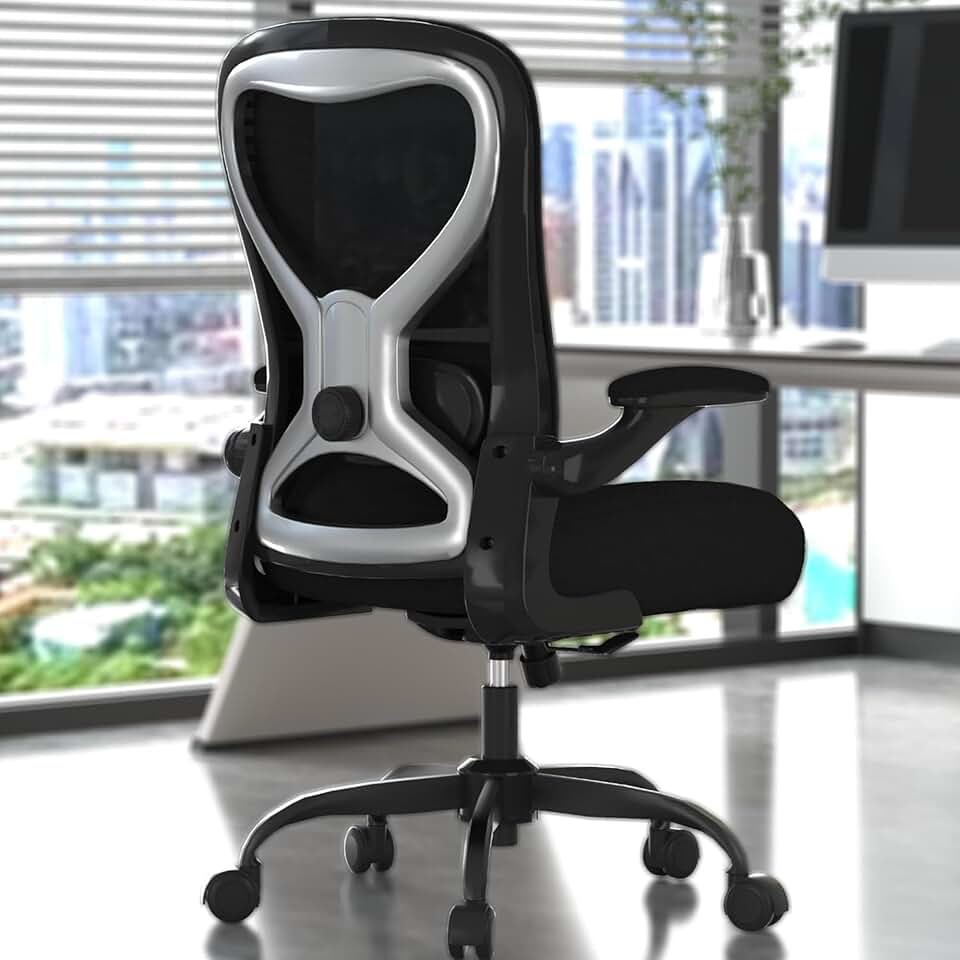
Office Desk Chair
Solid $90 ergonomics for 6-hour days - nothing more, nothing less
$90.24
Judge Score - 4.7/5
Last known price. Check Amazon for current price.

Ergonomic Office Chair
Solid $189 starting point - not your forever chair
$188.99
Judge Score - 4.7/5
Last known price. Check Amazon for current price.

ELABEST X100 Mesh Chair with Footrest
17-point adjustability and a footrest at $320 - finally a tall-person chair that delivers
Judge Score - 4.7/5

Office Desk Chair
Sub-$100 seating for shorter frames - honest about its limits
$93.49
Judge Score - 4.7/5
Last known price. Check Amazon for current price.
As an Amazon Associate, we earn from qualifying purchases.
Quick Verdict
Steelcase wins on adjustability and value; the Gesture and Leap V2 accommodate more body types, sitting styles, and work habits than anything Herman Miller makes at comparable prices. Herman Miller wins on resale value, breathability, and design prestige - the Aeron in particular holds its value on the used market better than almost any office chair ever made.
Neither brand makes a bad chair. They make chairs for different people.
Featured
Office Desk Chair
Solid $90 ergonomics for 6-hour days - nothing more, nothing less
$90.24
Who Should Read This
You're about to spend $900 - $2,500 on a chair you'll sit in for 8 - 10 hours a day for the next decade. This guide is for anyone who's narrowed it down to these two brands and needs to know: which specific model, at what price, for what kind of work. We cover the flagship matchups (Gesture vs. Aeron, Leap V2 vs. Embody), the full price spectrum including the Steelcase Series 1 and Karman, and give clear verdicts by use case - coding, calls, gaming, and executive setups.
Side-by-Side Specs - Flagship Models
Steelcase Gesture vs. Herman Miller Aeron (Size B, Remastered)
| Feature | Steelcase Gesture | Herman Miller Aeron (Size B) |
|---|---|---|
| Price (2026) | $1,200 - $1,800 | $1,500 - $2,200 |
| Dimensions | 23.75"D × 27"W × 38.5 - 43.5"H | 27"D × 27"W × 36.5 - 41"H |
| Seat Height | 16 - 21" | 16 - 20.5" |
| Seat Width | 20" | 17" |
| Seat Depth | 15.75 - 18.5" (adjustable) | 16.75" (fixed) |
| Weight Capacity | 400 lbs | 300 - 350 lbs |
| Back Material | Upholstered / mesh options | 8Z Pellicle mesh (zoned) |
| Lumbar | LiveBack + adjustable lumbar | PostureFit SL (sacrum + lumbar) |
| Armrests | 4D (height, width, depth, pivot) | 4D |
| Warranty | 12 years, 24/7 use; ships replacement parts | 12 years, all components; on-site repairs near dealers |
| Origin | Mexico | USA |
| Weight | ~54 lbs | ~44 lbs |
Full Ecosystem Pricing at a Glance
| Model | Brand | Price Range (2026) | Best For |
|---|---|---|---|
| Series 1 | Steelcase | ~$500 - $700 | Budget entry to ergonomics |
| Leap V2 | Steelcase | $900 - $1,400 | Dynamic sitters, lumbar-focused |
| Karman | Steelcase | $1,000 - $1,600 | Lightweight mesh, home offices |
| Gesture | Steelcase | $1,200 - $1,800 | Multitaskers, tech workers |
| Aeron (Remastered) | Herman Miller | $1,500 - $2,200 | Classic ergonomics, resale value |
| Embody | Herman Miller | $1,800 - $2,500 | Spinal alignment, all-day sitting |
Ergonomic Office Chair
Solid $189 starting point - not your forever chair
$188.99
See our top pick on Amazon
Check PriceDesign & Build Quality
Steelcase - Built Like Infrastructure
Steelcase chairs are heavy, dense, and engineered like they belong in a corporate procurement catalog - because historically, they did. The Gesture at ~54 lbs feels substantial under you. The construction uses more hard plastic and upholstery; it reads as "industrial ergonomics" rather than showpiece furniture. Available in 29 colors on the Gesture, with substantial customization through their configurator.
The tradeoff: Steelcase's service model is primarily ship-and-replace rather than on-site repair. For most people, this is fine. For an office managing 50 chairs, it requires more planning.
Herman Miller - Designed Objects That Happen to Be Chairs
The Aeron's 8Z Pellicle mesh is genuinely beautiful - a tensioned surface that looks architectural and functions as one of the best heat-dissipating back materials in production. Herman Miller chairs read as design objects; they fit naturally in premium home offices, creative studios, and executive suites where aesthetics matter.
Build quality on the Aeron is exceptional. BTOD.com's 2026 review rates it above the Gesture on overall build quality - the tolerances are tighter, the tilt mechanism quieter, the materials more refined. Herman Miller also uses 50%+ recycled content and modular construction designed for repair and disassembly at end of life.
Bottom line on build: Herman Miller is the better-crafted object. Steelcase is the more durable workhorse. Both will outlast most furniture you own.
Comfort & Ergonomics
This is where personal physiology matters enormously - and where most comparison articles fail you by picking a single winner.
The Sitting Style Question
Steelcase chairs (particularly the Gesture and Leap V2) are designed around the reality that people don't sit upright at 90 degrees all day. The Gesture's back follows you through reclines, leans, and lateral shifts. It's described consistently - including in YouTube tier list reviews from early 2026 - as "loungy" in a good way. If you move around, shift postures, or work across multiple screens and devices, Steelcase accommodates that.
Herman Miller chairs, especially the Aeron, encourage a more upright, fixed posture. The PostureFit SL mechanism supports both the sacrum and lumbar simultaneously, which is clinically sound but feels noticeably stiffer than Steelcase's approach. Users who sit in both chairs regularly describe the Aeron as "proper ergonomics" and the Gesture as "comfortable ergonomics" - a meaningful distinction.
Mesh vs. Cushion
The Aeron's Pellicle mesh wins on heat dissipation, full stop. If you run warm, work in a non-air-conditioned space, or just hate the feeling of foam trapping heat against your back after two hours, the Aeron solves that problem and the Gesture does not. The Gesture's upholstered seat and back retain more heat.
Conversely, the Gesture's padded seat is more comfortable for longer uninterrupted sits for people who find the Aeron's mesh seat pan uncomfortable on the underside of the thighs. The Aeron's seat edge pressure is a known complaint - shorter users and those with sensitive legs sometimes find the front edge of the seat cuts into their thighs despite the waterfall edge design.
Leap V2 vs. Embody
These two models target the same buyer - someone who sits 8+ hours and wants maximum spinal support - but take different approaches. The Leap V2's LiveBack technology flexes the backrest in two zones to follow your spine as you move. The Embody uses a pixelated back matrix that distributes pressure across a larger surface area while keeping the spine in natural alignment.
Both chairs measurably reduce fatigue on long working days. The Leap V2 feels more dynamic and forgiving; the Embody feels more precise. At $1,800 - $2,500, the Embody is expensive for what is functionally a lumbar support experiment. The Leap V2 at $900 - $1,400 arguably delivers more practical comfort per dollar.
ELABEST X100 Mesh Chair with Footrest
17-point adjustability and a footrest at $320 - finally a tall-person chair that delivers
Adjustability
Steelcase leads here, and it's not close.
The Gesture's armrests are the best in class for anyone who uses a keyboard, mouse, stylus, or holds a phone/tablet while working. They adjust in four dimensions including pivot - meaning you can angle them inward while typing, swing them wide for tablet work, and position them to float just under your forearms regardless of what you're doing. For developers, designers, and anyone on video calls gesturing at a second screen, this matters daily.
Steelcase also wins on seat depth adjustment. The Gesture's seat slides 15.75 - 18.5" deep, accommodating a wider range of inseam lengths than the Aeron's fixed 16.75" depth. The weight capacity advantage is significant too: 400 lbs on the Gesture versus 300 - 350 lbs on the Aeron, making Steelcase the default recommendation for larger frames.
Herman Miller's adjustability is good but posture-directed - the adjustments guide you toward their intended sitting position rather than adapting to yours. That's a philosophy difference as much as a spec difference.
See our top pick on Amazon
Check PricePrice & Value for Money
Steelcase's Ladder
Steelcase gives you a genuine on-ramp. The Series 1 at $500 - $700 is a legitimate ergonomic chair - not a compromise product - and a reasonable starting point if you're not ready to commit to four figures. The Leap V2 at $900 - $1,400 competes directly with the Aeron at a lower price and wins on adjustability. The Gesture at $1,200 - $1,800 is the sweet spot for most knowledge workers.
The Karman at $1,000 - $1,600 deserves a mention: it's Steelcase's answer to Herman Miller's mesh aesthetic, lighter than the Gesture at under 20 lbs, and WishDeck's 2026 home office roundup names it alongside the Aeron as a top pick for smaller home setups.
Herman Miller's Premium Anchor
Herman Miller doesn't discount its aesthetic or positioning. The Aeron starts at $1,500 in its most basic configuration and climbs to $2,200 with upgrades. The Embody at $1,800 - $2,500 is the most expensive chair in either ecosystem.
What justifies this? Two things: resale value and on-site service. A used Aeron in good condition from 2015 still sells for $600 - $900 on the secondhand market. That's extraordinary depreciation resistance. Herman Miller also provides on-site repair service near authorized dealers across the U.S., which matters if you're buying for a home office and don't want to ship a 40-lb chair back for repairs.
The value math: If you buy an Aeron for $1,800 and sell it in 10 years for $700, your net cost is $1,100. A Gesture at $1,500 with weaker resale might net you $400 back, putting your cost at $1,100 as well. The premium mostly evens out over a full ownership cycle.
Office Desk Chair
Sub-$100 seating for shorter frames - honest about its limits
$93.49
Who Should Choose Steelcase
Software developers and coders: The Gesture's armrest system is built for keyboard and mouse workflows. The ability to pivot armrests inward and float your forearms at the exact right height reduces wrist and shoulder strain during multi-hour coding sessions better than any Herman Miller product at the same price.
Larger frames: If you're over 6'2" or above 280 lbs, the Gesture's 400 lb capacity, 20" seat width, and taller height range make it the practical choice. The Aeron Size C handles larger users, but it's priced at the top of the range and the proportions still favor a more average build.
Multitaskers and people who move around: If your day involves switching between laptop, external monitor, tablet, phone calls, and video meetings, the Gesture moves with you. The Leap V2 is the right call if your priority is lumbar support during focused, upright work.
Budget-conscious premium buyers: The Leap V2 at $900 - $1,400 is the best value in either ecosystem. It's a full-featured ergonomic chair that competes with the Aeron at $300 - $500 less.
Who Should Choose Herman Miller
Hot-climate and warm-running workers: The Aeron's 8Z Pellicle mesh has no equal for breathability. If you're in a warm climate, don't have central air, or just run hot, sitting on fabric or foam all day is genuinely unpleasant. The Aeron solves that.
Buyers who prioritize resale value: Herman Miller is the only office chair brand with a reliable secondhand market that approaches furniture as a liquid asset. If your lifestyle involves moving, downsizing, or upgrading gear every few years, an Aeron is easier to sell and holds value better than any Steelcase model.
Design-conscious home offices: The Aeron and Embody are attractive objects. If your home office is on camera during client calls, or you simply care that your workspace looks considered, Herman Miller wins the aesthetic argument.
Executive and C-suite setups: Herman Miller carries brand recognition that Steelcase doesn't in non-corporate environments. The Aeron signals "I take this workspace seriously" in a way that's culturally legible to a broad audience.
Spinal alignment focus: If you've had back issues, seen a physiotherapist, and been told to sit upright with sacral and lumbar support, the Aeron's PostureFit SL and the Embody's pixelated back matrix are clinically purposeful tools, not just premium features.
See our top pick on Amazon
Check PriceUse Case Verdicts
| Use Case | Recommended Chair | Reason |
|---|---|---|
| Coding / Dev work | Steelcase Gesture | Best-in-class armrests for keyboard/mouse |
| Video calls / Exec meetings | Herman Miller Aeron | Aesthetics, posture, brand recognition |
| Gaming (long sessions) | Steelcase Gesture | Adaptive recline, cushioned seat, arm flexibility |
| All-day focused writing | Steelcase Leap V2 | LiveBack for dynamic lumbar, value pricing |
| Spinal rehab / chronic back pain | Herman Miller Embody | PostureFit + pixelated back for clinical alignment |
| Warm climates / no AC | Herman Miller Aeron | Pellicle mesh breathability |
| Small home office | Steelcase Karman or Aeron (Size A/B) | Lightweight Karman or compact Aeron footprint |
| Budget-conscious premium | Steelcase Leap V2 | Most ergonomic value under $1,400 |
Final Verdict
If you asked which brand to bet on for 2026 and beyond, the honest answer depends entirely on what you optimize for.
Buy Steelcase if: You want the most adjustability for the money, you have a larger frame, you use your arms heavily in your work, or you want to spend $900 - $1,400 on a Leap V2 and get 90% of the ergonomic benefit at 70% of the Aeron's price.
Buy Herman Miller if: You run hot and need mesh breathability, you care about resale value, you're buying primarily for spinal health on the advice of a medical professional, or your workspace appearance matters to how you're perceived professionally.
The Gesture is the single most versatile chair in either lineup - it fits more bodies, adapts to more working styles, and costs less than the Aeron. But the Aeron is the better-crafted object with superior long-term value retention, and the Embody remains the most clinically focused chair either brand makes.
Neither brand makes a wrong choice at this price tier. Spend more time thinking about which chair fits your body than which brand to be loyal to - and if at all possible, sit in both before buying.
Ready to buy? Here are the products from this guide
Frequently Asked Questions
It depends on what kind of back pain. The Herman Miller Embody ($1,800–$2,500) is the most clinically focused option for spinal alignment, using a pixelated back matrix to distribute pressure and support the natural curve of the spine. The Steelcase Leap V2 ($900–$1,400) is the stronger choice if your pain comes from sitting too rigidly — its LiveBack flexes in two zones to follow your movement rather than locking you into one posture. If you have a specific diagnosis, ask your physiotherapist which sitting style — dynamic or fixed-posture — suits your condition before spending $1,500+.
Yes, and you should. Both brands have dealer networks where you can test chairs; Herman Miller's showroom presence is stronger in major U.S. cities, while Steelcase is well-represented through corporate furniture dealers. Many cities have independent ergonomic furniture retailers that carry both brands side by side — search for authorized dealers on each brand's website. Buying without sitting first is the most common expensive mistake in this price range.
For 8–10 hour days, both chairs handle the duration well, but they feel different doing it. The Aeron keeps you in a structured, upright position with excellent lumbar and sacral support via PostureFit SL; its Pellicle mesh prevents heat buildup during long sits. The Gesture is more forgiving of shifting postures — if you move around, recline, or alternate between tasks, it adapts better. User consensus in 2026 reviews is consistent: the Aeron is "proper" ergonomics, the Gesture is more comfortable ergonomics. Neither choice is wrong; it reflects your sitting style.
Herman Miller, and the Aeron specifically, wins resale value handily. A used Aeron from 2015 in good condition still sells for $600–$900 on the secondhand market, which is extraordinary for office furniture. Steelcase chairs hold value reasonably well but don't command the same used-market premium. If you think of your chair purchase as an asset you might sell in 5–10 years, Herman Miller's resale strength makes the higher upfront price easier to justify.
The Steelcase Series 1 at $500–$700 is a genuine ergonomic chair — not a budget simulation of one — and is the most affordable entry point in either brand's lineup. For Herman Miller, certified preowned Aerons through Herman Miller's own resale program or reputable used dealers offer the full 12-year warranty coverage on remaining term, often for $700–$1,100. A used Aeron is frequently the best value in the entire premium chair market.
For most office workers who prioritize adaptive lumbar support and value, the Leap V2 ($900–$1,400) is a stronger practical choice than the base Aeron ($1,500–$2,200). The Leap V2's LiveBack system flexes with your movement, it accommodates a wider range of bodies, and it costs $300–$500 less. The Aeron wins on breathability, build refinement, and resale value. If you run warm or care about aesthetics and long-term value retention, pay the premium for the Aeron. If you want the best lumbar support for the money, the Leap V2 is the answer.
Both brands offer 12-year warranties covering 24/7 use, which is the industry standard for premium ergonomic chairs. The key difference is service delivery: Herman Miller provides on-site repairs through its authorized dealer network in the U.S., while Steelcase's primary service model is ship-and-replace — they send you parts or a replacement rather than dispatching a technician. For most home office users, Steelcase's model is perfectly adequate. For large office deployments, Herman Miller's on-site service is more practical. Note that Steelcase's warranty has shorter coverage windows (3–5 years) for specific components like wood elements and integrated electronics.
Joe Rogan uses the Herman Miller Embody in his podcast studio. It is one of Herman Miller's more specialized designs, built around dynamic lumbar support and a pixelated back that moves with the spine. For long recording sessions, it holds up well, though the Embody runs around $1,800 new and fits a narrower range of body types than the Aeron.
No, Herman Miller and Steelcase are separate, competing companies. Herman Miller is now part of MillerKnoll, a larger design group formed after its 2021 merger with Knoll. Steelcase remains independently publicly traded and is actually the larger company by annual revenue.
That title most often goes to the Herman Miller Aeron or the Steelcase Gesture, depending on who you ask. For pure engineering reputation and cultural cachet, the Aeron is the most recognized name in the category. If you want the most adaptable chair for varied working postures, the Gesture or Steelcase Leap V2 competes closely and some ergonomists rank them higher for all-day use.
Mark Zuckerberg has been publicly associated with the Herman Miller Aeron, which is the default high-end chair across most Silicon Valley offices including Meta. The Aeron became the de facto tech industry standard in the early 2000s and remains common in executive settings. That said, chair choices at that level are rarely documented in detail and may vary by workspace.
Related Guides
guide
Office Chair Back Pain - The Complete 2026 Guide
Stop office chair back pain with expert-backed advice on lumbar anatomy, chair features, top picks by pain type, accessories, and when to see a doctor.
guideOffice Chair Buying Guide 2026 - What Actually Matters
The complete office chair buying guide for 2026. Compare categories, ergonomic specs, materials, and price tiers to find the right chair for your body and budget.
guideOffice Chair Ergonomics - The Complete 2026 Guide to Sitting Without Wrecking Your Body
Master office chair ergonomics in 2026. Learn the 5 key features, how to fit a chair to your body, and which chairs are worth your money.
best ofOffice Chair with Adjustable Armrest - The Complete 2026 Buying Guide
Find the best office chair with adjustable armrest in 2026. We cover 2D, 3D, and 4D arms, top picks at every budget, and what to actually avoid.
guideOffice Chair Maintenance - The Complete Guide to Making Your Chair Last 10+ Years
Master office chair maintenance with our 2026 guide. Weekly, monthly, and yearly tasks to extend chair life from 3 to 10+ years. Includes repair vs. replace guide.
guideHow to Sit in an Office Chair Correctly - The Complete 2026 Ergonomics Guide
Learn how to sit in an office chair with proper posture in 2026. Step-by-step setup, lumbar tips, chair picks, and research-backed advice to prevent back pain.