The best home office chair for 2026 across every budget, from $35 to $1,000+. Real specs, honest tradeoffs, and who each chair is actually for.
Our Top Pick
GABRYLLY Ergonomic High Back Mesh Chair
 found that properly adjustable seating reduced musculoskeletal discomfort by 20-50% compared to fixed chairs. That number matters when you're pricing out a $200 chair versus a $700 one.
This guide covers the full range: Amazon-available picks for people who need something today, mid-range workhorses that punch well above their price, and premium chairs worth the investment if you're logging serious hours. We'll also tell you what to skip and why.
Every recommendation here is judged on five criteria:
Adjustability - seat depth, lumbar support, armrest range (2D vs 4D), headrest
Build quality - frame materials, mesh vs. foam, caster quality
Warranty coverage - a 1-year warranty on a $200 chair is a red flag
Fit range - height and weight accommodation, especially for users under 5'6" or over 6'2"
Long-session comfort - how the chair performs after hour four, not hour one
We cross-referenced 2026 expert tier lists (including a February 2026 ranking of 35 chairs), BTOD's ongoing 2026 reviews, and real user feedback to validate picks at each tier.
Featured
GABRYLLY Ergonomic High Back Mesh Chair
A $188 mesh chair that handles 400 lbs without the Herman Miller invoice
Best Budget Ergonomic Pick - GABRYLLY Ergonomic High Back Mesh Chair
Price: $192.50
The GABRYLLY Ergonomic High Back Mesh Chair is the most complete ergonomic package you'll find under $200 on Amazon. It ships with 4D armrests (height, depth, width, and pivot), adjustable lumbar support, a height-adjustable headrest, and a mesh back that actually breathes during summer months.
The seat height adjusts from roughly 17" to 21", which covers most users between 5'3" and 6'2". Mesh back chairs at this price often cut corners on the seat pan - the GABRYLLY uses a medium-density foam cushion that holds up reasonably well, though you'll likely feel it softening after 12-18 months of full-time use.
Who it's for: Remote workers who need a real ergonomic chair but can't justify spending $500+. It won't compete with a Soji or Aeron on long-session comfort, but it beats every foam-padded task chair at the same price.
The catch: The warranty is thin. At this price tier, expect to replace it in 2-3 years with heavy use rather than the 5-7 years you'd get from a mid-range chair.
Best for Larger Frames - COMHOMA Big & Tall Ergonomic Chair
Price: $159.96
Most chairs in the sub-$200 category are built for a 5'8", 160-lb baseline. The COMHOMA Big & Tall Ergonomic Chair is one of the few exceptions, with a reinforced frame and a seat designed for users up to around 300 lbs. The wider seat pan (typically 21"+) gives larger users the lateral support they lose in standard chairs.
Adjustable lumbar and 3D armrests are included. The mesh back is on the firmer side, which some users prefer and others find harsh - if you run warm, you'll appreciate it.
Who it's for: Users over 6'0" or 220 lbs who keep buying standard chairs and finding them undersized. The COMHOMA is a practical fix without the premium-brand markup.
The catch: The 1-year warranty is short even for this price tier. It's a get-you-through-the-year solution, not a multi-year investment.
At $84.99, the Marsail Ergonomic Mesh Office Chair sets realistic expectations. You get a breathable mesh back, basic height adjustment, and 2D armrests. That's it. There's no adjustable lumbar, no seat depth control, and no headrest.
What it does well: the mesh construction keeps it from feeling stifling, and at under $100 it's a legitimate stopgap for a spare room, a short-term rental, or anyone who sits fewer than 4 hours a day.
Who it's for: People who need a chair today and have $85. Not for full-time WFH workers who sit 6-8 hours daily.
The catch: Everything. You're buying a functional chair, not an ergonomic one. Add a separate lumbar pillow ($20-$30) if you're using this as a daily driver.
Best Under $200 with Serious Features - CAPOT Ergonomic Mesh Office Chair
Price: $199.99
The CAPOT Ergonomic Mesh Office Chair sits right at the $200 ceiling and earns its spot. The standout feature is the adjustable lumbar depth - not just height, but how far the lumbar pad pushes into your lower back. That's a level of customization usually reserved for chairs costing twice as much.
Four-directional armrests, adjustable headrest, and a breathable mesh back round out the package. Seat height range covers approximately 17" to 21.5". The high-back design gives good thoracic support, which matters if you sit with a slight recline.
Who it's for: The serious WFH worker who's maxed out on what sub-$150 chairs offer and wants a meaningful upgrade without crossing $200.
The catch: Like most chairs in this price range, the foam seat pan will compress over time. If you're over 200 lbs, budget for replacement in 18-24 months of full-time use.
Best Under $150 Mesh Chair - SIHOO M18 Ergonomic Mesh Office Chair
Price: $139.99
SIHOO has been making mesh chairs long enough to get the basics right. The M18 Ergonomic Mesh Office Chair includes adjustable lumbar support, 2D armrests, a recline function with tension control, and a 3-year warranty - which is genuinely rare at this price point.
The seat is on the narrower side (roughly 19"), so larger users may find it pinching after a few hours. But for users in the 5'4" to 6'0" range at average build, the M18 is one of the most reliable long-term bets under $150.
Who it's for: WFH workers who want a dependable mesh chair with a warranty that actually means something. The 3-year coverage gives it real staying power at this price.
The catch: The 2D armrests (height-only) won't satisfy users who need lateral arm positioning. Step up to the GABRYLLY or CAPOT if that matters to you.
Best Mid-Range Value - Haworth Soji
Price: $540 (base) to $650 (fully loaded)
The Haworth Soji is the clearest value story in the $500-$700 range. At 28"W x 27"D x 39-44"H with a seat width of 18.9" and depth adjustable from 15.75" to 17.72", it fits a wide range of body types. The seat height range (16.4" to 21") works for users roughly 5'2" to 6'3".
The 4D armrests address one of the most common ergonomic failure points in home office setups - arm positioning that contributes to shoulder and neck tension. The adjustable lumbar support is a dial-style system, not just a fixed pad, meaning you can tune it to your specific spinal curve.
The 12-year component warranty and 5-year upholstery coverage is what makes this worth the price. Budget chairs at $150-$200 might cost $400-$500 over five years in replacements. The Soji, bought once, likely outlasts two or three budget alternatives.
Who it's for: Full-time remote workers logging 6-8 hours daily who want to stop thinking about their chair. The Soji is a proper ergonomic investment, not a stopgap.
The catch: Firm arm pads are the most consistent complaint from users. Some people adapt; others find them genuinely uncomfortable. If you plan to rest your arms on the pads (rather than use armrests primarily for positioning), test this before committing. The 30-day return window is your safety net.
Price: $1,400+ (new), $700-$900 refurbished via authorized dealers
The Herman Miller Aeron has been the reference point for ergonomic seating since the mid-1990s, and the current version earns that status. The PostureFit SL lumbar system supports both the sacrum and lumbar spine simultaneously - a distinction that matters for users with lower back issues. The 8Z Pellicle mesh distributes weight across zones rather than treating the seat as a single surface.
Three size options (A, B, C) mean the Aeron actually fits differently-sized humans rather than forcing everyone into one seat. Size B (the most common) suits users 5'5" to 6'2" at average build; Size A fits users under 5'5", and Size C accommodates larger frames.
In 2026 tier lists, the Aeron consistently ranks S-tier for overall comfort and durability. The 12-year warranty with Herman Miller's service network backs up what the specs promise.
Who it's for: People who sit 8+ hours daily and have the budget to solve the problem permanently. Also worth considering if you have existing lower back or hip issues where chair quality has a direct health impact.
The catch: $1,400 new is a lot. The refurbished market (authorized dealers like BTOD) cuts that to $700-$900 for a reconditioned chair with remaining warranty coverage. That's the smarter path for most buyers.
The 2026 New Entrant - Libernovo Omni
Price: Not yet widely listed (2026 release)
The Libernovo Omni debuted in February 2026 comfort tier lists ranking 35 chairs, landing in high-comfort territory alongside chairs costing significantly more. The key differentiator is its approach to seat depth: it ships in two configurations - 45cm for users under 5'7" and 48cm for users over 5'9". That's a rare acknowledgment that most chairs are built for a single height range.
Spec highlights: 300 lb weight capacity, available in Midnight Black and Space Gray, with the standard adjustments you'd expect at this tier.
One reviewer specifically called it their "favorite ergonomic chair heading into 2026" based on the seat depth options alone - a feature that typically only appears on chairs at the $800+ level.
Who it's for: Taller users (over 5'9") who've never found a chair where the seat depth actually matches their thigh length, and shorter users (under 5'7") who find themselves perching on the edge of standard seats.
The catch: Pricing isn't yet widely established. Availability may be limited in early 2026. Check current listings before building this into your budget.
Runner-Up Premium - Haworth Zody (2nd Generation)
Price: Approximately $1,000
The Haworth Zody's second iteration is a significant jump from the 2005 original. Mesh back, padded seat, and a lumbar adjustment system that allows both height and depth tuning make it a serious option for users who want Haworth's engineering without the Aeron's brand premium.
At roughly $1,000, it sits between the Soji ($540-$650) and the Aeron ($1,400+). For users who found the Soji's features sufficient but want more refined comfort for longer sessions, the Zody closes that gap.
Who it's for: Heavy users who want a premium chair and prefer Haworth's warranty and support network to Herman Miller's.
SIHOO M18 Ergonomic Mesh Office Chair
126 degrees of recline, $160 - the budget ergonomic chair that earns its BIFMA cert
The Furmax Mid Back Mesh Office Chair is the clearest example of false economy in this category. At $39.98, it offers fixed armrests, no lumbar adjustment, no headrest, and a 90-day warranty that tells you everything about the manufacturer's confidence in long-term durability.
The mesh back exists, but provides no zoned support - it's a single layer of fabric stretched over a frame. The seat foam compresses within weeks of regular use. The fixed armrests lock you into one arm position regardless of your desk height or body proportions.
The real cost: At $39.98, this feels like a deal. But if you're working from home 5 days a week, you'll likely need to replace it within 6-12 months. At that point you've spent $40 plus the time and discomfort, and you still need a chair. The Marsail Ergonomic Mesh Office Chair at $84.99 is twice the price and meaningfully better. Spend the extra $45.
Under 4 hours daily: Budget options ($85-$200) are defensible. Over 6 hours daily: the cost-per-hour math shifts significantly toward mid-range and premium chairs. An $650 chair used daily for 5 years works out to roughly $0.70 per working day. A $150 chair replaced every 18 months is $0.55 per day - and you've sat in a worse chair the whole time.
Step 2 - Match the Chair to Your Body
Height under 5'6": Look for seat heights that go below 17" and seat depth options on the shorter end. The Libernovo Omni's 45cm seat depth configuration was specifically designed for this range. Most standard chairs will have you sitting with your legs dangling or forcing you to perch forward.
Height over 6'1": Seat depth above 18" and seat height above 20" are priorities. The Libernovo Omni's 48cm configuration, the Haworth Soji (up to 17.72" depth), and Size C Aeron all address this.
Weight over 250 lbs: Verify weight capacity specs, not just "heavy duty" marketing. The Haworth Soji (325 lbs) and Libernovo Omni (300 lbs) publish real numbers. Budget chairs claiming 250+ lbs capacity often use that ceiling for frame integrity, not long-term comfort.
Step 3 - Prioritize Your Adjustment Needs
For most WFH workers, the three most impactful adjustments are:
Seat depth - controls whether your thighs are properly supported without cutting off circulation at the knee
Lumbar position - not just presence of lumbar support, but ability to tune height and depth
Armrest height - arms should rest at elbow height with shoulders relaxed, not shrugged
Features like headrests and recline tension are secondary. If you're choosing between a chair with a headrest and no adjustable lumbar versus a chair with adjustable lumbar and no headrest, take the lumbar every time.
Step 4 - Factor in the Warranty
A chair's warranty is a direct statement about how long the manufacturer expects it to last.
90 days to 1 year: Budget-only territory. Budget accordingly.
2-3 years: Acceptable for the $130-$200 range (SIHOO M18's 3-year warranty is a genuine standout here).
5-12 years: Mid-range and premium. The Haworth Soji's 12-year component warranty is what justifies its $540+ price for long-term thinkers.
Step 5 - Check Return Policies Before You Buy
Chairs feel different after 2 hours than they do after 2 minutes. Many Amazon-listed chairs have 30-day return windows - use that policy. Premium brands like Haworth offer 30-day trials for exactly this reason. If you're spending $500+, confirm the return policy before ordering.
COMHOMA Big & Tall Ergonomic Chair
400-lb capacity, pocket spring lumbar, $160 - finally a big chair that earns it
The February 2026 tier lists (covering 35 chairs) show a few meaningful shifts from prior years:
New entrants competing above their price: The Libernovo Omni is the clearest example - a 2026 debut that landed in high-comfort tiers alongside chairs from Haworth and Steelcase. Height-specific seat depth is the differentiator.
Budget market maturing: Chairs like the GABRYLLY and CAPOT now ship with 4D armrests and adjustable lumbar as standard - features that were mid-range exclusives three years ago. The floor for "real ergonomic chair" has dropped from $250-$300 to around $150-$200.
Premium staying premium: Herman Miller, Steelcase, and Haworth's top-tier products haven't been disrupted. The Aeron's PostureFit SL and the Fern's flexible back matrix (which adapts to spinal movement in real time) don't have equivalent equivalents at lower price points. You're paying for genuinely differentiated engineering, not just branding.
The S-tier comfort rankings from February 2026 placed the Haworth Fern, Colamy Atlas, and Anthros at the top, with the Raynor Ergohuman GEN2, Steelcase Gesture, and BTOD Duolc in A-tier. The Steelcase Amia and Ticova Ergonomic both appear in mid-tier - good chairs, but with specific tradeoffs.
Final Recommendations by Use Case
You sit under 4 hours daily and have $85-$100: Marsail Ergonomic Mesh Office Chair. Add a lumbar pillow.
You need a real ergonomic chair and have $140-$200: GABRYLLY Ergonomic High Back Mesh Chair at $192.50 for 4D armrests, or SIHOO M18 Ergonomic Mesh Office Chair at $139.99 for the 3-year warranty.
You're taller or heavier than average and have under $200: COMHOMA Big & Tall Ergonomic Chair at $159.96 is built for frames most budget chairs ignore.
You want to stop replacing chairs every two years and have $540-$650: Haworth Soji. The 12-year warranty and proper 4D adjustability make it the right long-term answer for serious WFH workers.
You sit 8+ hours daily and your back health is a priority: Herman Miller Aeron, refurbished through an authorized dealer at $700-$900. This is not an upgrade purchase. It's a health purchase.
You're taller than 5'9" and nothing has ever fit right: Watch the Libernovo Omni. The 48cm seat depth configuration addresses the single biggest fit issue for tall users.
What to skip entirely: Furmax Mid Back Mesh Office Chair at $39.98. It costs $40 and performs like it costs $40.
Furmax Mid Back Mesh Office Chair
A $36 mesh chair that does one thing right - staying out of your way
For 8+ hour workdays, the Herman Miller Aeron (refurbished at $700-$900) and Haworth Soji ($540-$650) are the most defensible picks. Both offer adjustable lumbar, seat depth control, and 4D armrests - the three features that matter most for long-session comfort. Research in Ergonomics (Robertson et al., 2009) found properly adjustable chairs reduced discomfort by up to 50% compared to fixed seating, which is exactly the difference you feel after hour five.
It depends entirely on how many hours a day you sit. A $200 chair like the GABRYLLY Ergonomic High Back Mesh Chair delivers genuine ergonomic features and is a solid choice for part-time use or those on a hard budget. But $200 chairs typically use foam seat pans that compress within 18-24 months, and carry warranties of 1-2 years at best. The Haworth Soji at $540-$650 includes a 12-year component warranty - over five years of daily use, the cost-per-day difference between the two is minimal, and you'll sit in a significantly better chair.
Three checks cover 90% of fit issues. First, when seated, your feet should rest flat on the floor with your knees at roughly 90 degrees - seat height is the adjustment. Second, the seat pan should support your thighs without pressing into the back of your knees - seat depth is the adjustment. Third, your arms should rest at elbow height with your shoulders relaxed - armrest height is the adjustment. If you find yourself perching at the edge of the seat to avoid knee pressure, the seat is too deep for your body; look for chairs with adjustable seat depth like the Haworth Soji or Libernovo Omni.
Adjustable lumbar support is the non-negotiable feature. You want a lumbar system that adjusts both height and depth - not just a fixed foam pad. The Herman Miller Aeron's PostureFit SL system supports both the lumbar and sacral regions simultaneously, which is particularly effective for lower back issues. At lower price points, the CAPOT Ergonomic Mesh Office Chair ($199.99) offers adjustable lumbar depth, which is unusual for under $200. Pair any chair with correct seat height adjustment so your hips are at or slightly above knee level, which reduces lumbar loading.
Taller users (over 5'9") should prioritize seat depth adjustment and seat height range above 20". The Libernovo Omni's 48cm seat depth configuration is specifically designed for users over 5'9" - a rare feature at its price point. The Haworth Soji (seat height up to 21", depth up to 17.72") and Size C Herman Miller Aeron also fit taller users well. For heavier users, verify published weight capacity numbers rather than trusting marketing language: the Haworth Soji is rated to 325 lbs, the Libernovo Omni to 300 lbs.
Mesh backs are generally better for all-day use because they allow airflow, which prevents the heat buildup that makes foam and leather chairs uncomfortable after a few hours. The tradeoff is that mesh has less initial cushioning - whether that's a pro or con depends on personal preference. Leather and faux-leather chairs look more formal and are easier to clean, but most heat up considerably in warm environments. For 6-8 hour workdays, mesh back with a foam or cushioned seat is the most practical combination, which is why chairs like the GABRYLLY, SIHOO M18, and Haworth Soji use exactly that construction.
A budget chair ($85-$200) used full-time should last 1.5-3 years before the seat foam compresses or mechanical components degrade. Mid-range chairs ($400-$650) with quality construction and proper warranties should last 5-7 years. Premium chairs like the Herman Miller Aeron and Haworth Soji are backed by 12-year warranties for a reason - they're built to last a decade of daily use with minimal maintenance. The warranty length is the single most honest indicator of expected lifespan, because manufacturers set it based on their own failure rate data.
Herman Miller and Steelcase consistently produce the best home office chairs, with the Aeron and Leap V2 setting the benchmark for ergonomics, build quality, and long-term durability. For mid-range buyers, Autonomous (ErgoChair Pro) and Branch deliver strong value without the premium price tag. The "best" maker depends on your budget, but Herman Miller's 12-year warranty and Steelcase's LiveBack technology remain the gold standard.
After spinal surgery, prioritize a chair with firm lumbar support, adjustable seat depth, and a recline function that reduces spinal compression - the Herman Miller Aeron or Steelcase Gesture are the top choices here. Avoid chairs with excessive cushion softness, as they allow the pelvis to tilt backward and strain the surgical site. Always consult your surgeon or physical therapist before selecting a chair, as specific procedures like lumbar fusion may require different positioning than cervical surgery.
For extended sitting sessions of 6 or more hours, the Steelcase Leap V2 is the top pick due to its LiveBack system that adapts to your spine's movement and its highly adjustable armrests that reduce shoulder fatigue. The Herman Miller Aeron is a close second, particularly for its PostureFit SL lumbar support that maintains the natural S-curve of your spine over long periods. Both chairs are designed to accommodate natural position shifts rather than locking you into one static posture.
For scoliosis, the Steelcase Leap V2 is the strongest option because its independently adjustable back sections can accommodate asymmetrical spinal curvature better than most fixed lumbar supports. The Herman Miller Aeron with PostureFit SL also works well, as the dual-pad sacral and lumbar support can be tuned to reduce uneven pressure on the spine. Look for chairs with a wide adjustment range and seat depth control, since scoliosis often causes uneven hip positioning that a standard fixed seat cannot compensate for.
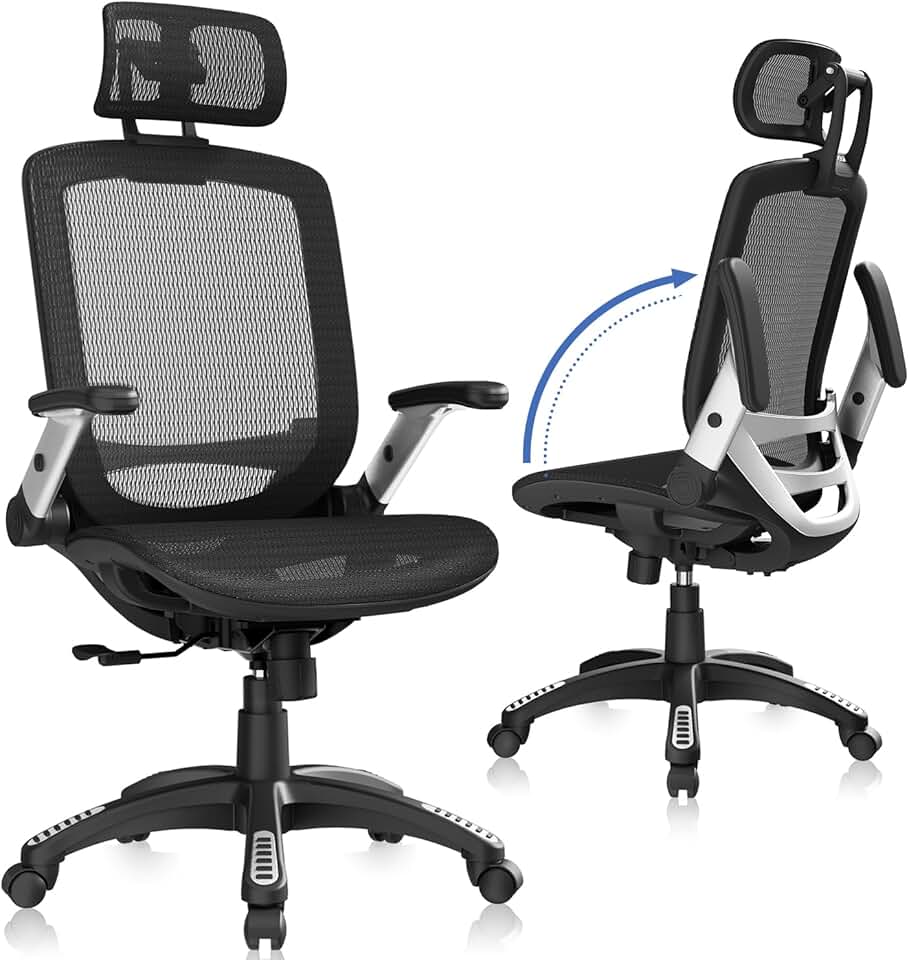
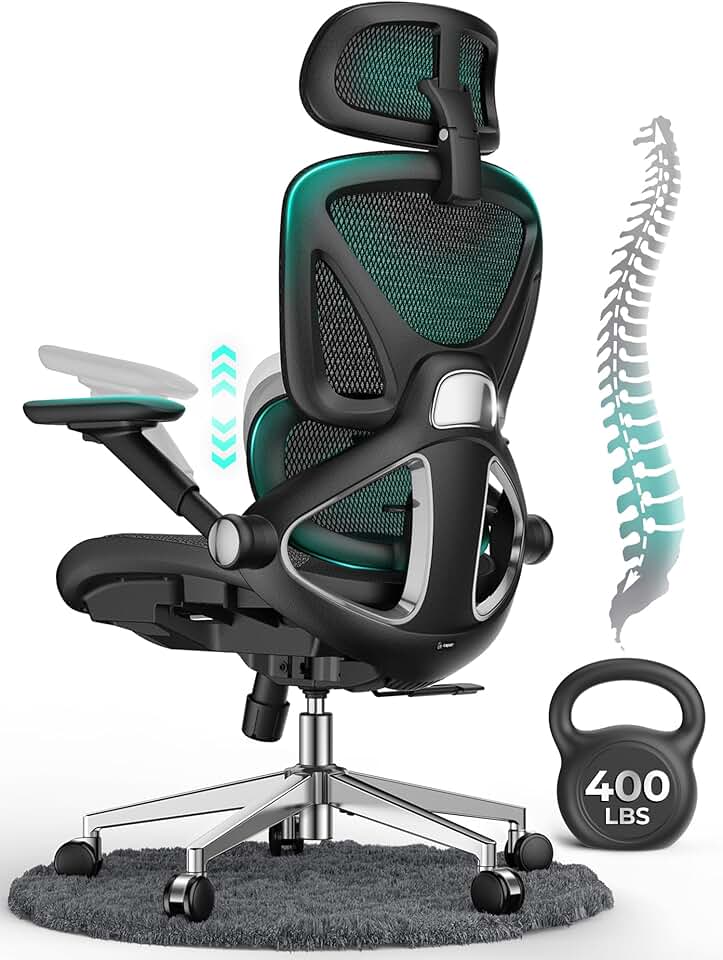

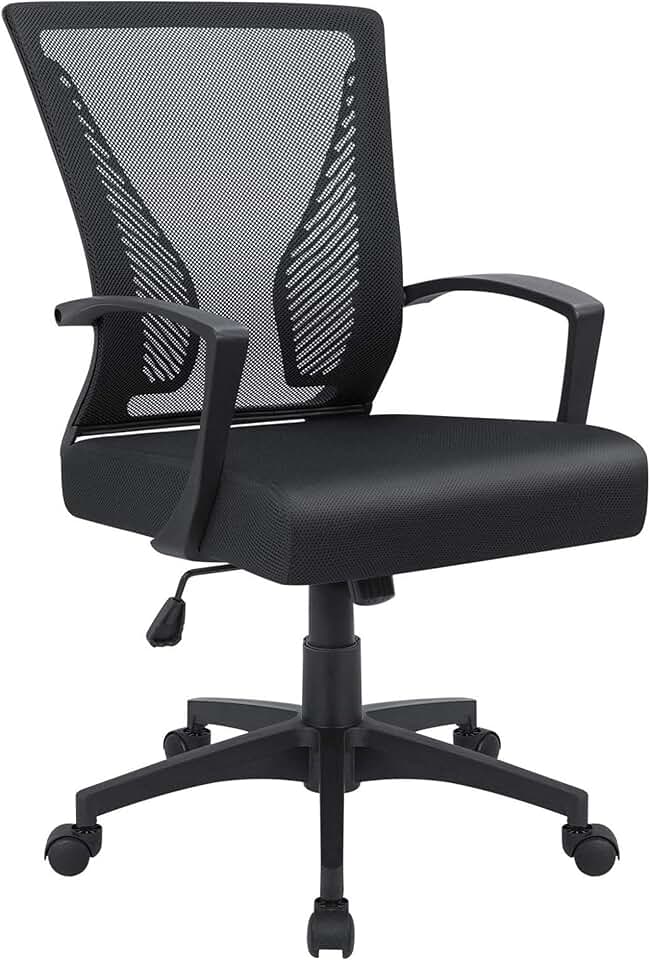


 Photo by
  Photo by