Build Quality
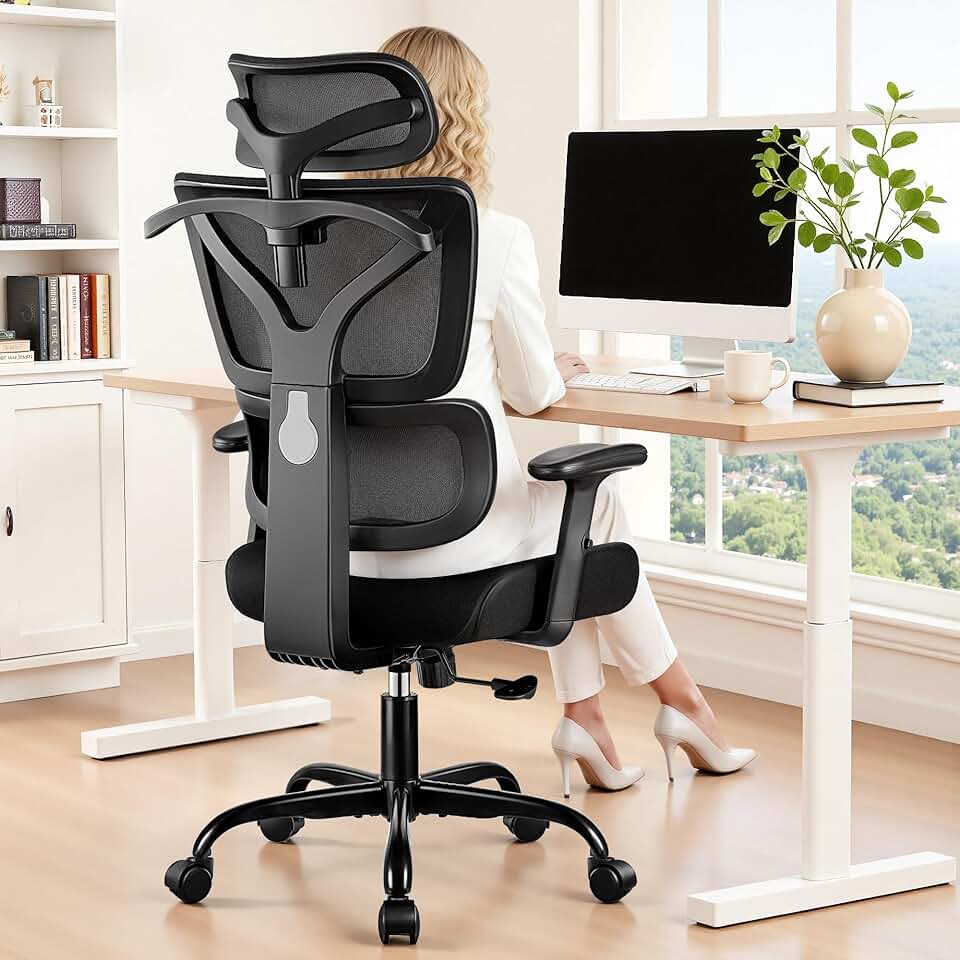
The SIHOO M18 weighs 37.1 lbs and spans 28"W x 27"D x up to 51"H - dimensions that place it squarely in the mid-range footprint for ergonomic mesh chairs. The frame combines steel, aluminum, and nylon, with a polypropylene shell on the back and headrest. That polypropylene is where the budget shows most clearly - tap it and it sounds hollow, and after 12-18 months of daily friction it will show scratches. The PU caster wheels roll quietly on hardwood and are replaceable, which matters for long-term ownership. The BIFMA certification and claimed 1,136 kg pressure test results give the structural components more credibility than the plastic trim suggests, and the 3-year warranty backs that up. But do not mistake certification for premium construction - this is a solidly built budget chair, not an entry-level commercial one.
Comfort & Ergonomics
The breathable polyester mesh back is the M18's most honest feature. It genuinely ventilates better than foam-backed chairs in the same price range, and in a home office without AC it makes a measurable difference over a 6-hour session. The seat is a different story: the W-shaped high-density sponge cushion measures 17.91" deep and accommodates hip widths up to 20.08". It feels supportive on day one, but compressed sponge is a documented pattern in pre-2026 reviews - plan for noticeable softening somewhere between 12 and 24 months depending on your body weight and daily hours. The 126° recline works well for short breaks but there is no recline lock at intermediate angles in most configurations, which limits its utility for extended reclined work.
Adjustability
This is where the M18 earns its money. The dual-adjustable lumbar moves both up-down and in-out to follow your lumbar curve rather than approximate it - a genuine ergonomic differentiator versus fixed lumbar pads on chairs like generic Amazon mesh options at $120-$150. The headrest adjusts 3.9" vertically and pivots 45°, covering the range needed for users between 5'6" and 6'2". Armrests adjust up and down but do not pivot laterally or slide fore-aft, which is a real limitation for users who type with their elbows out or need width adjustment. Seat height adjusts via standard pneumatic cylinder. The lumbar adjuster specifically has drawn user complaints for stiffness - it requires deliberate force to reposition, especially when seated.
Assembly
Assembly is required and takes most buyers 30-45 minutes with the included hardware. The instruction sheet is functional but not thorough, and the lumbar mechanism orientation confuses roughly 1 in 5 buyers based on retailer Q&A patterns. The 37.1 lb total weight makes maneuvering the base and seat together awkward solo. Budget 45 minutes and have a second person available if you're not comfortable with flat-pack furniture.
Value for Money
The street price reality in 2026 is $159.99 at Walmart and Amazon, not the $289.99 MSRP the Sihoo site inflates it from. At $160, the M18 competes directly with the Costway mesh chairs at Best Buy ($150-$200) and generic BIFMA-adjacent seats on Newegg ($120-$200). It beats both on lumbar adjustability and weight capacity. The Sihoo M59AS at $239.99 adds flip-up arms for space saving but doesn't meaningfully improve ergonomics. The 3-year warranty at $160 is the strongest value argument here - most chairs in this range offer 1 year. The cushion compression issue is the honest caveat that could push your total cost of ownership up if you replace the seat pad at the 18-month mark.